Kriti Sanon’s Raksha Bandhan campaign for jewellery brand GIVA was meant to be warm, festive and emotional. Instead, it quickly turned into a social media controversy over styling, camera angles, cultural context and the way women are presented in advertising.
 ReelWatch on Instagram
The campaign featured Kriti celebrating Raksha Bandhan in a contemporary festive look. She wore a bralette style blouse with a draped skirt and cape, while the ad also tried to expand the idea of Rakhi beyond the traditional brother sister bond by including pets as part of the family celebration.
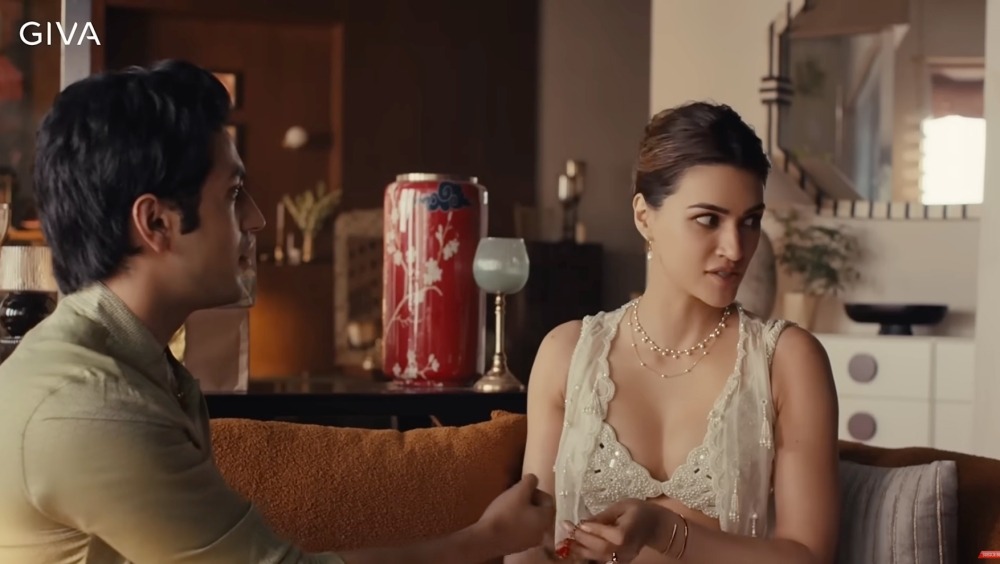
On paper, it was a sweet idea. But once the ad was released, the conversation quickly moved away from the jewellery and the Rakhi message. Most of the attention went to Kriti’s outfit and, more importantly, the way the camera chose to frame her.
The Problem Was Not Just Kriti’s Outfit
Much of the criticism was initially dismissed as another case of people policing what a woman wears. But the issue with the GIVA ad was not only the outfit.
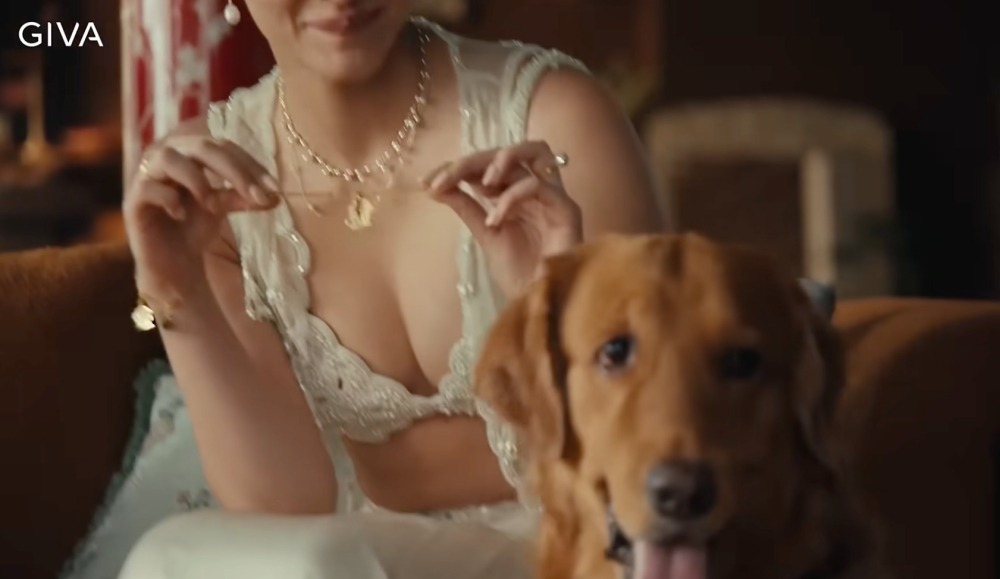
The camera repeatedly appeared to focus on Kriti’s chest, making the visual treatment feel unnecessarily sensual for an advertisement built around Raksha Bandhan, a festival rooted in family, affection and tradition.
That raises a more important question. Why did a jewellery campaign based on a traditional Indian festival need to present its female star in this way?
The problem was not simply that Kriti wore a revealing blouse. It was the combination of the styling, the camera angles and the overall presentation. Together, they made the ad feel as though it was trying to mix family values and tradition with a deliberately sensual visual language.
The two did not sit comfortably together.
The Brother’s Traditional Look Makes the Contrast Stronger
The contrast becomes even more obvious when you look at the brother’s styling in the same advertisement.
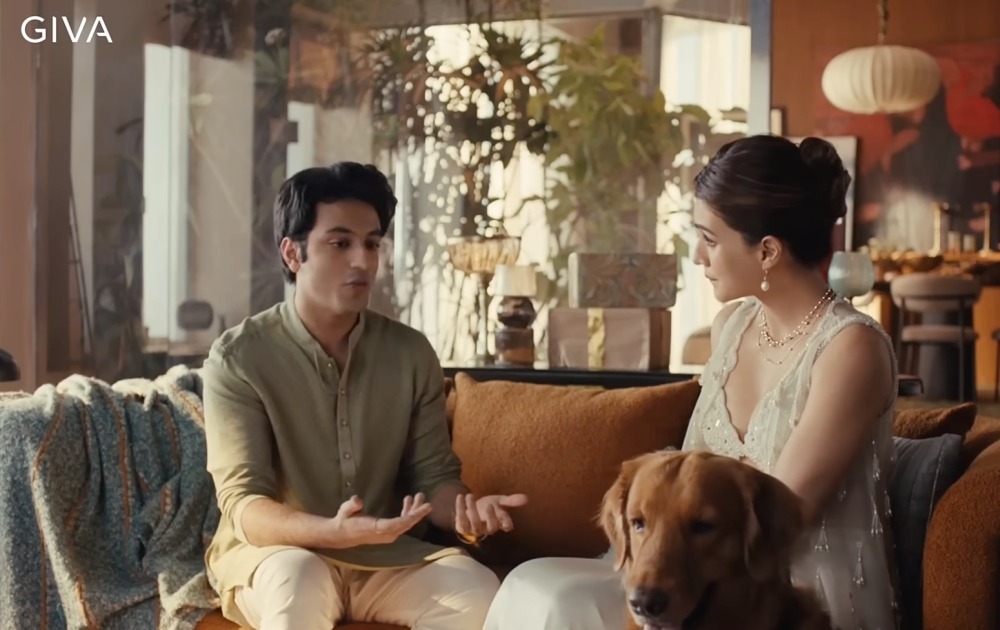
He is shown wearing a traditional kurta set, fully covered and dressed exactly as one would expect for a Raksha Bandhan celebration. His look is festive, conventional and completely in tune with the cultural setting.
Kriti, meanwhile, is styled very differently.
That makes the choice feel less accidental. If the creative team understood the traditional mood of the festival well enough to dress the male character in a kurta, why was a much more revealing outfit chosen for Kriti?
It naturally raises the question of whether the outfit was deliberately selected to add glamour and attract attention. And when that styling is combined with camera angles that repeatedly draw the eye towards her chest, the criticism shifts away from simply telling a woman what she should or should not wear.
It becomes a valid question about whether the advertisement itself was sexualising its female star.
Does Every Occasion Have a Dress Code?
There is also a broader point about dress codes and context.
Most occasions come with some level of expectation when it comes to clothing. People dress differently for a beach, an office meeting, a wedding, a funeral or a religious ceremony.
That does not necessarily mean restricting personal freedom. It simply means recognising the setting.
Raksha Bandhan is deeply rooted in Indian family and cultural traditions. It is therefore understandable that some viewers would expect the styling and imagery of a Rakhi advertisement to reflect that context.
That does not mean festive fashion needs to be conservative. Modern Indian fashion regularly includes bralette blouses, corsets, sheer fabrics and experimental drapes.
The difference lies in how those clothes are styled and presented.
A contemporary outfit can still look festive, elegant and culturally connected without the camera turning the look into something overtly sensual.
Kriti Sanon Defends Her Choice
Kriti Sanon defended her outfit and questioned why a woman’s respect for culture should be judged by her neckline.
That is a fair argument when discussing personal choice. Women should not be treated as if they carry the entire responsibility of representing tradition through their clothes.
But an advertisement is different from an individual simply choosing what to wear.
Every detail in an ad is planned. The outfit is selected by a styling team. The lighting is intentional. The camera angles are chosen by a director. The edit is deliberate.
The way a celebrity’s body is framed is also a creative decision.
That means the conversation should not stop at Kriti Sanon. The brand and the creative team are equally responsible for how the campaign was presented.
In fact, the biggest criticism perhaps belongs not to Kriti, but to the people who conceptualised and shot the advertisement.
Kangana Ranaut Joins the Debate
The controversy became even bigger when Kangana Ranaut publicly criticised Kriti’s outfit in the campaign.
Her comments pushed the ad further into the spotlight and turned it into a wider discussion about tradition, fashion and cultural representation.
Kriti responded by defending her choice and arguing that the meaning of a festival lies in its emotions rather than in what a woman is wearing.
The exchange generated headlines, but it also simplified what was actually a more complicated debate.
There were really two separate questions.
One was whether Kriti should be allowed to wear a revealing outfit.
The other was why a brand chose to style and film her that way in a campaign centred on a traditional family festival.
Those are not the same thing.
Why GIVA Pulled Down the Rakhi Ad
As the backlash grew, GIVA eventually decided to withdraw the advertisement.
The jewellery brand said that its intention had been to celebrate Indian festivals with the entire family, including pets, and that it had never intended to hurt anyone’s sentiments.
GIVA said:
“We have the highest regard and deep respect for Indian culture, traditions, and festivals. As a brand, we have always believed in celebrating these joyous moments with the entire family, and this time we wanted to extend that love and celebration to our pets.
If our recent advertisement has inadvertently hurt the sentiments of some sections of society, that was never our intention. Out of respect, we have withdrawn the advertisement from all media. Wishing you all love and positivity this festive season!”
The statement effectively brought the campaign to an end, but it did not really answer the larger creative questions surrounding it.
Did the Ad Sexualise the Wrong Moment?
There is nothing wrong with Kriti Sanon looking glamorous. There is nothing wrong with modern festive dressing. There is nothing wrong with revealing fashion either.
The issue here is context.
When the occasion is Raksha Bandhan and the story is supposed to be about siblings, family and protection, repeatedly drawing visual attention towards the female star’s body feels unnecessary.
It does not strengthen the story. It does not explain the jewellery. And it does not add anything meaningful to the emotion of the festival. If anything, it distracts from all three.
And that is perhaps where the campaign failed most.
The Jewellery Almost Disappeared From the Conversation
For a jewellery advertisement, the biggest irony is that people ended up discussing Kriti Sanon’s chest far more than GIVA’s jewellery. The product became secondary. The Rakhi message became secondary. Even the emotional idea involving family and pets became secondary.
Instead, the discussion became about one actress’s body. That is usually a sign that the creative execution has missed its mark.
If the audience walks away discussing the camera angles instead of the jewellery being sold, the campaign has distracted from its own purpose.
Modern Fashion Is Not the Problem
The more interesting takeaway from the controversy is not whether women should dress conservatively for festivals. That would be far too simplistic.
Women should be free to wear what they choose, and Indian festive fashion can absolutely be modern, glamorous and experimental.
But context still matters.
The fact that the brother was dressed in a completely traditional kurta while Kriti was styled and filmed in a far more sensual way makes the contrast impossible to ignore. It suggests that the male character was allowed to carry the traditional visual language of the festival, while the female star was expected to bring the glamour and sex appeal.
And perhaps that is why the ad made some viewers uncomfortable. Modernising tradition is not the problem. Contemporary styling is not the problem either.
But when the woman becomes the sensual element in a campaign while tradition is used as the backdrop, it is fair to question the creative choice.
The Real Question Behind the GIVA Controversy
GIVA has now pulled the Rakhi advertisement, but the debate it created is worth looking at beyond the usual social media outrage. The real question is not whether Kriti Sanon should be allowed to wear a bralette. Of course she should. The better question is why the campaign chose that styling, why her brother was dressed so differently, and why the camera repeatedly seemed more interested in Kriti’s body than in the jewellery or the story being told.
For an advertisement celebrating Raksha Bandhan, that may have been the real reason it missed the mark.
Glamcheck Verdict: Modern festive fashion? Absolutely. Mixed messaging, awkward framing and tradition used only when convenient? That is where this Rakhi campaign completely lost the thread.