Earrings sit closer to the face than any other piece of jewellery, which is why the same pair can flatter one person and unbalance another. The stone and the price have almost nothing to do with it. Shape, length and proportion against your own face do.
This guide covers the seven things worth checking before buying a pair, which earring shapes suit which face shape, and every construction type in the category, pierced and unpierced.
What to check before buying
Comfort
A pair you are not comfortable in stays in the box, however rare or expensive it is.
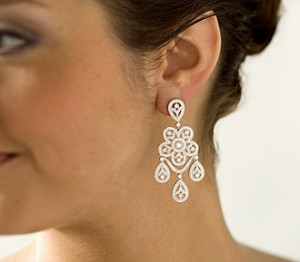
Check for rough or sharp edges that will catch, and look closely at the setting of any stud, diamond or gemstone. A setting with an exposed edge scratches the neck and snags on clothing.
Length
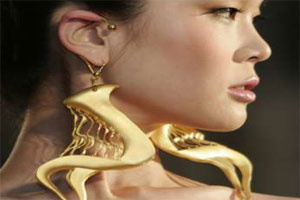
The longer the drop, the more work it is to wear. Long earrings tangle in hair and catch on clothing, and both happen constantly rather than occasionally.
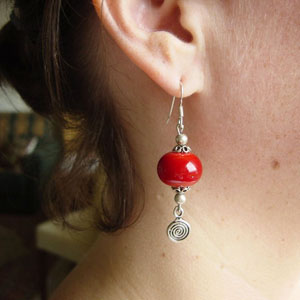
The practical limit is the shoulder. An earring should stop with clear space between it and your shoulder, never touching it.
Weight
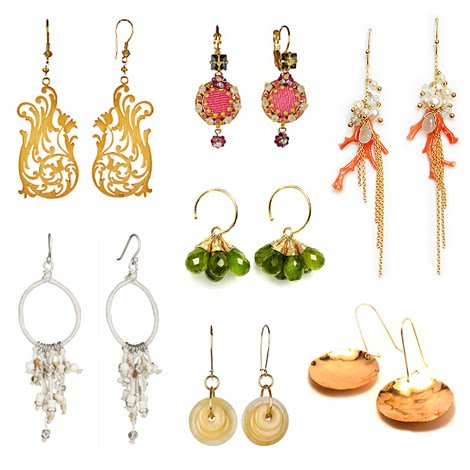
Length and elaboration both add weight, and weight is carried entirely by the earlobe. A heavy pair worn for hours puts sustained pressure on the skin and muscle holding it, and stretched or torn earlobes are the result.
This is the one criterion where the consequence is permanent, which is why light designs are the right choice for anything worn daily.
Color
Matching stones to an outfit is the obvious approach and works well when you can do it. The practical answer is to keep plain diamonds or pearls in the drawer, because both go with everything and cover the case where nothing else matches.
Stones can also be matched to your skin and eyes rather than your clothes, or deliberately contrasted with the outfit.
Design
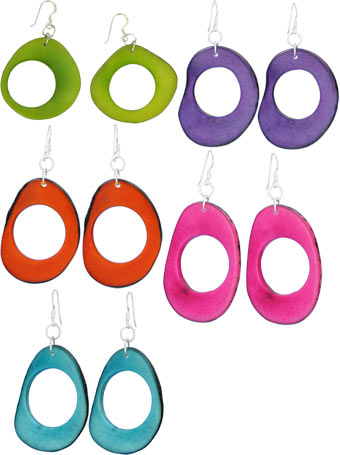
Design is not a separate consideration so much as the thing that determines the previous three. The construction decides the length, and the length and elaboration decide the weight.
Occasion
Small stones for daily wear, larger ones for occasions. A simple diamond or pearl stud is right for work and formal meetings, silver or alloy for shopping and weekends, and the rare or expensive pieces for the dressiest events.
Price
Earrings are made in everything from plastic to precious metals, and the expensive end brings storage and maintenance obligations with it. A costly pair cannot simply be left on a dressing table.
A practical collection has a few inexpensive silver or alloy pairs for regular wear and a small number of good pieces kept for occasions.
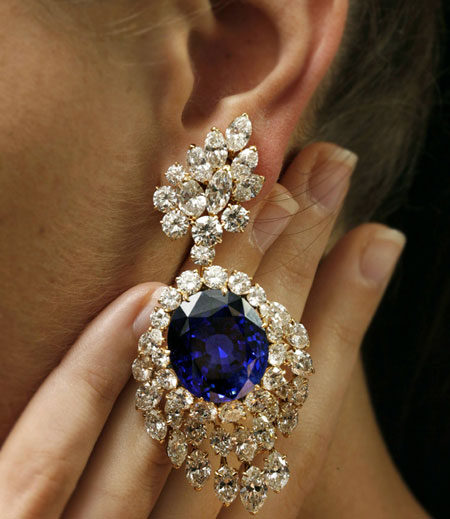
Choosing by face shape
This is where the biggest difference is made, and it costs nothing. Identify your face shape, then choose a shape that balances it: earrings add width where a face is narrow and length where a face is round.
Also worth weighing in the decision are your hair cut and color, your skin tone, your overall frame and what you are wearing.
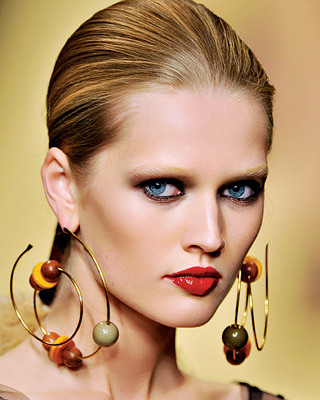
Diamond
A strong, broad forehead, an angular jawline and a square hairline, with cheeks wider than both forehead and chin.
Wear studs, and anything wider than it is long. Avoid long, sleek designs.
Heart
A narrow jawline with a wider forehead and, often, wider cheeks.
Wear triangles, circles and ovals, and anything wider at the bottom than the top. Avoid shapes that taper to a point at the end, which repeat the line of the jaw.
Long and narrow
Wear simple studs and chandeliers. Squares and triangles add width; circles add roundness. Avoid dangles, which add length to a face that already has it.
Oblong
More length than width.
Wear chandeliers and studs. Avoid anything with a long drop.
Oval
A forehead wider than the chin, with width slightly ahead of length. The most accommodating shape: almost anything works.
Wear teardrops especially. Avoid only the very long and sleek.
Round
Equal in length and width, with a rounded chin.
Wear long, lean designs, angular lines and curves, and ovals, squares, rectangles and oblongs. Avoid small studs, hoops and circular shapes, all of which make a round face rounder.
Square
A broad, prominent forehead with an angular jaw and a squared hairline.
Wear round and curved shapes, which soften the angles. Hoops and danglers both work. Avoid squares and rectangles, which repeat the jawline.
Triangular
Broader at the chin, narrower at the forehead.
Wear ovals and circles, which restore proportion between the two.
Pierced earrings
Pierced designs are the larger of the two families and the more common. Materials run from plastic, glass and beads through metal to precious stones. The constraint on size is not taste but the earlobe itself: it can only grip so much weight before it stretches.
Studs
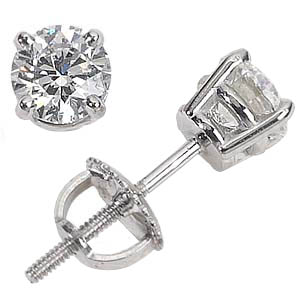
The defining feature is that a stud appears to float on the lobe with no visible connection.
Construction is a post that passes straight through the ear, held by a removable friction back, or an ear nut. Better studs use a threaded post, which holds far more securely and is what stops an expensive stone from being lost.
They are usually small and always easy to wear, set with diamonds, pearls or gemstones such as topaz, emerald, ruby or jade. Diamonds in studs are typically solitaires. This is the most versatile earring there is, equally correct with jeans and with a ball gown.
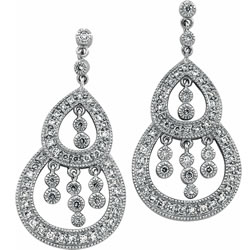
Chandeliers
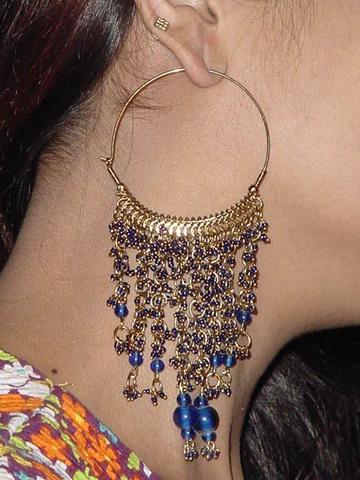
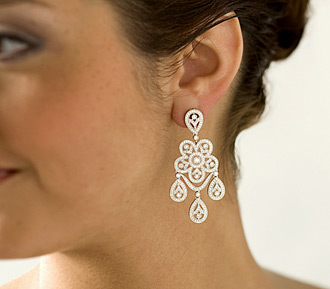
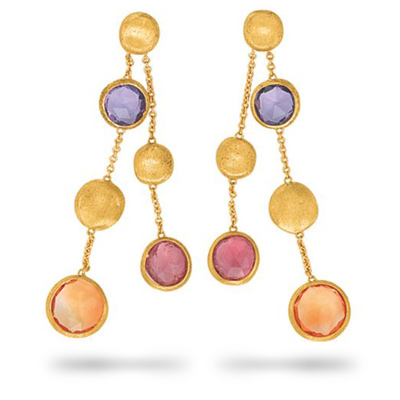
Highly embellished and built in multiple layers hanging downward, combining metallic elements with gemstone structures.
Drops
Designed to hang in a straight line and sway with movement. Usually either a geometric shape or a single larger stone set to dangle.
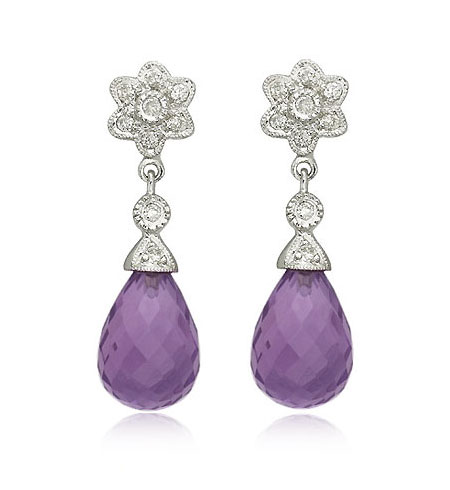
Dangles
The broad family that drops and chandeliers both belong to: anything that hangs and sways below the lobe.
Most attach with a thin wire through the lobe, hooking at the back, and hang without any enclosure. The French hook is the best-known variation.
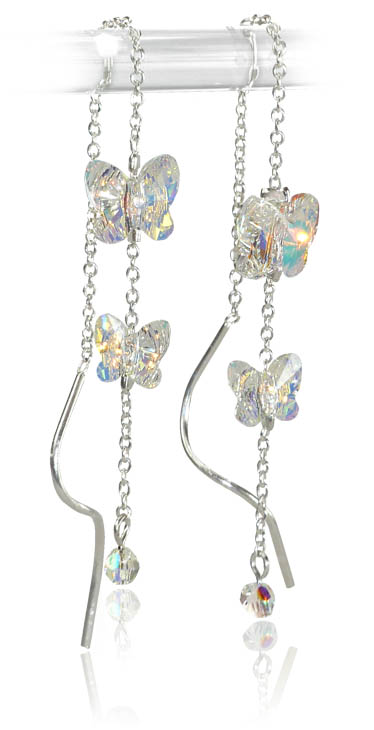
Ear threads
A chain fine enough to slip through the piercing and emerge below it, with a bead, pearl or shape at the hanging end. The length is whatever you want it to be.
Ear spikes
Plastic sticks around 1mm across and 1.5cm long that pass through the piercing and stay put without a back.
Fish hooks
More a hanger than an earring in itself: a hook that passes through the ear and takes the shape its name describes.
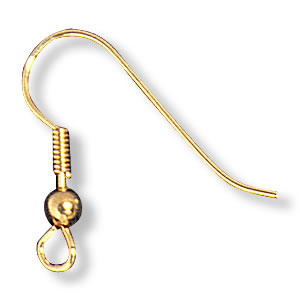
French hoops
A variation on the fish hook, rounded rather than hooked and open at the bottom, with the opening passing through the piercing.
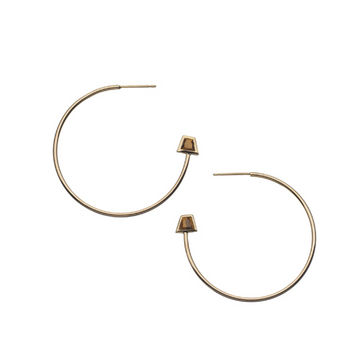
Hoops
Round or oval and made at every size, from close to the lobe to very large.
In the classic construction the circle itself passes through the ear. The other common build uses hollow metal tubing with a thin wire attached at the front, which passes through the piercing and slips into the tube at the back. Hollow tubing keeps the weight down, which is what makes large hoops wearable at all.
Some hoops are a single ring, others a continuous loop of rings, and some do not close the circle at all. Sterling silver is the most popular material.
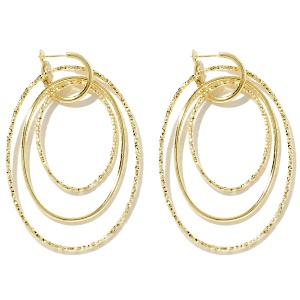
Charm hoops
A hoop with a gemstone, pearl or diamond hanging from the ring.
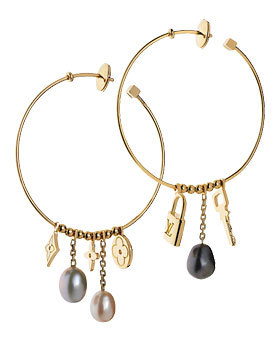
Sleeper hoops
Small, light, plain hoops made to be left in continuously, including overnight, which is where the name comes from. They are the standard choice for keeping a new piercing open.
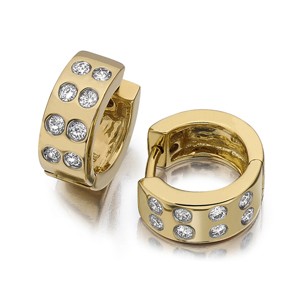
Huggies
As the name suggests, the setting hugs the ear to hold the earring in place, sitting tight against the lobe rather than hanging from it. Hearts and ovals are the most common shapes.
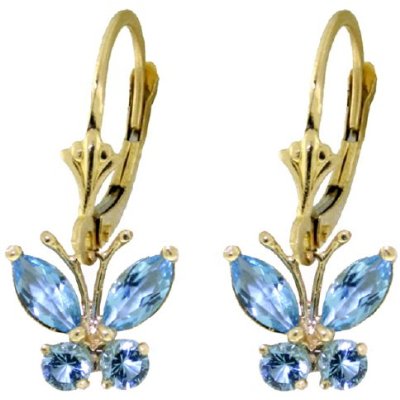
Lever backs
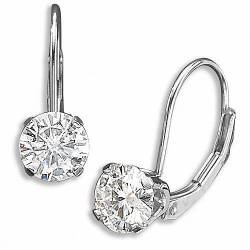
A hinged segment folds upward and a flip back presses against the ear to hold the earring. The design works on pierced and unpierced ears alike, and the closed fitting makes it one of the more secure ways to wear a drop.
Bajoran or cuff-chain earrings
Worn high on the ear and connected to an ear cuff by a chain. The style is also called the slave earring, and it entered wide circulation after appearing on Star Trek.
Earrings without a piercing
Every look above has an unpierced equivalent, and they are also the way to wear earrings at points on the ear you have not had pierced.
Clip-ons are the oldest of these and still the most common. A two-part clip attaches at the back and mechanical pressure holds it, pinched onto the lobe. Made as both studs and hoops.
Screw ons use a terminator that screws against the back of the ear. The stud version uses a clutch screw on a thin metal post.
Ear screws are the alternative for anyone who finds clips painful, and they are easier to use.
Stick-ons are adhesive-backed and stick directly to the lobe, imitating a stud.
Magnetic earrings use twin round magnets with a spring closure, front and back, holding the earring against the lobe. They can be worn anywhere on the ear, not only the lobe, and are made as studs, drops and hoops.
Ear cuffs are a curved band of metal pinched onto the helix, the outer rim of the ear.
Spring hoops hold their position by spring force alone.
Ear hooks use a hook large enough to pass over the whole ear.
Body piercing jewellery worn in the ear
Several pieces from body piercing are now worn as earrings.
Captive bead rings, also called ball closure rings and often abbreviated CBRs, are almost complete rings with a small gap, closed by a bead that the ring’s own tension holds in place.
Plugs are short cylindrical pieces, some with flared ends to hold them, others secured with small elastic rings.
Barbells are straight rods with a bead fixed at one end and a thread at the other. Internally threaded barbells have become the standard, because external threads irritate the piercing as they pass through it.
Circular barbells are similar to captive bead rings with a wider gap, one fixed bead and one threaded, which makes them much easier to put in and take out.
Practical tips
Balance the earrings against the necklace. Wear delicate earrings with an elaborate necklace and elaborate earrings with a delicate one. An ornate pair also works well when you are wearing no necklace at all, since it draws attention up and away from a bare neck.
Do not let the earrings win. If the first thing anyone notices is the jewellery rather than your face, the pair is too much.
Match length to your height. Some drop adds apparent height to a petite frame, but a long elaborate chandelier overwhelms it. Danglers, dangling hoops and chandeliers all suit a taller frame.
Use the shape to emphasize a feature. Round button earrings suit a thin face. Large round hoops highlight the cheekbones and nose. Rectangles and ovals balance a full or round face.
Match the width to your lobe. A wide earring needs a lobe large enough to carry it.
Keep daily pairs light, for the reason given above: heavy earrings tear earlobes.
For sensitive skin, wear sterling silver or 14 carat gold. Reactions to nickel and other alloys are common and worth avoiding rather than testing.
Quick reference
| Face shape | Wear | Avoid |
|---|---|---|
| Diamond | Studs, wider than long | Long sleek designs |
| Heart | Triangles, circles, ovals, wider at the base | Shapes tapering to a point |
| Long and narrow | Studs, chandeliers, squares, triangles, circles | Dangles |
| Oblong | Chandeliers, studs | Long drops |
| Oval | Almost anything, teardrops especially | Very long and sleek |
| Round | Long lean shapes, ovals, squares, rectangles | Small studs, hoops, circles |
| Square | Rounded shapes, hoops, danglers | Squares and rectangles |
| Triangular | Ovals and circles | Anything widening the chin |
Frequently asked questions
Which earrings suit a round face?
Long, lean designs that add length: ovals, squares, rectangles and oblongs, and angular lines. Avoid small studs, hoops and circular shapes, all of which repeat the roundness of the face rather than balancing it.
How long should earrings be?
Short enough to leave clear space between the earring and your shoulder. Beyond that they tangle in hair and catch on clothing constantly, and the extra length adds weight the earlobe has to carry.
Can I wear earrings without pierced ears?
Yes, and in every style. Clip-ons and screw ons are the traditional options, ear screws are easier to wear than clips, and magnetic and stick-on earrings imitate studs. Ear cuffs pinch onto the outer rim of the ear and need no piercing at all.
Why do heavy earrings damage earlobes?
All the weight is held by the skin and muscle of the lobe. Worn for long periods, that constant pressure stretches the piercing and can tear it, and neither reverses on its own. This is why light designs are the right choice for anything you wear daily.
What earrings should I wear if my skin reacts to metal?
Sterling silver or 14 carat gold. Nickel and other alloys are the usual cause of a reaction.
What is the difference between a drop, a dangle and a chandelier?
Dangle is the general family: anything hanging below the lobe. A drop hangs in a straight line, usually a single shape or stone. A chandelier is multi-layered and tiered. Drops and chandeliers are both kinds of dangle.
What is the most useful pair of earrings to own?
A plain diamond or pearl stud. It is light enough for daily wear, correct at work and at formal events, and it goes with any outfit, which solves the case where nothing you own matches what you are wearing.
See also the necklace guide, the diamonds guide and how to choose an eyeglass frame.