A handbag does two jobs at once. It carries what you need, and it functions as an accessory that completes an outfit. Most buying mistakes come from optimizing for one and forgetting the other.
One piece of history worth knowing: handbags began as a utility item for men, and only later became a women’s category. What was purely practical became a fashion object, which is why the range of shapes, sizes, colors, fabrics and styles is now so wide.
Getting the size right
Two things decide the size: what you need to carry, and your own proportions.
The second is the one people skip. A bag should be in proportion to your frame. A petite woman carrying a very large bag will be overwhelmed by it, and the bag dominates rather than complements. A larger frame carries a large bag comfortably, and a very small bag against a larger frame looks equally out of scale.
This is the same principle that governs jewelry scale, and it is worth applying before considering anything else.
The six categories
Clutch
A small, generally rectangular evening bag with no handle. It is held rather than carried, which is what limits it to occasions where you are not also carrying anything else.

Satchel
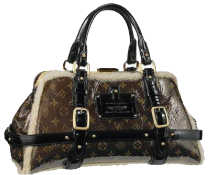
A large bag with a short handle, carried on the arm rather than over the shoulder.

Duffle
A large bag used for travel or sport.

Tote
A medium to large bag with two straps, open enough to load quickly. The tote is the everyday workhorse of the category.

Messenger
A bag with a long strap worn across the body. Because the weight sits on the opposite shoulder and the bag stays put, this is the most practical shape for walking any distance or keeping your hands free.

Sling
The same long-strap construction as a messenger but smaller, for when you need the cross-body convenience without the capacity.

Choosing a color
With hundreds of colors available, the useful approach is to narrow before you browse.
- Keep it simple. Look for the bag that matches your temperament and how you actually dress, not the one that stands out on the shelf.
- Match it to outfits you already own. A bag that works with three things in your wardrobe is worth more than one that works with nothing.
The colors that work hardest
Black. The evergreen. It works for professional settings and for parties, across every purpose and age group. If you own one bag, this is it.
Brown and tan. The most popular colors, and the most broadly useful after black. They suit every age group, pair well with denim and boots, and look particularly good against brown or black outfits.
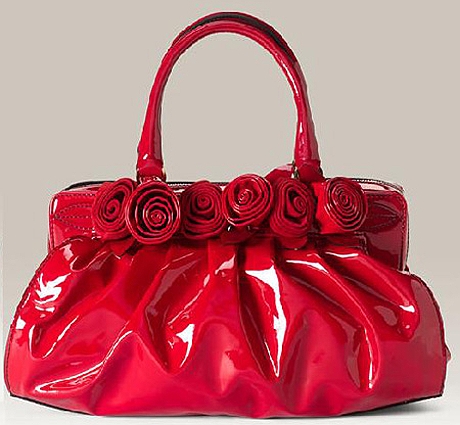
Red. Works for office and party wear alike, and adds sophistication to an outfit that would otherwise be plain.
Purple. More adventurous, and more forgiving than it sounds. It combines with charcoal, gray, black and blue, which means it works with most of a wardrobe, and it pairs well with denim.

Frequently asked questions
What size handbag should I carry?
One in proportion to your frame. A large bag overwhelms a petite figure, and a very small one looks out of scale against a larger frame.
What is the difference between a messenger and a sling bag?
Construction is the same, size is not. A sling is the smaller version of the same cross-body shape.
Which handbag color is most useful?
Black, followed by brown or tan. Both work across professional and social settings and with most of a wardrobe.
What is a satchel?
A large bag with a short handle carried on the arm rather than over the shoulder.
See also our guides to clutch bags and designer handbags.