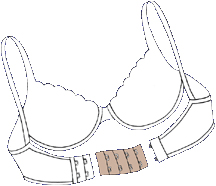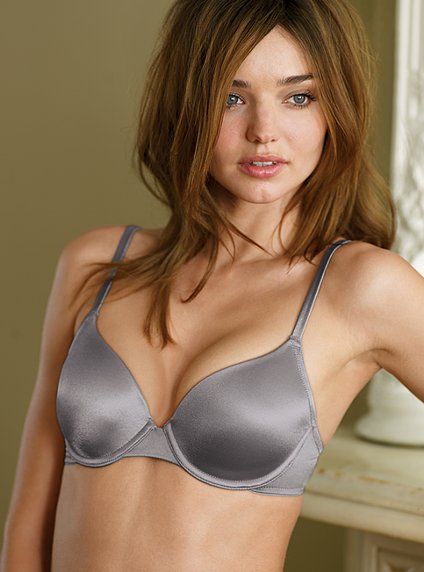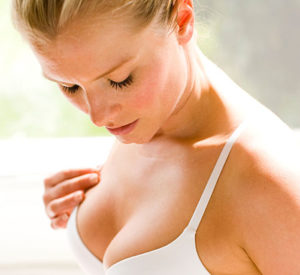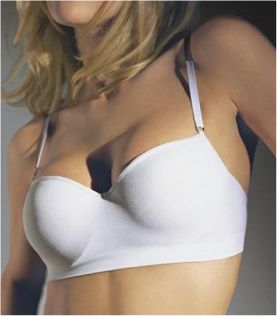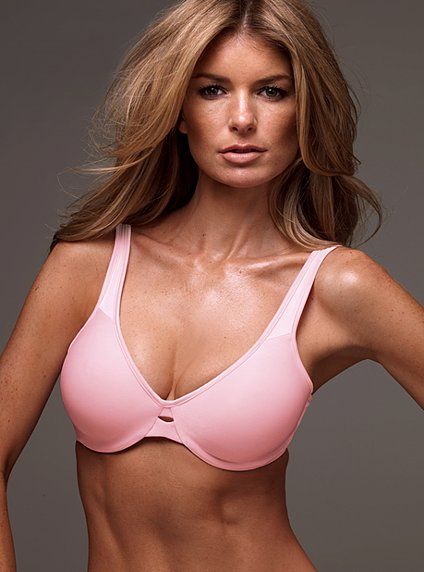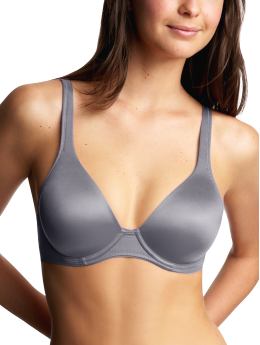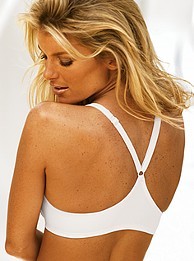
The cup determines more about a bra than any other component, to the point that bras are frequently named after them. A demi bra, a padded bra and an underwired bra are all named for their cup rather than anything else about the garment.
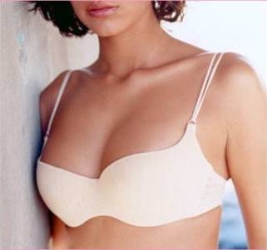
Contour cups
Contour cups are more rigid than molded cups, holding a firm predetermined shape whether or not they are being worn.
They are effectively invisible under tight clothing and T-shirts, which is the main reason to choose them. They also even out a difference in size between the two breasts, because the cup imposes the same shape on both sides.
Two limitations. Anyone with breast implants may find the rigid shape difficult to fit into, since the cup will not adapt. And storage requires care: mishandling deforms the cup permanently, and even folding the bra the wrong way puts wrinkles into it that do not come out.
Demi cups
Demi cups provide very little coverage, most reaching only about an inch above the nipples.
Most are set at an angle that pushes the breasts toward the center for more cleavage while moving tissue away from under the arms. An underwired demi cup is shallower and shorter than a full cup, which is why the wire is less likely to poke near the armpit.
Most push-up bras use a demi cup, since the shallow angled shape is what creates the lift and the exposure.
Fit matters more here than elsewhere. A demi cup in the wrong size makes the breasts look bulgy or cut off across the top, because there is no cup edge above to contain them.
Molded cups
A molded cup is seamless, with a pre-formed breast shape built into the fabric of the cup itself. It is lighter in construction than a contour cup.
How they are made
Nylon or polyester tricot fabric is heated over breast-shaped molds to set the form. The cup can be a single layer of fabric, or fused with a thin layer of foam or fiberfill to produce a more rigid, non-collapsing shape.
The trade-off
Because the shape is predetermined and not especially malleable, a molded cup can be difficult to fill well. It fits the shape it was made for rather than adapting to yours.
Like contour cups, they need careful storage. Crushing them creates wrinkles that show through clothing.
Padded cups
Padded cups carry padding underneath the cup surface. The thickness varies from light to substantial depending on the style and the fabric.
They are more comfortable than a push-up and give a slight lift rather than a dramatic one. Some carry padding only in the lower portion, which produces greater lift and décolletage while leaving the top of the cup thin.
Many use removable padding, known as cookies, which lets you adjust the effect or remove it entirely.
Lined cups
A lined cup has one or more fabric linings beneath the cup surface, and there can be more than two. The fabrics used in each layer may differ from one another.
Lining serves two purposes: it makes the cup more opaque, which prevents show-through, and the added fabric provides more support.
Full cups
Full cups provide complete coverage, substantial lift and full support.
They are the most flattering choice for a larger bust, precisely because they contain and control rather than exposing. Maternity bras are frequently made with full cups for the same reason, since support is the primary requirement.
Seamed cups
A seamed cup is built from two or more pieces of fabric stitched together to form the cup shape. This was the dominant construction before molded cups arrived, and it remains the more versatile of the two.
Why they are still used
- More design variation. Seams allow detail and shaping that a molded cup cannot achieve.
- More fabric options, including lace, satin, silk and cotton.
- More support. A three-sectioned cup provides more support than a molded one, because each seam is a shaping line doing structural work.
- Alterable. Seamed bras can be adjusted for a closer fit, which molded cups cannot.
Seam direction
Diagonal and vertical seams are the more flattering, since they follow the line of the body. Horizontal seams are also common and produce a different, more structured shape.
The drawback
Seams show. Under figure-hugging clothes and T-shirts they leave visible lines and bulges, which is exactly the problem molded and seamless cups were developed to solve.
Underwired cups
Underwired cups conceal a wire within the cup structure, running beneath the breast. The wire provides considerable hold and support.
They are popular among women with a larger bust, because the combination of support, lift and control is difficult to achieve any other way.
Drop cups
Drop cups are a nursing construction. Each cup has a clip at the top that releases so the cup can be dropped down individually for breastfeeding, without removing or unfastening the whole bra.
Zip cups
Also a maternity and nursing construction, and different in design from a drop cup. A zip-cup bra has a zip running from the top of the cup, positioned on the outer side of the bra, giving access for feeding.
The construction includes fabric behind the zip to prevent pinching and itching against the skin, and a fabric liner over the outer side of the zip so the baby cannot be caught on it during feeding.
Choosing a cup
| Priority | Cup type |
|---|---|
| Invisible under a T-shirt | Molded or contour |
| Maximum support | Full cup, underwired |
| Maximum cleavage | Demi, padded at the base |
| Detail and fabric variety | Seamed |
| Evening out a size difference | Contour |
| Breastfeeding | Drop or zip |
| Preventing show-through | Lined |
Frequently asked questions
What is the difference between molded and contour cups?
Both are seamless with a preformed shape. Contour cups are more rigid; molded cups are lighter in construction.
Which cup gives the most support?
A full cup, particularly underwired. A three-sectioned seamed cup also supports more than a molded one.
Why do my seamed bras show under T-shirts?
The seams create raised lines. A molded or seamless cup is the answer under close-fitting fabric.
How should molded bras be stored?
Laid flat or stacked with the cups nested, never folded. Crushing a molded cup puts wrinkles in it permanently.
For the surrounding structure see basic elements of a bra, and for the styles built on these cups see bra categories.