
Coach’s Spring 2027 bag collection arrived at New York Fashion Week with a clear sense of continuity. Stuart Vevers did not try to distance the brand from its most familiar signatures. Instead, he returned to them with a lighter touch, introducing new shapes while reworking established icons through deconstruction, layered detailing and deliberately imperfect finishes.
The result felt less like an anniversary retrospective and more like a study in how familiar Coach codes can continue to evolve.
Introduction and Theme
The broader Spring 2027 collection marked Coach’s 85th anniversary, and that history naturally filtered into the accessories. The mood was rooted in memory, wear and the idea that a bag becomes more interesting once it starts to feel personal.
Rather than presenting leather goods as pristine objects, the collection allowed construction details, softened shapes and playful surface treatments to become part of the design. There was a sense that these bags were meant to be used, marked and lived with, not kept untouched.
That gave the collection a more relaxed emotional tone, even when the silhouettes themselves remained polished.
Key Design Inspirations and Mood
The strongest inspiration came from Coach’s own archive, particularly its long association with practical American leather goods and turnlock hardware. Those references were not reproduced literally. Vevers used them as a framework for something less formal and more contemporary.
There was also a clear interest in contrast. Structured totes sat beside slouchier shapes. Familiar bags were shown with exposed construction. Practical forms were interrupted by celebratory details.
That tension between utility and personality gave the lineup its character.
Surface Techniques and Embellishments
The surface treatments were among the most distinctive elements of the season.
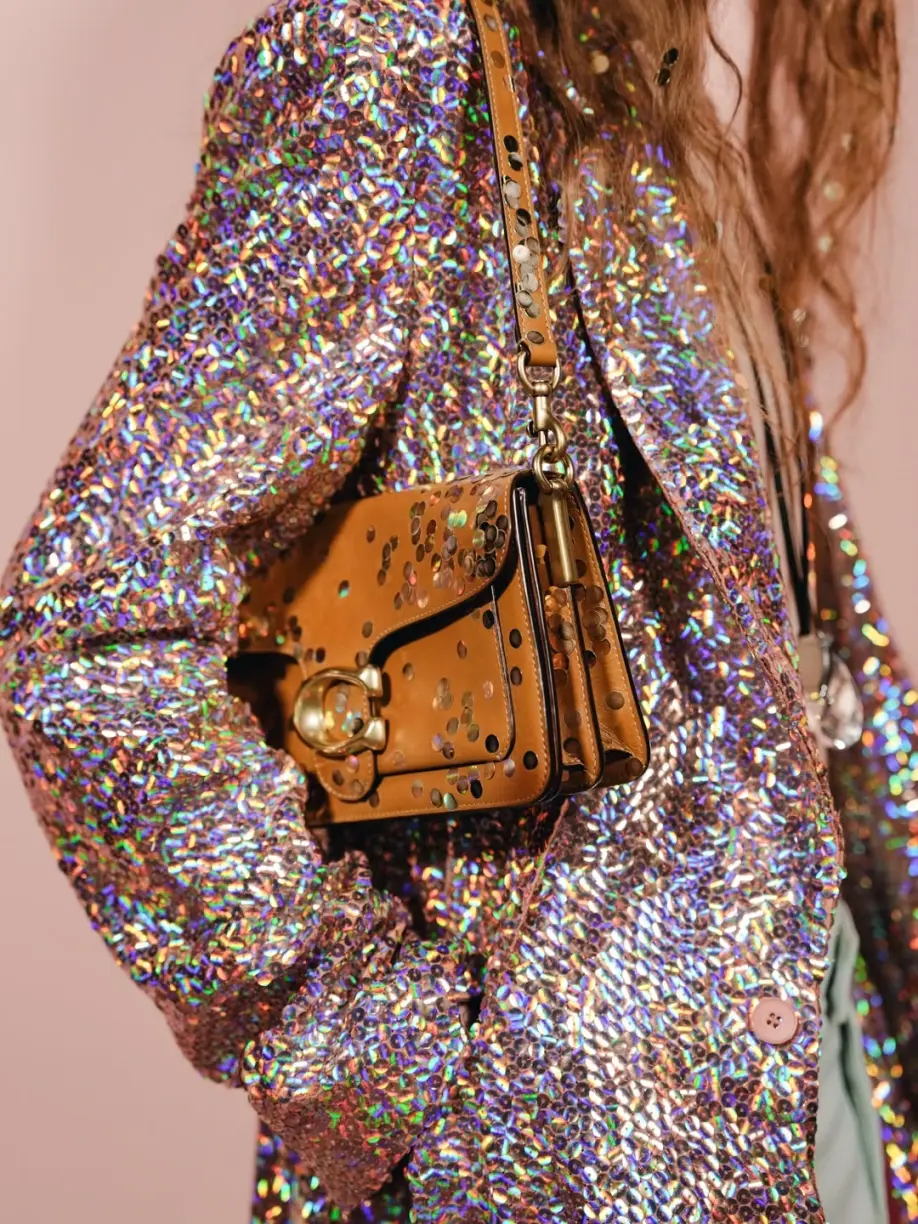
Metallic foil, glitter and confetti-like finishes appeared across selected styles, giving the leather a slightly worn, celebratory effect. Rather than looking polished in a conventional way, the bags seemed as if they had already passed through a party.
Elsewhere, exposed seams, visible pockets and layered leather details created a more deconstructed finish. These techniques added texture without relying on heavy ornamentation and helped reinforce the collection’s interest in imperfection.
The embellishment felt deliberate, but never overly decorative.
The Turnlock Tote
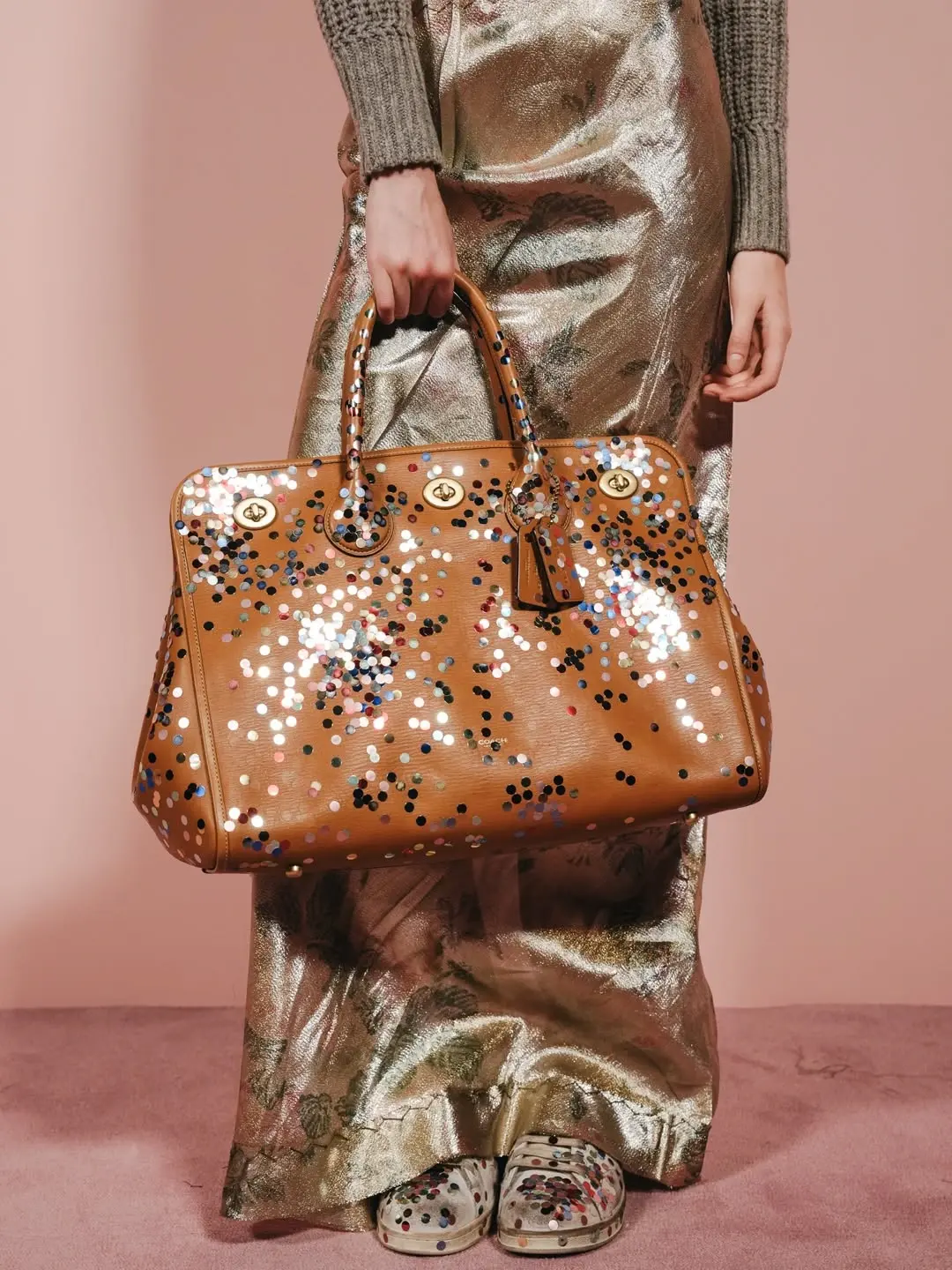
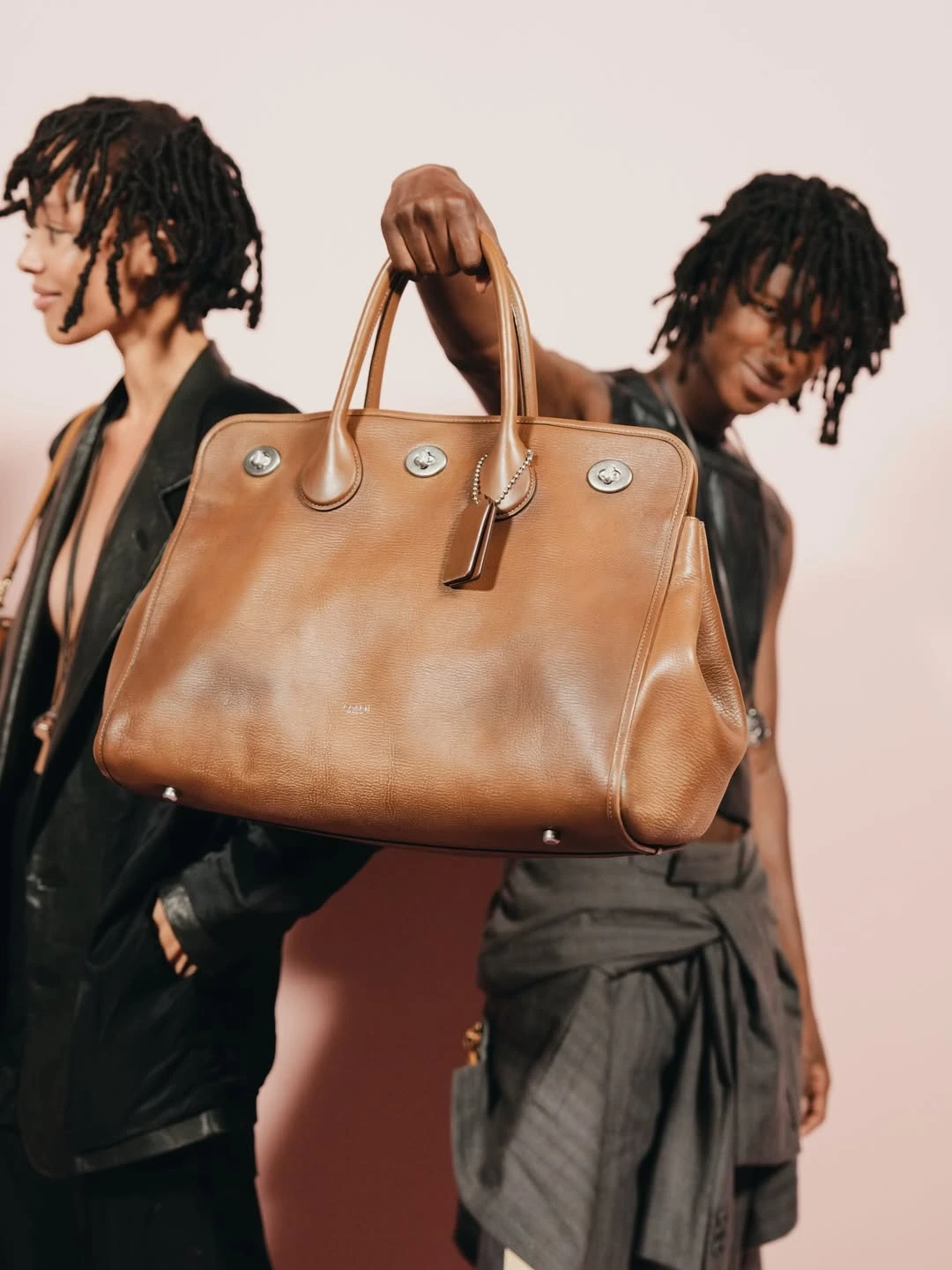
The new Turnlock Tote was one of the clearest introductions of the season. Shown in different sizes, it combines a straightforward everyday shape with one of Coach’s most recognisable hardware signatures.
The larger version has the scale of a practical work or travel bag, while the smaller one feels more compact and polished. The design is restrained, but the turnlock gives it enough heritage identity to feel unmistakably Coach.
It is probably the most commercially versatile piece in the collection.
The Brooklyn Bag
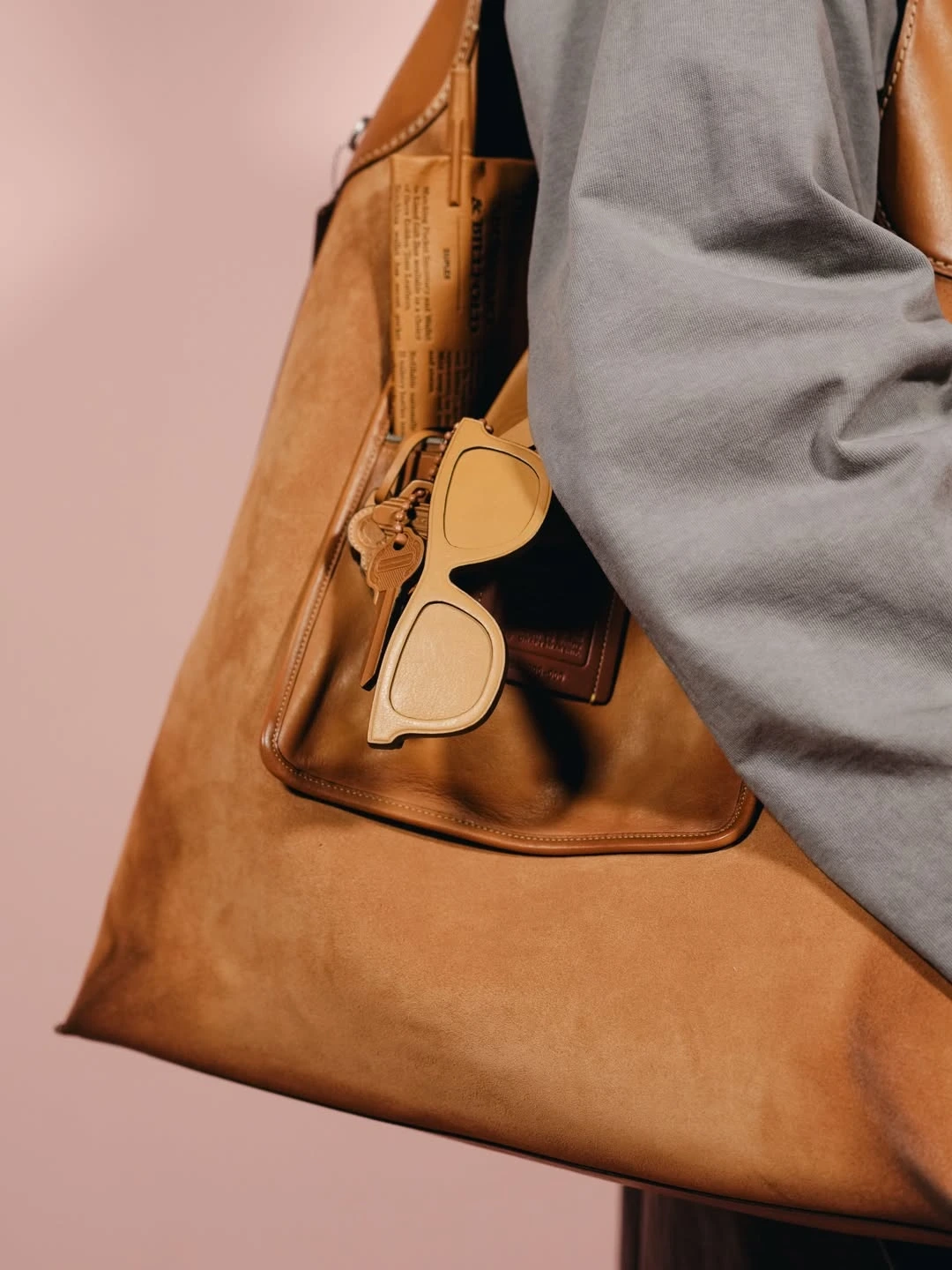
The Brooklyn returned with a more experimental treatment.
For Spring 2027, the bag was shown with an inside-out effect, bringing seams, internal structure and pocket details to the exterior. The familiar slouch remained, but the finish became more raw and deconstructed.
That shift gives the Brooklyn a slightly more individual character without losing the relaxed shape that made the original so successful.
The Tabby

The Tabby moved in a more utilitarian direction. Layered pockets and collaged leather details gave the bag a busier surface, while the recognisable hardware kept the silhouette grounded. The result feels more customised and functional, almost as if the bag had been adapted over time by its wearer.
It is a subtle evolution, but one that gives the Tabby a younger, more casual attitude.
The Gift Box Bags

The gift box-inspired bags brought the anniversary theme into the collection in the most literal way.
These were less about everyday use and more about injecting humour and occasion into the runway. Their novelty gave the accessories story a lighter moment and helped frame the collection around celebration without making every piece feel overtly commemorative.
Conclusion

Coach Spring 2027 works because it treats heritage as something flexible.
The Turnlock Tote introduces a new everyday anchor. The Brooklyn is deconstructed. The Tabby becomes more layered and practical. Metallic and confetti finishes bring in a sense of celebration without overwhelming the designs.
What ties the collection together is the idea that luxury does not have to mean flawless.
Coach’s strongest bags this season are the ones that feel ready to develop character over time. That makes the collection feel both familiar and forward-looking, which is exactly the balance an anniversary season needs.