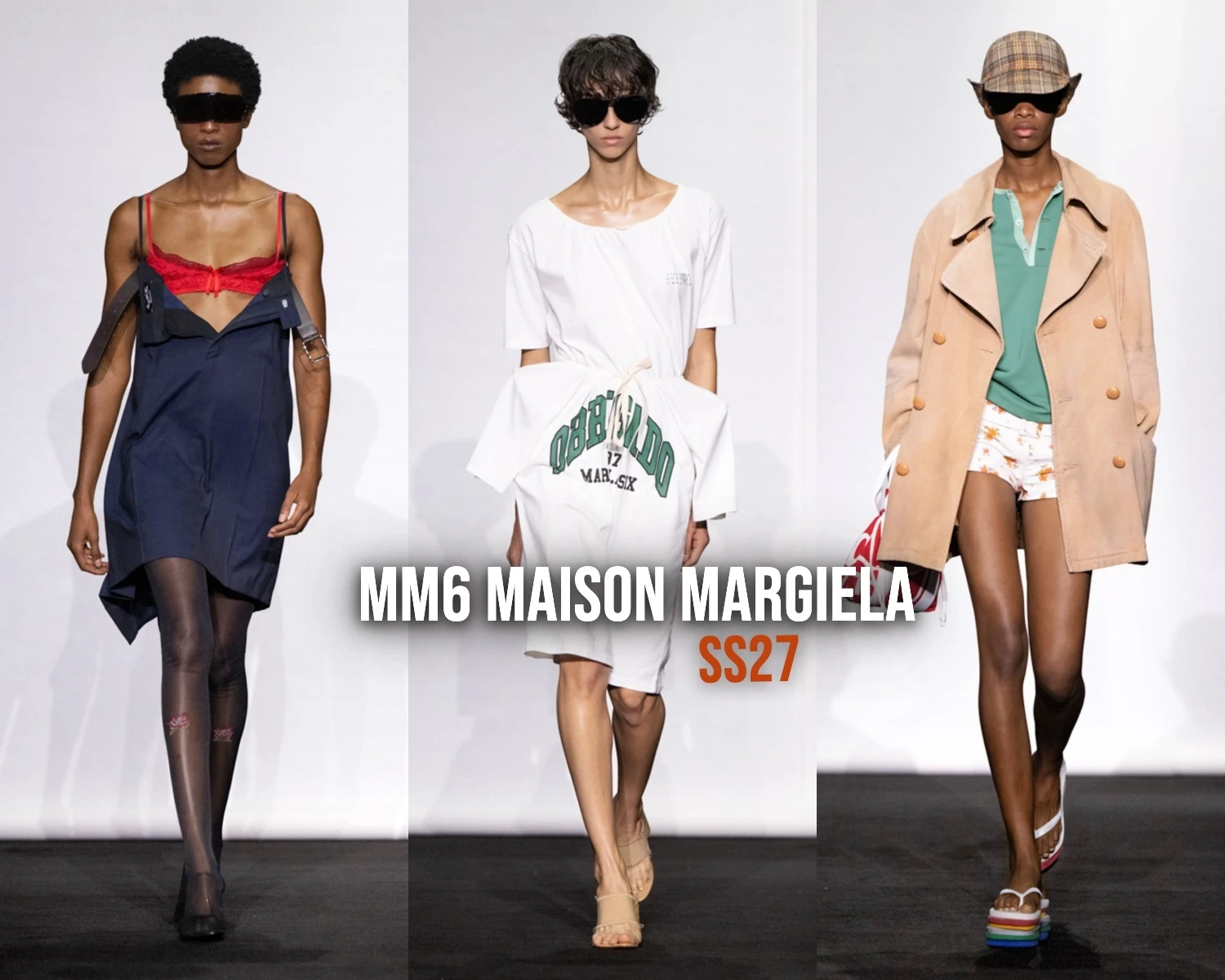
MM6 Maison Margiela approached Spring/Summer 2027 at Milan Fashion Week with a deceptively simple question: what happens when familiar clothes are allowed to behave differently?
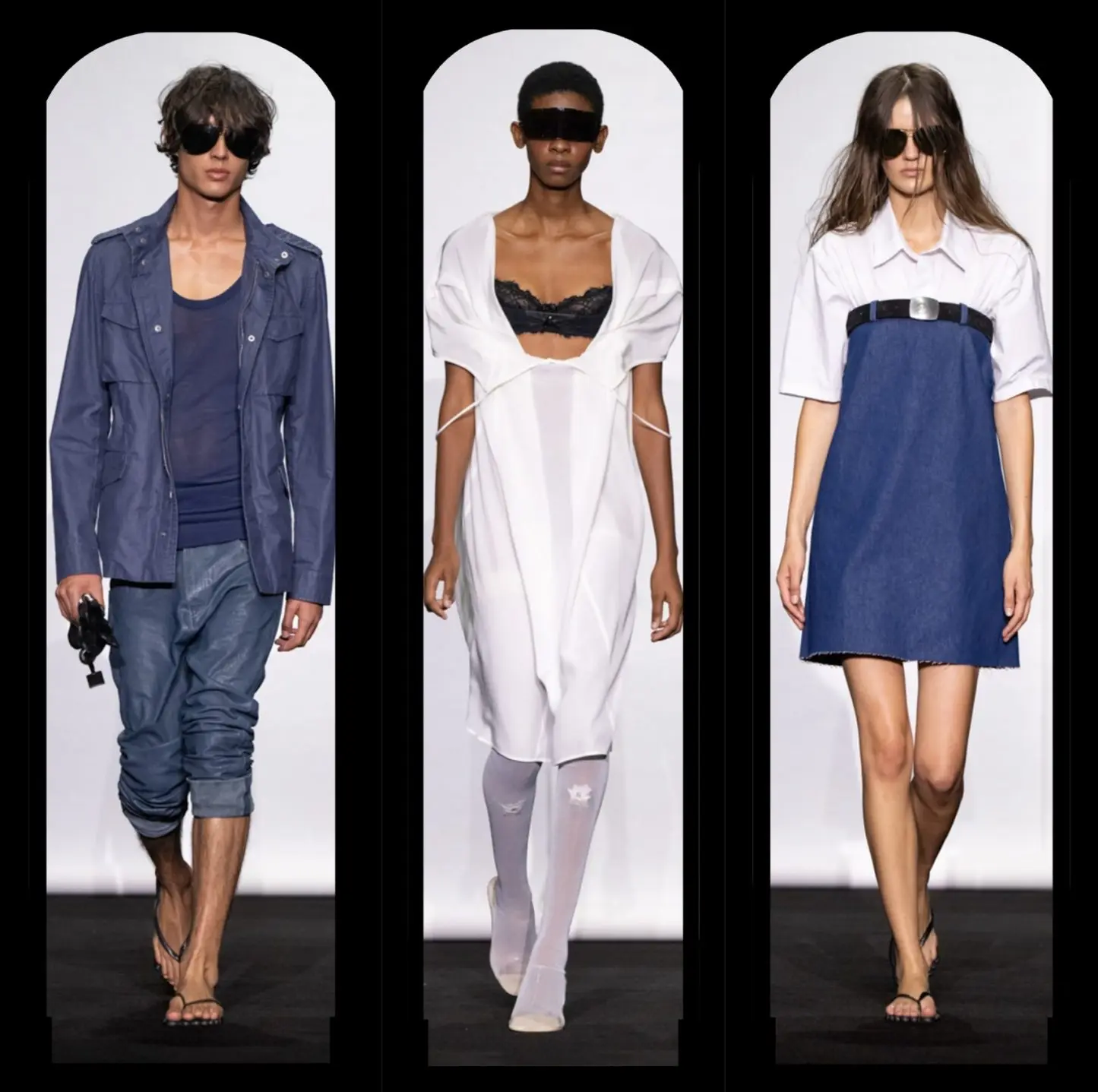
The answer came through a collection built from recognisable wardrobe staples, shirts, sweaters, trousers, biker jackets and tailoring, but each piece was subtly reworked through proportion, placement and construction.
Rather than chasing spectacle, MM6 focused on transformation.
Familiar Pieces, Reassembled
One of the collection’s strongest ideas was the ability of garments to shift function.
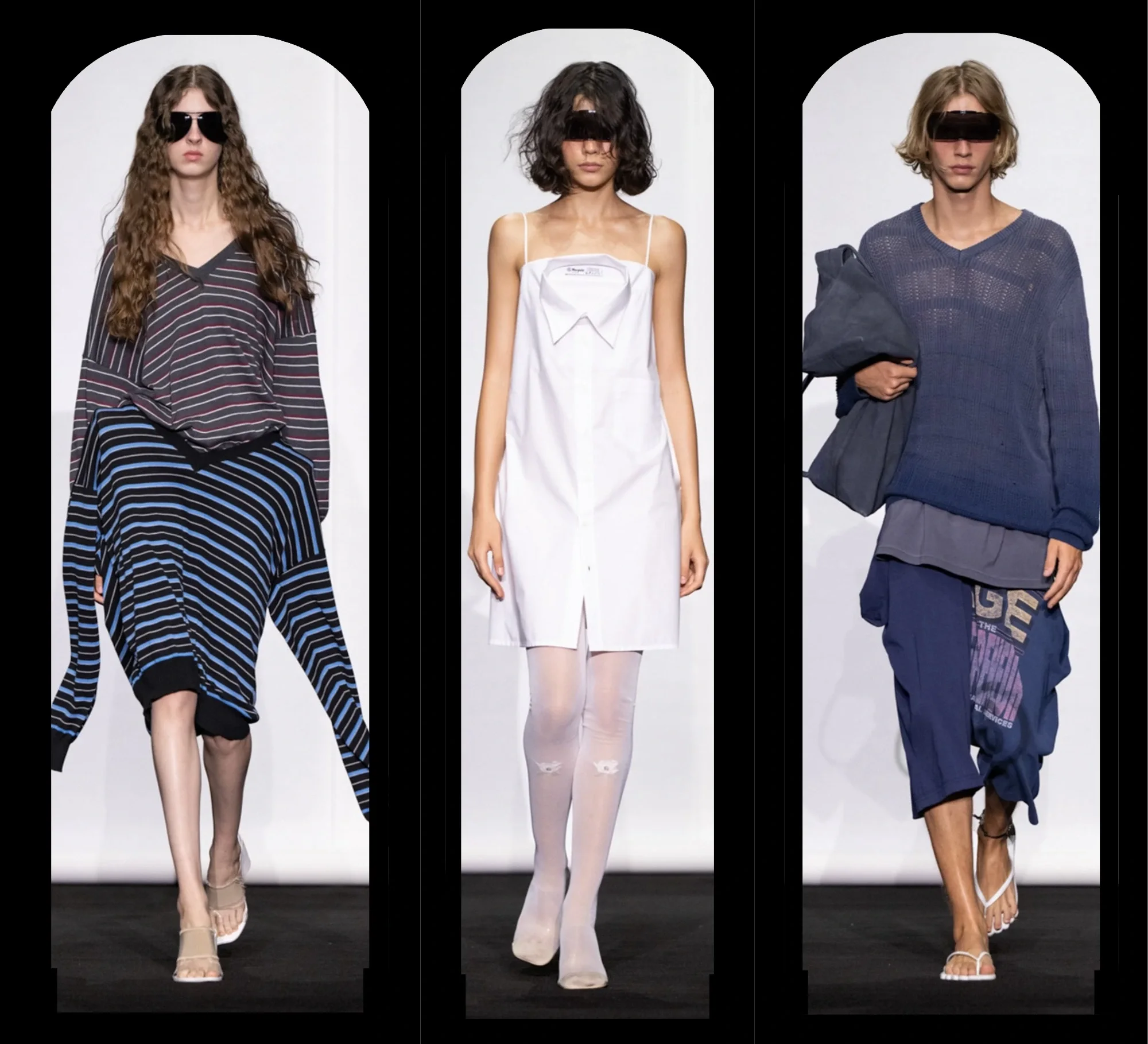
A shirt could fold into a square and become a dress. Trousers could be manipulated into a miniskirt. Sweaters were repositioned and reshaped, sometimes using the studio’s “hip-paulette” construction to introduce unexpected volume around the hips.
The effect was conceptual without becoming impractical.
The clothes still looked wearable, but they asked the eye to reconsider how each piece was supposed to work.
Menswear Followed the Same Experiment
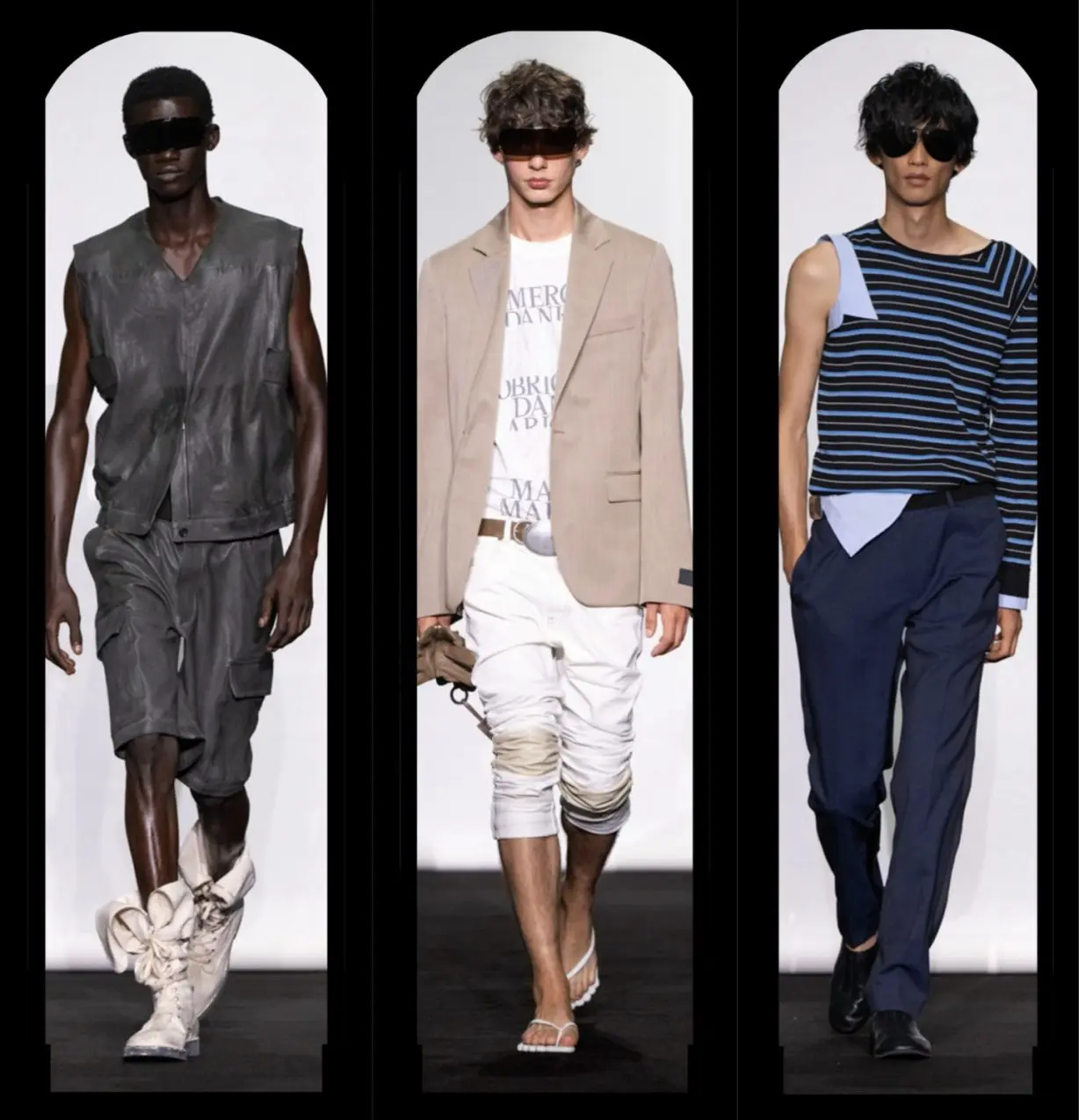
The menswear carried the same sense of controlled disruption.
Classic tailoring details were moved away from their usual positions. Collars and button plackets shifted sideways, tuxedo stripes migrated inward, and low-crotch trousers were narrowed into leaner silhouettes.
Nothing felt radically alien. The interest came from small adjustments that changed the balance of otherwise conventional garments.
Footwear Delivered the Strongest Visual Twist
The MM6 x Havaianas collaboration became one of the clearest expressions of the season’s idea.
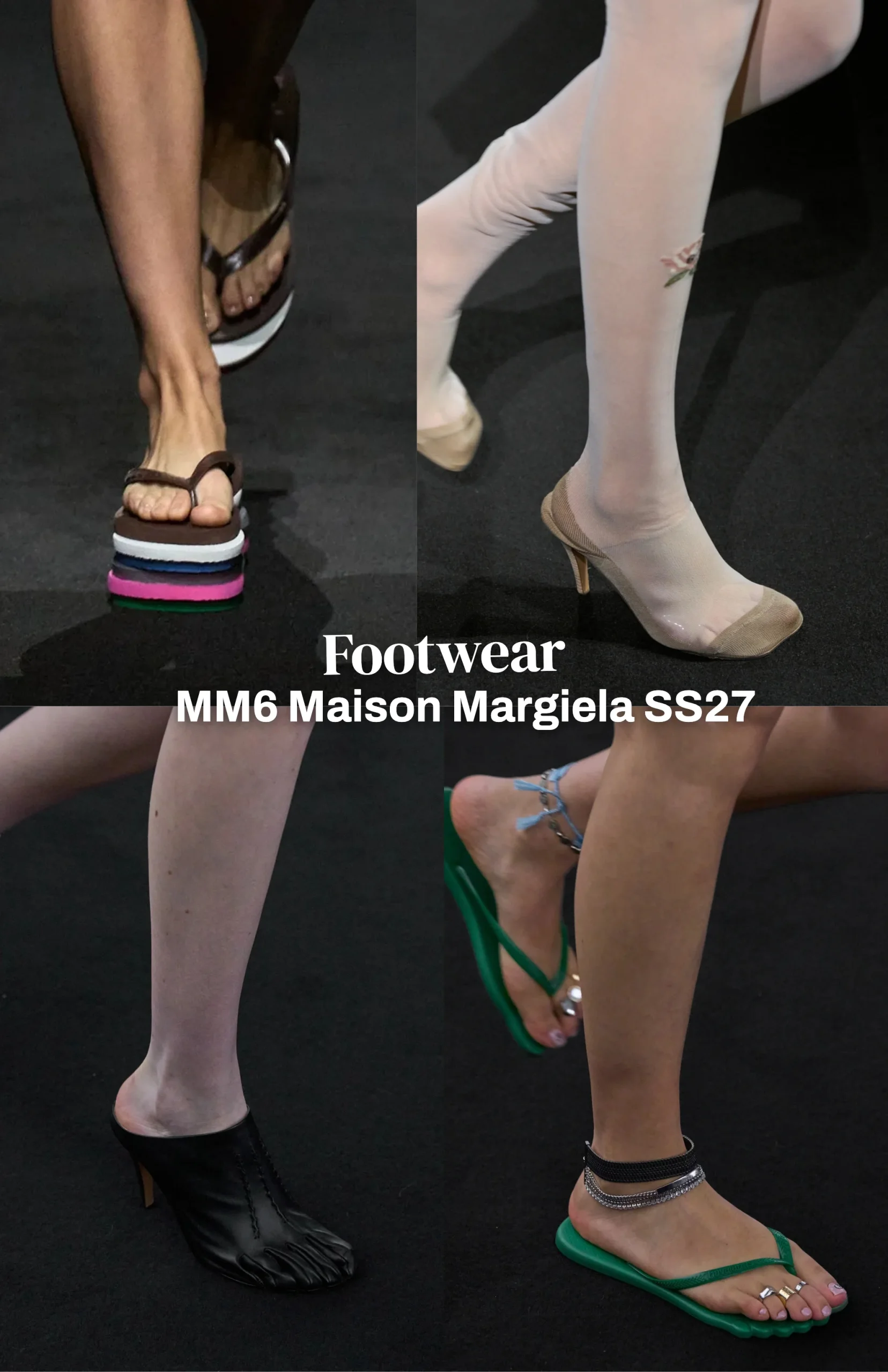
The classic flip-flop was redesigned with six toe openings, turning MM6’s signature number into a literal construction detail. Another version stacked multiple coloured soles to create a chunky platform.
Elsewhere, footwear became even more experimental. Leather mules separated the toes individually, almost like gloves for the feet, while frayed sandals, stocking-style shoes and loosely worn lace-up boots continued the sense of familiar objects being quietly re-engineered.
Bags Became Softer and Less Formal
The accessory story followed the same approach.
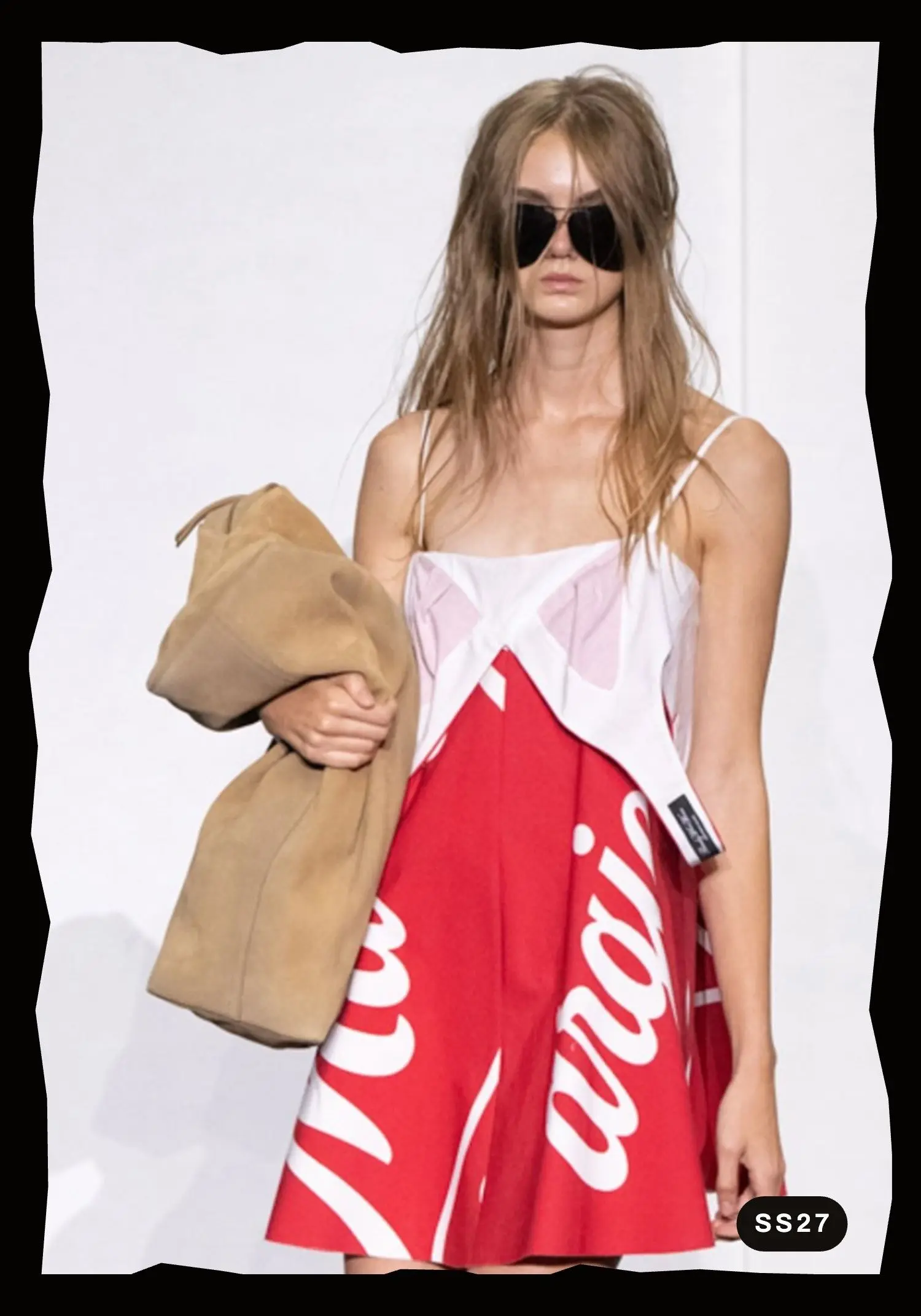
The Soft Bauletto bag was collapsed and folded, reducing the sense of rigid structure and making it feel closer to a garment than a conventional handbag.
It was a subtle but effective move, especially within a collection so focused on rethinking where one category ends and another begins.
A Collection About Use, Not Reinvention
MM6 SS27 worked because it never forced the concept.
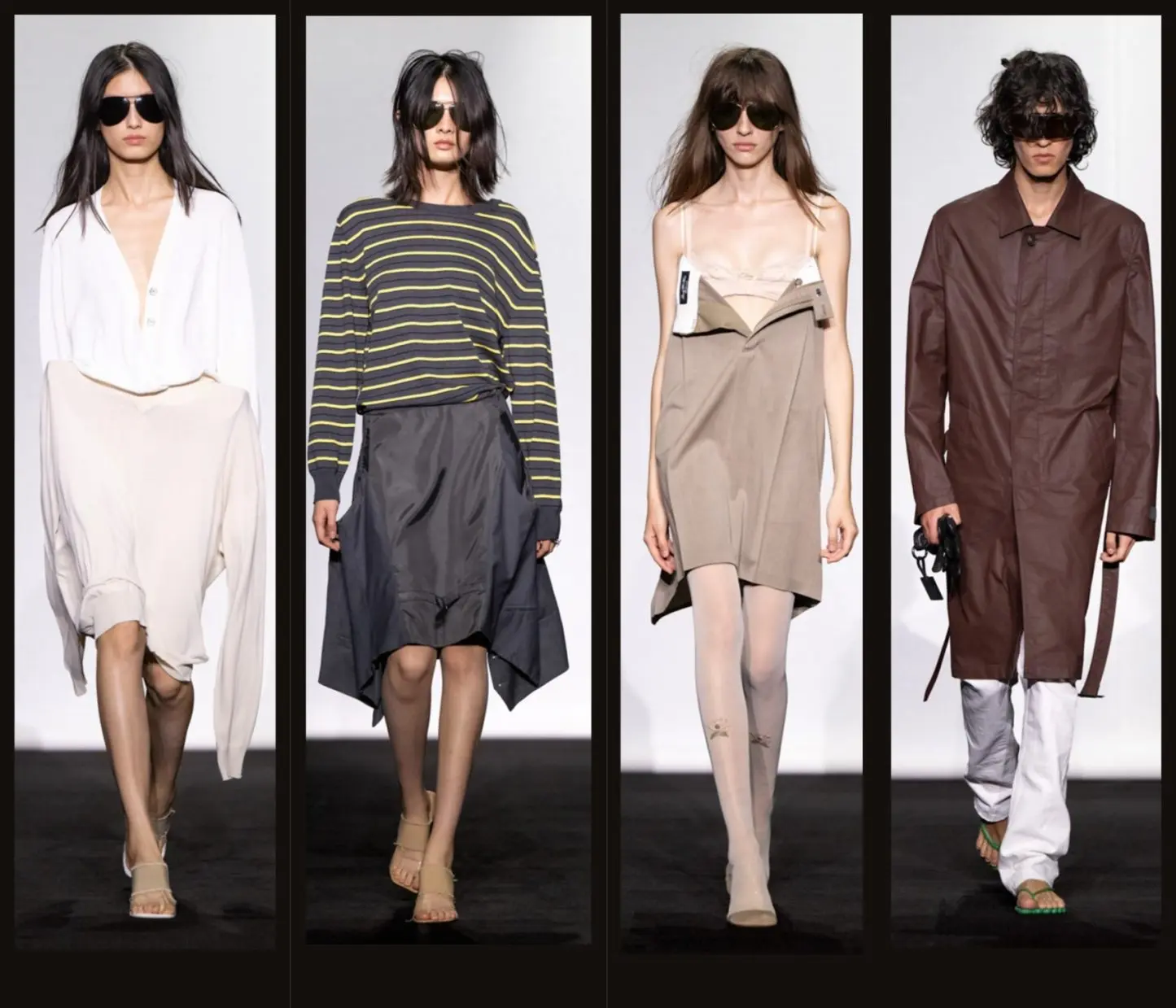
The collection did not try to invent completely new clothes. It looked instead at how existing ones could be worn differently, folded differently or interpreted differently.
A flip-flop could gain an extra toe opening. A sweater could become a skirt. A bag could lose its structure.
That was enough to make the everyday feel unfamiliar again.