
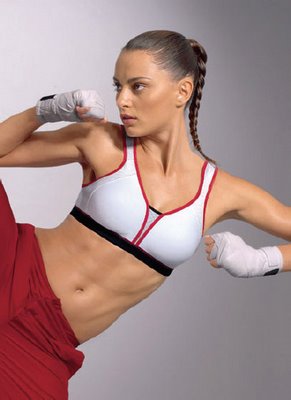
Fitness clothing guide
The benefits that workout may fetch is uncountable and undeniable. No doubts, why people are getting more fascinated towards gym, yoga and other exercises! A healthy body can always sustain a healthy mind and spirit. A simple activity like jogging can help you build-up stamina and prepare you combat your gruelling schedule. An aerobics or a gym class can give you an opportunity to make new friends as well as look good. Yoga is also a handy and easy way to remain fit and healthy and that to with minimum possible investment. Well, all you need to invest is time and devotion. Laughter class is one of the most novel and innovative way to keep your mind, heart, spirit and body happy and healthy. These simple activities may help you take your mind off from the rat race and rejuvenate, strengthen and prepare you to face tougher situations, and to love and enjoy your life.
But the key to comfortable exercising lies in wearing comfortable outfits, shoes and other accessories. Always wear the right clothes for the right kind of exercises. The one that you may wear to swim may not be apt for your karate classes. The garment that you are wearing, no matter whatever it is, should provide you unrestricted movement and let your skin breathe. However, this doesn’t mean that you can’t affod to look as sexy as you are. Infact, you can certainly look as sexy as you want to!!! With so much of innovations in the field of fashion, the maket is swarming with a number of designer dresses that are meant solely to be worn while you exercise. By wearing these dresses that are an amalgamation of sceience, technology as well as fashion, you can look your best and feel the best. So, all you fashion freaks, set your spirits high and marvel in the fact that evening parties are not the only occassions to rock the stage with your designer dresses and your killer looks!!
Wearing good clothes may be a motivational factor while you exercise. By wearing good, a women certainly feels really good. An universal fact!! And this is what the designers best understand about you. Their creations may help you wear clothes that complement your body shape as well as retain your feminine style. But remember, the key word remains comfort.
Wear cheerful and playful colors. You need not to stick to those dull beiges, greys, whites, browns, navy blues or blacks. The designers have come out with all possible rainbow hues to eradicate dullness, monotony and boredom from your closets and perhaps your life, while you exercise. So, say yes to all feminine hues like pinks, lavenders, purples, greens and yellows. And say yes to life!!
Comfort, Fit, Fabric, Design, Quality, Season, Garment care
Fitness Apparels
Sports bras, Crop tops, Support vests, Cami Tops,T-shirts/Casual tees, Racer-back tops, Spaghetti tops, Hoodies, Shorts, Sweat pants
Gym Accessories
Shoes, Socks, Head bands, Sweat bands/Wrist bands, Jewelleries, Gym Bags, Water bottle/ juices
Care for your fitness apparels and accessories
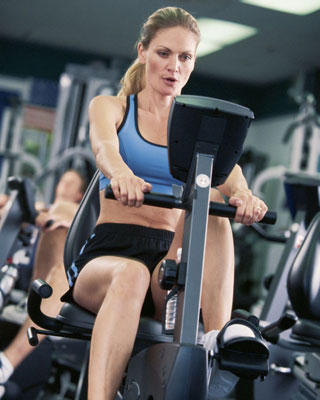
Fitness clothing guide
Comfort matters
Comfort is the key in determining your exercise wears. The garment should feel comfortable enough even while you wear it for some longer hours. While purchasing a sexy and smart garment make sure that you are not compromising on comfort. Afterall, how valid will an outfit be if you wearing it might turn out to be a nightmare.
The garment that you wear should not have rough edges that might hurt your skin. For the same matter chech that all the stitches underneath sit in a straight line over you skin and are smooth and comfortable.
All the buttons, hooks and other embellishments involved, though minimal, should feel smooth on your skin. After all, leave the discomfort, it won’t seem aesthetic enough if you time and again rub your hands against the hurting body parts, in public.
Even all the elastics that are incorporated into the design must not be too tight to leave red marks that may give you itching and burning sensation. All tight fitting elastics may also restrict proper blood flow into the veins of your body.
Always, try on as many clothes as you can, especially, while you are opting for a style you have not tried before. Remember, not all style and design may prove to be comfotable to all.
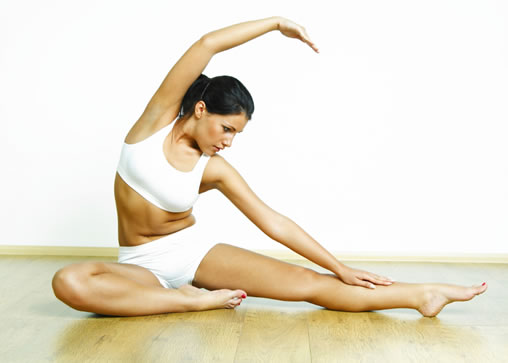
Fit matters
The garment that you wear while you exercise should be of a size that is neither too close to accomodate you nor too loose to fit you.
A looser garment may have extra volume of fabrics that may hinder the movement of your body parts, while you exercise. Similarly, a tight or close fitting garment may not enable unrestricted movement of your limbs and other body parts.
Fit is of great importance as a gym apparel that is too loose may result in falls and slips.
You might find it extremely hard to exercise freely if you wear a garment that is not your size. So wear the size that gives room to your body for free movement of your limbs ad other body parts.
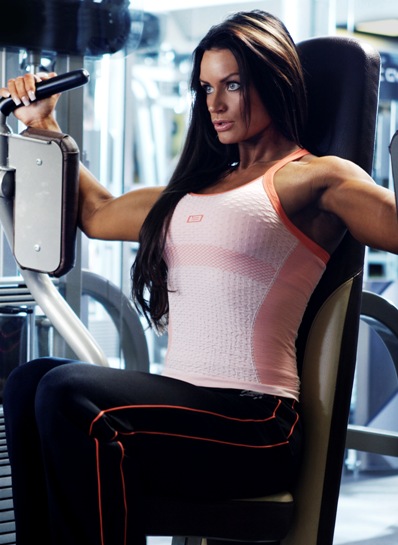
Fabric matters
Fabric plays a key role in determning the comfort level of your garment.
Wear stretch materials that allow free unrestricted movement of your body parts.
Do not wear cottons as they have no stretch property.
Wear lycras or jersies blend with cotton for comfort.
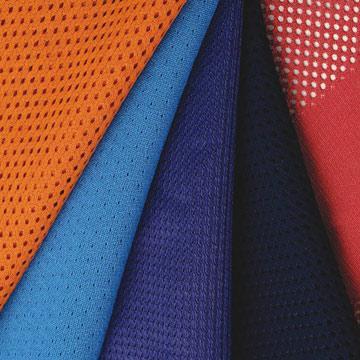
Mesh fabrics are fashionalble as well as highly functional. They are light in weight and they have water wicking properties that make them ideal for exercise wear. They may easily absorb all moisture and sweat and send them off to the environment. This way you can keep your body cool and moisture free.
These high quality fabrics are less prone to chaffing and piling and are easy to wash as compared to other fabrics.
Design matters
While purchasing a designer wear featuring a style that you have not tried before, see to it that the style suits you. This you can do by trying on several dresses.
The sleeves and cut should be comfortable enough and permit free movement of your body parts, while you exercise. Avoid long sleeves. If you wear sleeveless ones, then keep a few short sleeve dresses too as you may not wear a sleeveless one always.
Avoid unnecessary cuts or flares, frills, ruffles, bows etc. The extra volume of fabric is going to be more of a problem than a pleasure.
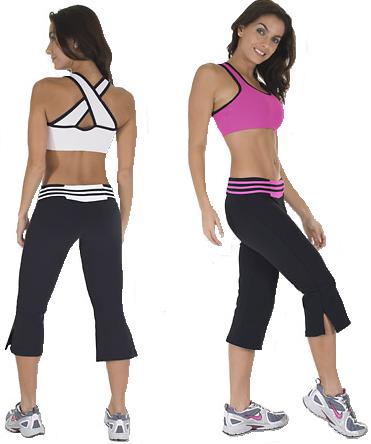
The neckline that is featured on your exercise wear should be comfortable and aesthetic enough while you involve yourself into various activities. The neckline should neither be so wide as to run off your shoulders nor too deep to run down your chest, giving an unsighy look. Also, the neckline should not be too close to yuor neck so as to choke your neck and restrict free circualtion of air underneath.
Avoid all fancy necklines like swetheart neckline, turtle neckline, key hole neckline, etc. Stick to the basics, like the crew neckline, square neckline, scoop neckline, etc.
Quality matters
A good high quality garment might cause a bit strain on your purse but it is always better to have two or three gym wear that are good qulaity than to have a dozens, none of which have a qulaity to make you feel comfortable.
A good quality garment is the one that is made of good fabric, design and makes you feel comfortable.
Season matters
In summers you should go for lighter fabrics in light colours that absorb less heat and help you keep dry and cool.Mesh becomes a popular choice.
In winters you can layer yourself with different pieces so that you can take off or put on the layers as per the temperature of the body in compliance with the environment. The basic colours that are popular in winters are black, greys and dark blues.
Garment care matters
All exercies wear should have easy to wash and easy to dry features. It is a sheer waste to purchase one that needs laundry and dry clean. After all, it’ s a daily wear and not a fancy wear.
It should be a perfect fit. The perfect length of a t-shirt would be that ends around mid hip. You can team it up with carpirs, track pants, shorts.