Dressing well at any size is a matter of choosing clothes that work with your shape rather than against it. The market now carries a substantial plus size range, so the choice is genuinely there.
The organizing principle throughout is the same as for any body shape. Identify what you want to show, build the outfit around it, and choose everything else to support that decision.

Fit: nothing loose and nothing tight
This is the most important section in the guide, because both common mistakes pull in opposite directions.
Choose
- Clothes in your actual size. Correct fit is what makes an outfit work.
- Softly tailored pieces, which define the shape rather than obscuring it.
- Corsets and bustiers, worn under or over, which pull the waist in and highlight the bust and hips.
- A thick waistband at the stomach, which makes the midsection read leaner.
Avoid
- Shapeless clothes. The belief that baggy clothing conceals is simply wrong, and loose clothes are consistently unflattering. Extra fabric reads as extra volume.
- Tight clothes. A garment a size too small clings and highlights exactly what it is being asked to conceal.
- Pleats. The additional fabric adds volume.

Colors
Choose
- Dark, deep colors, which absorb light and produce a slimming effect. Navy, black, chocolate brown, maroon, purple and green all work.
- Monochrome outfits, which do not break the silhouette horizontally and therefore read as longer and slimmer. Accessorize with color to avoid dullness.
- Black, the most reliable of all.
- Earthy tones.
Avoid
- Stretch and shiny materials.
- Vibrant, bright colors such as sunshine yellow and plum red, which enlarge whatever they cover.
- Light colors such as beige, white and gray over problem areas. They can be worn elsewhere on the body without difficulty.

Fabrics
Thin fabrics such as denim, cotton and cotton jersey all work, provided the garment is your size.
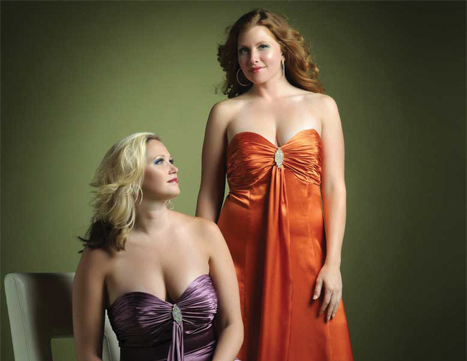
Avoid shiny fabrics including silk and satin, which reflect light and enlarge. Shiny fabrics in dark loud colors are the worst combination, since they reflect while also drawing attention.

Prints and patterns
Choose
- Vertical lines, which elongate and slim.
- Asymmetrical stripes, which do the same while adding apparent height.
- Pinstripes and top-stitching, which create verticals without an obvious pattern.
- Small, delicate prints such as tiny flowers or polka dots.
Avoid
- Horizontal lines, which add width directly.
- Bold, heavy patterns, which add bulk.

Jeans and trousers
Choose
- An easy, relaxed fit in your size.
- Long trousers, which elongate the line.
- Wide-legged cuts, the single best trouser shape here.
- Moderate low-rise, which lengthens the upper torso.
- Straight classic cuts.
- Flat fronts or side zippers.
- Detail and embellishment below the knee, which draws attention away from hips and thighs.
- Mixed colors, such as a light top with dark trousers, leggings or stockings.
Avoid
- Tapered jeans, which narrow at the ankle and make the ankle look heavier.
- Cropped trousers.
- High-rise jeans, which draw attention to the stomach.
- Extremely low-rise hipsters.
- French pleats.
- Flares and umbrella hems.
- Large embellished pockets at the hips and buttocks.
- Skin-tight leggings and anything that clings across the thighs, buttocks or stomach.


Skirts
- Knee-length, if you want to show your legs.
- Narrower and longer rather than wide and short.
- A-line shapes, without umbrella flares or large volume.
Avoid pleats, miniskirts, mid-calf hemlines, wrap-arounds fastened with safety pins, and high-rise skirts, which make the stomach bulge.

Shirts
- Small shoulder pads, which balance the shoulders against wider hips.
- Thin vertical stripes and pinstripes.
- Straight classic cuts in jackets and shirts.
- Flat fronts.

Tops
Choose
- Long tops reaching the hips, which cover the area most people want covered.
- Raglan sleeves, whose diagonal seam softens the shoulder line.
- Loose-fit tops with slight pleats that narrow to hug the waist and hips.
Avoid
- Bulky, oversized shirts.
- Clingy fabrics across the top, particularly if you are top-heavy.
- Frills, ruffles and tiers, all of which add volume.
- Low-cut and sleeveless shirts, which make the arms and shoulders read heavier.
- Straps, cropped and cut-off tops.
- Belly-baring shirts, tube tops, halters and open-back tops.


Necklines
Wide and open necklines balance width and lengthen the upper body.
- Open collar shirts.
- Scoop necklines.
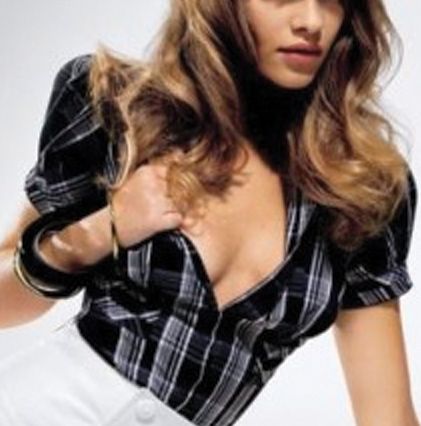
- Plunging necklines.
- V-necklines, which lengthen the upper half.
Avoid high collars and closed necklines, including turtle and boat necks, both of which widen the shoulders and add apparent volume.


Corsets and bustiers
A corset molds the torso and enhances the bust, and it can be worn as an undergarment to smooth the waist and buttocks or as an outer garment in its own right. The effect is a genuine hourglass line, and plus size corsets are built to give the extra support required.
One important caution
Corsets are designed to fit tightly, but do not buy one that fits too tightly. An over-tight corset restricts blood circulation and makes breathing difficult, and no visual result is worth that.
Take your time finding the right one. They come in a wide range of designs, colors and sizes, from plain versions for wearing underneath to elaborate silk or satin pieces with lacing and clasps for evening.
Accessories
Handbags
Medium and large bags balance against your proportions. Avoid small bags, which look out of scale.
Belts
Narrow, simple and slim. Avoid large embellished buckles and, above all, wide broad belts, which enlarge rather than define.
Footwear
Pointed heels lengthen the foot, and open-toed heels achieve the same. If you have wide feet, do not buy narrow shoes. They will be uncomfortable and no styling advantage compensates for that.
Make-up
Soft make-up in lighter shades, with the eyes highlighted using mascara and eyeliner. Avoid dark, flashy make-up.
The part that matters most
Carry yourself with confidence whatever you are wearing. Identify your best features and build around them, lift an outfit with bright accessories, and smile. That advice sounds like filler and it is not: presence changes how any outfit reads, and it is the one variable entirely within your control.
Frequently asked questions
Do baggy clothes hide weight?
No. This is the single most common mistake. Extra fabric reads as extra volume, and loose clothing is consistently unflattering.
Which trouser shape works best?
Wide-legged, in a moderate low rise. Tapered and cropped cuts both work against you.
Why avoid shiny fabrics?
They reflect light, which enlarges whatever they cover. Matte cotton, denim and jersey do the opposite.
Should a corset feel tight?
Firm, not constricting. A corset that restricts your breathing or circulation is the wrong size.
What size belt should I wear?
Narrow and simple. Wide belts enlarge the waist rather than defining it.
See also body types, the necklines guide and how to appear taller.