
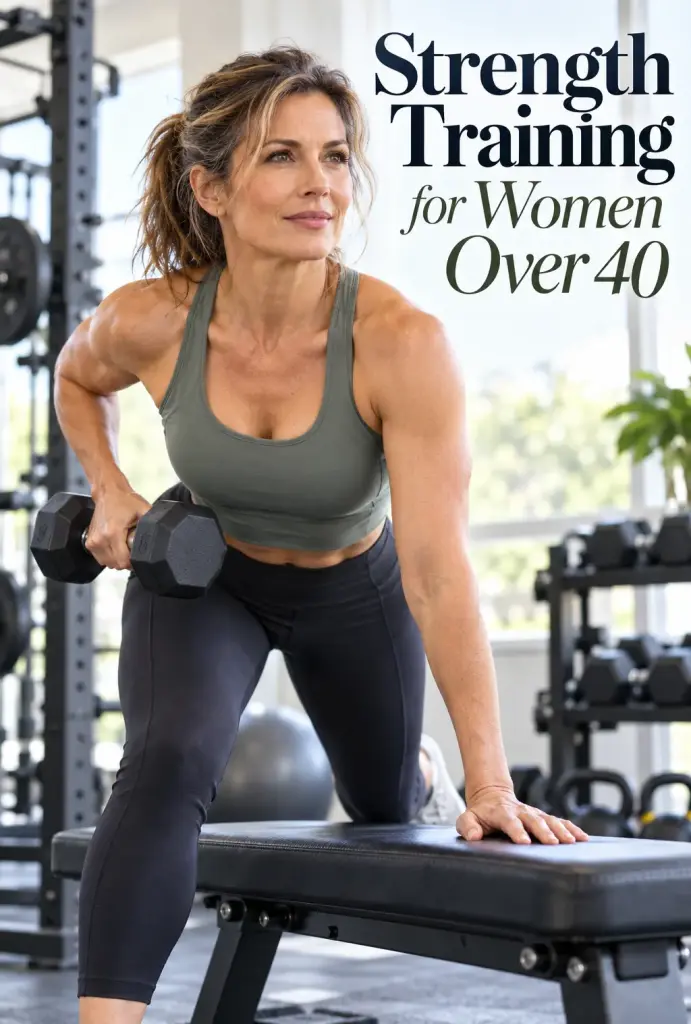
Strength training is not just for athletes or people who want to lift heavy weights. It can help women over 40 build strength for everyday life, support healthy bones and maintain muscle as the body changes with age.
You can start at home with bodyweight exercises or use resistance bands and light weights. The key is to begin at a comfortable level and build up gradually.
Why Strength Training Matters After 40
As we age, we can gradually lose muscle and bone strength. Strength training makes muscles work against resistance, helping them stay strong. It can also support balance, posture and everyday activities such as carrying groceries, climbing stairs or getting up from a chair.
Weight bearing and resistance exercises also support bone health. Exercise cannot prevent every bone condition, but regular movement can help strengthen bones and improve balance. If you have osteoporosis or low bone density, ask a healthcare professional which exercises are suitable for you.
How to Begin
Start with two short sessions a week (under guidance), leaving a rest day between them. Public health guidelines recommend muscle strengthening activities at least two days a week for adults. You can work out at home using a sturdy chair, resistance bands or light dumbbells.
Begin with movements that use several muscle groups:
- Sit to stand: Sit on a sturdy chair, then stand up slowly and sit back down.
- Wall push ups: Place your hands on a wall and bend your elbows to bring your chest closer, then push back.
- Glute bridges: Lie on your back with knees bent, lift your hips gently and lower them.
- Resistance band rows: Pull a band towards your body while keeping your back upright.
- Calf raises: Hold a chair for support and rise onto your toes, then lower slowly.
Choose a number of repetitions that feels manageable while still making your muscles work. Focus on steady movement and good form. When the exercises begin to feel easy, add a few repetitions or use slightly more resistance.
Make It Part of Your Week
A simple routine is easier to maintain than an ambitious one. You could exercise on Tuesday and Friday, for example. Walking, dancing or cycling can complement strength training, but they do not replace exercises that challenge your muscles.
Warm up with a few minutes of easy movement before you begin. Give yourself time to rest between sessions, and stop if you feel sharp pain, dizziness or unusual shortness of breath.
Get Support When You Need It
If you have a health condition, joint pain, a recent injury or have not exercised for a long time, speak with a doctor or qualified trainer before starting. They can help you choose safe movements and adapt exercises to your needs.
You do not need a gym or heavy weights to begin. Start small, practise consistently and choose exercises you feel comfortable repeating. Over time, strength training can help you feel more capable in workouts and in everyday life.