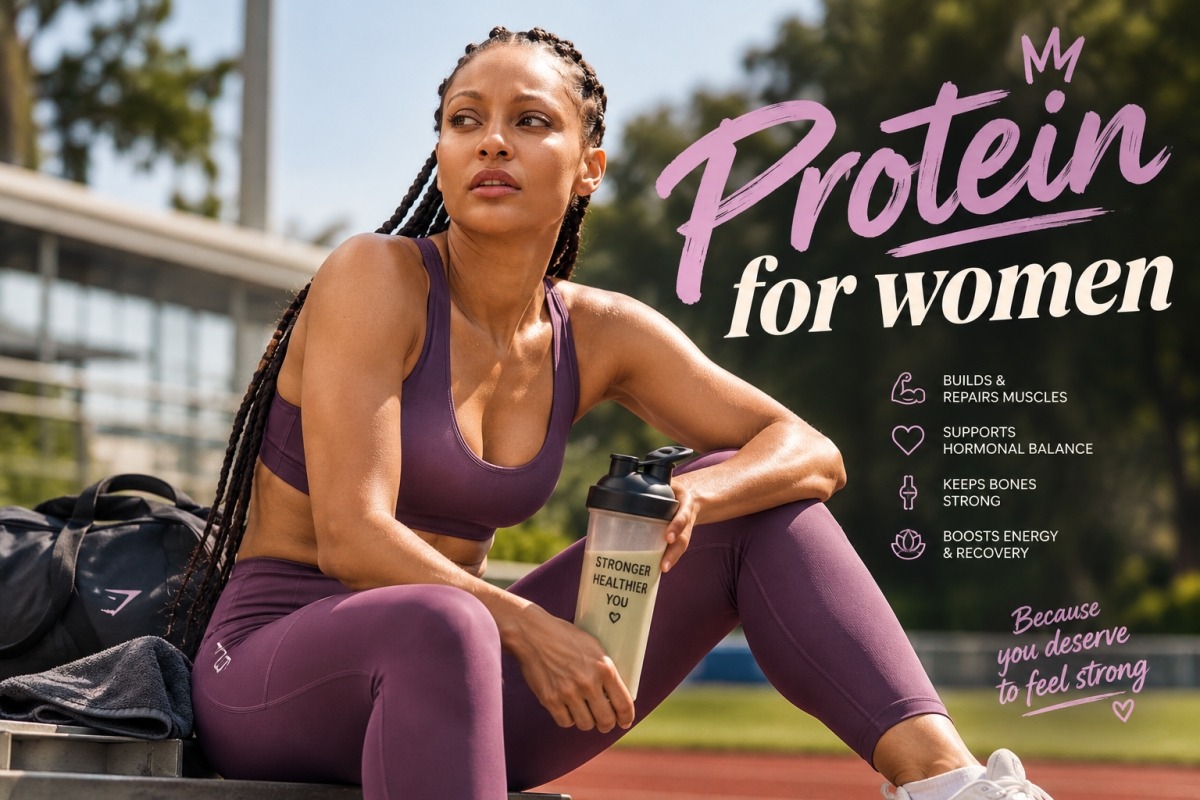
Protein has become one of the most talked about nutrients in health and fitness, but for women it is about much more than building muscle.
Protein helps maintain muscles, bones, skin and tissues. It is involved in making enzymes, hormones and antibodies, and it plays an important role in recovery after exercise. It can also help meals feel more satisfying, which is one reason protein often comes up in conversations around weight management.
Yet many women are still unsure about how much protein they actually need. Is 50 grams enough? Do you need more after 40? Should you eat extra protein if you are trying to lose weight? And does protein powder become necessary if you exercise?
The answer depends on your age, body weight, activity level and overall health.
Why Protein Is So Important for Women
Protein is made from amino acids, which the body uses as building blocks.
Every day, your body is constantly breaking down and rebuilding tissues. Protein provides the amino acids needed for this process. Some amino acids can be made by the body, while others, known as essential amino acids, have to come from food.
Protein is particularly important for maintaining muscle.
Women naturally begin to lose some muscle mass as they get older, especially when physical activity decreases. Hormonal changes around menopause can make maintaining muscle and bone health even more important.
Eating enough protein, particularly when combined with strength training, can help support muscle maintenance and healthy ageing.
Protein is also useful during weight loss. When calories are reduced, the body can lose both fat and muscle. Adequate protein, along with resistance exercise, can help preserve more lean tissue while losing weight.
How Much Protein Do Women Need Every Day?
The standard Recommended Dietary Allowance for healthy adults is around 0.8 grams of protein per kilogram of body weight per day.
This should be viewed as a basic level intended to meet the needs of most healthy adults rather than necessarily the ideal amount for every lifestyle.
For example, a woman weighing 60 kg would have a basic protein requirement of around:
60 × 0.8 = 48 grams of protein per day
A woman weighing 70 kg would need around:
70 × 0.8 = 56 grams per day
Individual needs can be higher depending on exercise, age, weight loss goals, pregnancy, recovery from illness and other factors.
Women who train regularly or participate in sports often need considerably more protein. The US National Institutes of Health notes that athletes may need roughly 1.1 to 2.0 grams of protein per kilogram of body weight per day depending on training demands.
This is why there is no single protein number that works for every woman.
Protein Needs for a Sedentary Woman
A woman who does little structured exercise can generally use the basic guideline of around 0.8 grams per kilogram as a starting point.
That means a 55 kg woman would need roughly 44 grams per day, while a 65 kg woman would need about 52 grams.
But simply reaching a number is not the whole story.
Protein should ideally come from nutritious foods that also provide vitamins, minerals, fibre and healthy fats. Eggs, milk, yogurt, lentils, beans, soy, fish, chicken, nuts and seeds can all contribute.
A varied diet also makes it easier to get the full range of amino acids your body needs.
How Much Protein Do Active Women Need?
Protein requirements increase when you exercise regularly because training creates additional demand for muscle repair and recovery.
Women who do moderate exercise several times a week may often benefit from roughly 1.2 to 1.6 grams of protein per kilogram of body weight per day, depending on their training intensity, calorie intake and goals.
For a 60 kg woman, this would equal approximately 72 to 96 grams of protein each day.
Someone who performs intensive strength training or competitive sport may require more.
Protein does not build muscle by itself, however.
Strength training provides the stimulus that tells your body to adapt and build stronger muscle. Protein provides the raw material needed for that repair and growth.
The combination is much more useful than simply adding large amounts of protein to a sedentary lifestyle.
Protein for Women Trying to Lose Weight
Protein can be particularly helpful when losing weight because it tends to make meals more filling.
A breakfast containing eggs, Greek yogurt or paneer, for example, may keep you satisfied longer than a breakfast made mainly from refined carbohydrates.
Protein also requires more energy to digest than carbohydrates or fat and, more importantly, helps protect lean muscle while you are eating fewer calories.
Preserving muscle matters because the goal of healthy weight loss should generally be to lose excess body fat while maintaining as much muscle as possible.
Women who are dieting and exercising may therefore benefit from protein intake above the basic minimum.
This does not mean that eating unlimited protein automatically produces faster weight loss. Total calorie intake still matters.
Adding protein shakes, bars and high calorie protein foods on top of your regular diet can actually increase total calorie intake if you are not paying attention.
The most useful approach is usually to make protein a meaningful part of each meal rather than simply adding more food.
Protein for Women Who Want to Build Muscle
If your goal is muscle gain, protein becomes even more important.
Resistance training creates small amounts of stress within muscle tissue. During recovery, your body repairs and adapts that tissue, gradually making it stronger.
Adequate protein supports this process.
Rather than eating almost all your protein at dinner, it may be more practical to spread your intake across the day.
For example, a woman aiming for around 90 grams could have approximately 25 grams at breakfast, 25 grams at lunch, 15 grams from snacks and 25 grams at dinner.
The exact pattern does not need to be perfect. Your total daily intake and consistent training matter more than obsessing over exact meal timing.
Protein Becomes More Important After 40
Protein deserves more attention as women enter their 40s and beyond.
Muscle mass gradually declines with age, particularly when people are physically inactive. This age related muscle loss can eventually affect strength, balance, metabolism and independence.
Women may also experience changes in body composition during the years surrounding menopause.
This is why maintaining muscle through resistance exercise and adequate nutrition becomes increasingly important in midlife.
Women over 40 do not automatically need an extreme high protein diet. But relying on a small amount of protein at dinner while eating very little protein during the rest of the day may become less useful as you get older.
Regular protein rich meals combined with strength training provide a much stronger foundation.
Protein After Menopause
After menopause, maintaining muscle and bone becomes an important part of healthy ageing.
Research and expert recommendations for older and postmenopausal women have suggested protein intakes around 1.0 to 1.2 grams per kilogram per day, particularly alongside regular physical activity.
One expert consensus on postmenopausal women suggested approximately 1.0 to 1.2 grams per kilogram daily, with around 20 to 25 grams of high quality protein at main meals.
A 65 kg woman using this range would consume approximately 65 to 78 grams per day.
Strength training becomes particularly valuable at this stage because protein and resistance exercise work together to support muscle strength.
Protein should also be seen as part of a wider approach to bone health that includes calcium, vitamin D, physical activity and adequate overall nutrition.
Protein Needs After 60
Protein needs can become even more important later in life because the body may not respond to dietary protein quite as efficiently as it did at a younger age.
This is sometimes referred to as anabolic resistance.
Research groups studying healthy older adults commonly suggest around 1.0 to 1.2 grams of protein per kilogram per day, with higher amounts sometimes appropriate for physically active older adults or those recovering from illness.
Maintaining adequate protein can help support muscle strength and everyday physical function.
That does not mean every woman over 60 should start drinking protein shakes. Whole foods can still provide most or all of the protein needed.
The focus should be consistent intake and maintaining physical activity, particularly strength based exercise that is appropriate for the individual’s fitness level.
Should Women Eat Protein at Every Meal?
For many women, this is one of the simplest ways to improve protein intake.
A common pattern is eating very little protein at breakfast, some at lunch and most of the day’s protein at dinner.
For example, breakfast might consist of tea and toast, lunch might be rice with vegetables, and dinner might contain paneer, chicken or dal.
A more balanced approach could include some protein at every meal.
Breakfast might contain eggs, yogurt, milk or paneer. Lunch could include dal, beans, tofu, fish or chicken. Snacks might contain yogurt, roasted chana, nuts or cottage cheese. Dinner can contain another protein rich food.
This makes reaching your daily target easier without making any one meal unusually large.
What Are the Best Protein Foods for Women?
Both animal and plant foods can provide valuable protein.
Eggs are one of the simplest protein rich foods and provide all essential amino acids.
Milk, curd, Greek yogurt and paneer can provide protein along with calcium. Greek yogurt tends to contain more protein than regular yogurt, although the exact amount varies by product.
Chicken and fish are concentrated sources of high quality protein and can make it easy to reach higher protein targets.
For vegetarians, dals, beans, chickpeas, soy products, tofu, paneer, dairy, nuts and seeds can all contribute.
Soy is particularly useful because it provides a high quality plant protein.
Traditional Indian diets already contain many excellent protein foods. The issue is sometimes portion size.
A small bowl of dal may contribute useful protein, but it may not provide as much as someone assumes. Combining dal with curd, paneer, soy, beans or another protein source can help increase the total amount in a meal.
Can Vegetarian Women Get Enough Protein?
Absolutely.
A vegetarian diet can provide sufficient protein when it includes enough protein rich foods throughout the day.
Dairy products such as milk, yogurt and paneer can make this easier for women who consume dairy.
Plant based diets can rely more heavily on lentils, chickpeas, kidney beans, soybeans, tofu, tempeh, peas, nuts and seeds.
Plant foods do not all contain identical amounts of every essential amino acid, but you do not need to combine specific proteins at every single meal.
Eating a varied diet containing different plant protein sources throughout the day can provide the essential amino acids your body requires. The NIH also notes that different plant foods contribute different essential amino acids, so variety is important.
How Much Protein Is There in Common Foods?
Protein content varies by portion size and preparation, but knowing approximate amounts can make planning much easier.
- Two eggs provide roughly 12 to 14 grams of protein.
- A cup of milk generally provides around 8 grams.
- A serving of Greek yogurt can provide roughly 15 to 20 grams depending on the product.
- Around 100 grams of paneer may provide approximately 18 to 20 grams.
- A cup of cooked lentils can provide roughly 15 to 18 grams.
- A cup of cooked chickpeas can provide around 14 to 15 grams.
- Around 100 grams of cooked chicken breast may provide close to 30 grams.
- Fish commonly provides around 20 to 25 grams per 100 gram serving, depending on the variety.
- Tofu can provide roughly 10 to 15 grams per 100 grams depending on its firmness and preparation.
- Food labels are useful because actual values can vary considerably between brands and products.
Is Dal Enough Protein?
Dal is nutritious and absolutely counts as a protein food, but calling dal a complete solution to your protein needs can be misleading.
The amount matters. Someone eating one small serving of dal each day may still fall short of her protein requirement, particularly if the rest of her diet contains little dairy, soy, eggs, fish or meat.
Dal also provides carbohydrates and fibre, which is a good thing, but it means that consuming very large quantities simply to increase protein may also add a significant amount of calories.
Rather than abandoning dal, build around it.
Dal with curd, paneer, tofu or another protein source can create a more protein rich meal while keeping the diet varied.
Is Paneer a Good Protein Source?
Paneer can be an excellent protein source, especially for vegetarian women.
It is rich in high quality dairy protein and also provides calcium. The only consideration is that full fat paneer can be relatively calorie dense because it contains both protein and fat.
That does not make it unhealthy. Portion size simply becomes more important when someone is trying to reduce calories.
Low fat paneer can provide another option for women who want more protein for fewer calories.
Are Protein Powders Necessary for Women?
No.
Protein powder is a convenience food, not a requirement. If you can meet your protein needs through regular food, there is no nutritional rule saying you need a shake.
Protein powders become useful when someone’s requirements are high or when everyday life makes it difficult to prepare enough protein rich meals.
A woman training before work, for example, may find a whey or plant protein shake convenient after exercise.
Someone who needs only 55 grams of protein and already eats eggs, dairy, lentils and other protein foods may have no need for one.
The important question is not, “Should women take protein powder?” It is, “Am I consistently getting enough protein from my overall diet?”
Whey Protein for Women
Whey is a milk derived protein and contains all of the essential amino acids.
It is absorbed relatively quickly and is popular among people who strength train because it is convenient and provides a concentrated amount of protein.
Whey protein is not a male supplement. Protein does not behave differently because a woman consumes it. Women can use whey in exactly the same way as men when it fits their diet and goals.
Women who are lactose sensitive may tolerate whey isolate better than some whey concentrates because it generally contains less lactose, although individual tolerance varies.
People with a milk allergy should avoid whey.
Plant Protein Powder for Women
Women following a vegan diet or avoiding dairy can use plant based protein powders.
Common options include pea, soy, rice and blends of several plant proteins.
Soy is naturally a complete protein, while blended products often combine different plant proteins to create a broader amino acid profile.
When choosing any protein powder, look beyond the protein number. Check the ingredient list, serving size, added sugars and whether the product contains unnecessary stimulants or large blends of supplements you did not intend to take.
Is Protein Good for Women’s Skin and Hair?
Hair and skin contain proteins, so adequate dietary protein is part of maintaining normal tissue health.
Hair is largely made from keratin, a type of protein. However, eating extra protein does not automatically make hair grow faster or transform your skin.
Hair loss can have many causes including genetics, iron deficiency, thyroid problems, stress, hormonal changes and inadequate calorie intake.
If someone is genuinely protein deficient, improving protein intake may help overall nutrition. But if protein intake is already adequate, adding more protein is unlikely to solve every hair or skin concern.
Nutrition works as a whole. Iron, zinc, essential fats, vitamins and sufficient calories are also important.
Can Eating Protein Make Women Bulky?
This is one of the most persistent myths around protein and strength training. Eating protein does not suddenly create large muscles.
Significant muscle growth requires progressive resistance training, sufficient calories, time and consistent effort.
Women generally have much lower levels of testosterone than men, which also influences how quickly large amounts of muscle are gained.
For most women, strength training and adequate protein are much more likely to create a stronger, firmer body than an unexpectedly bulky one.
Protein Before or After Exercise?
You do not need to rush for a protein shake the moment your final exercise ends.
The body remains responsive to protein for much longer than a few minutes after training.
Having a protein rich meal or snack reasonably close to your workout can support recovery, but total protein intake across the day is more important than hitting an extremely narrow timing window.
If you train in the morning before breakfast, having protein with breakfast afterward makes sense. If you exercise after work and then eat a protein rich dinner, that may already cover your needs.
Fitness nutrition should fit into your day rather than making your entire day revolve around nutrient timing.
Is Too Much Protein Bad for You?
More is not always better.
Once protein needs are being comfortably met, extremely high intakes are unlikely to produce endlessly increasing benefits.
Very protein heavy diets can also push other valuable foods such as fruit, vegetables, whole grains and healthy fats out of the diet.
The bigger concern applies to people with certain medical conditions.
Women with kidney disease may need individualized protein recommendations. Expert guidance for older adults specifically notes that people with severe kidney disease who are not on dialysis may require protein restriction rather than higher intake.
Anyone with kidney disease or another condition affecting protein metabolism should therefore discuss protein targets with a doctor or registered dietitian rather than following general fitness advice.
Protein and Pregnancy
Protein needs increase during pregnancy because the mother’s body is supporting the growth of new maternal and fetal tissues.
Pregnancy is not the time to follow aggressive high protein diets or rely heavily on supplements without medical guidance.
A balanced diet containing foods such as dairy, eggs, pulses, beans, tofu, fish, poultry, nuts and seeds can contribute protein along with the many other nutrients needed during pregnancy.
Protein supplements should be discussed with a healthcare professional, particularly when they contain added herbs, vitamins or performance ingredients.
What Does a High Protein Day Actually Look Like?
Eating more protein does not have to mean chicken breast and protein shakes all day.
- A woman might start her morning with eggs and yogurt.
- Lunch could contain dal with paneer or chicken alongside vegetables and rice or roti.
- An afternoon snack could include Greek yogurt, milk, roasted chana or nuts.
- Dinner could contain fish, tofu, soy, paneer, chicken or another lentil based dish.
Without dramatically changing the way she eats, she may already move from a low protein diet to one that comfortably provides 70 to 90 grams.
Small changes often work better than suddenly trying to follow an extreme high protein diet.
Protein Quality Matters, But So Does the Whole Diet
It is easy to become so focused on protein grams that food quality gets forgotten.
A healthy diet still needs vegetables, fruit, whole grains, healthy fats, fibre and micronutrients.
A processed protein bar containing a long ingredient list is not automatically a better choice than a bowl of dal and curd simply because the packaging says “20 grams protein.”
Protein should improve the diet rather than take over the diet.
Whole and minimally processed foods can provide protein along with many other nutrients your body needs.
How to Know If You Are Eating Enough Protein
You do not have to track your food forever. Tracking for a few typical days can be useful if you genuinely have no idea how much protein you consume.
Look at the portions you normally eat, check food labels where appropriate and calculate an approximate daily total.
You may discover that you already get enough. Or you may find that breakfast and lunch contain almost no meaningful source of protein.
That information is more useful than automatically buying supplements.
Once you understand where your protein comes from, maintaining a balanced intake becomes much easier.
The Bottom Line
Protein deserves a place in every woman’s diet, whether she exercises regularly or not.
For many healthy adult women, around 0.8 grams per kilogram of body weight represents a basic daily requirement. Active women, women trying to preserve muscle while losing weight and women getting older may benefit from higher amounts depending on their individual situation.
The most useful approach is not to chase the highest possible protein number.
Eat protein regularly through the day, choose a variety of nutritious sources and combine good nutrition with strength training and an active lifestyle.
For women entering their 40s, 50s and beyond, this becomes even more valuable. Maintaining muscle is not simply about appearance. It supports strength, movement and independence as you age.
And protein does not need to be complicated.
Eggs, dal, curd, paneer, soy, beans, fish, chicken, nuts and seeds can all contribute. Protein powder can fill a gap when necessary, but food can comfortably do most of the work.
The goal is simply to give your body enough protein to support the life you want to live.