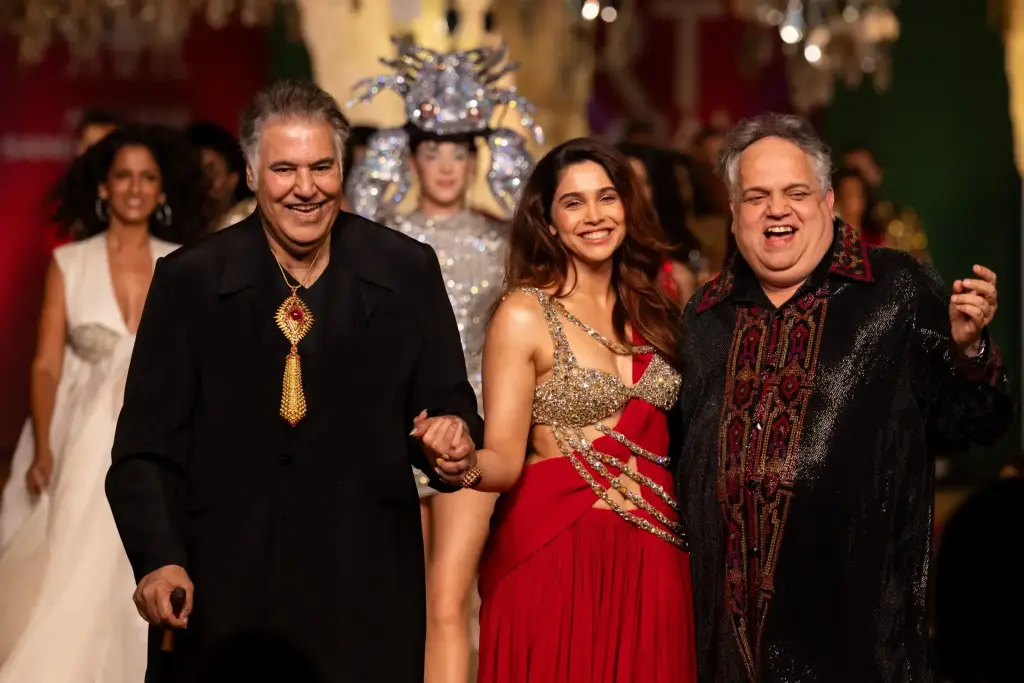
Abu Jani and Sandeep Khosla transformed Mumbai’s Mahalaxmi Racecourse into a glittering celebration of fashion, art and music on November 12, 2026. Their presentation, Disco Inferno, revisited the exuberant glamour of the 1970s and 1980s through the designers’ signature Indian craftsmanship and extravagant couture.
The evening brought together more than 100 models and dancers, a specially composed soundtrack, an enormous elephant installation named Rani, and actress Sharvari, who opened and closed the show in two spectacular outfits.
The collection also carried personal significance. Coming shortly after the designers celebrated 40 years in fashion, Disco Inferno was as much a tribute to their creative journey as it was a contemporary collection.
1. The theme: Disco Inferno
The concept took inspiration from two distinct but closely connected worlds: the exuberant disco culture of the West and the flamboyant musical glamour of Indian cinema.
Think Studio 54, mirrored dance floors, glittering eveningwear, vibrant colours, synthesiser music and the theatrical glamour of Bollywood’s disco and cabaret years.
But the designers weren’t simply recreating old fashion. They reinterpreted the period through Indian couture techniques, elaborate hand embroidery, unexpected fabric treatments and contemporary silhouettes.
The guiding idea was that dressing up should feel joyful, expressive and wonderfully extravagant.
The designers described the collection as a celebration of memories from their youth, reinvented through their present-day creative perspective.
2. The venue and spectacular elephant installation
The presentation took place at Art Mumbai 2026 at Mahalaxmi Racecourse.
The fashion house’s art and decor division, A Wonder Room, created the environment, using disco balls and dramatic illumination to transform the historic venue into an immersive spectacle.
The most memorable installation was unquestionably Rani, an approximately 20-foot-tall elephant-inspired artwork.
The installation had several layers of meaning:
-
A tribute to Mumbai: Named Rani, meaning queen, it referenced Mumbai’s historic Rani Baug and the city where the designers first met.
-
Traditional craftsmanship: Handworked mirror detailing and gota embellishments celebrated the decorative vocabulary associated with Indian textiles.
-
Disco inspiration: Reflective disco balls brought the sparkle of the dance floor into the sculpture.
-
Cinematic glamour: Its exuberant decoration recalled the elaborate visual world of Indian cinema’s cabaret era.
What made Rani particularly interesting was the combination of an enormous sculptural form with intricate handcrafted surface decoration.
Rather than simply serving as a backdrop, the elephant functioned as an independent artwork and a symbol of the designers’ relationship with Mumbai.
3. The collection: Indian couture meets disco maximalism
The collection was divided into several design stories, including Disco, Origami, Inca, Badla and Modern, alongside fresh interpretations of the house’s established Raj and Greta collections.
Womenswear
The collection balanced traditional Indian embellishment with fluid, contemporary shapes.
Key design elements included:
-
Silhouettes: Kaftans, bustiers, open jackets, inventive sari drapes and relaxed, flowing garments alongside fitted eveningwear.
-
Embellishments: Sequins, Swarovski-style sparkle, stones, beads, cut dana embroidery and intricate handwork.
-
Colours: Neon brights, vivid jewel tones, metallic gold, silver and multicoloured combinations.
-
Textures: Shimmering sequin sheeting, richly embellished fabrics and contrasting surfaces that caught the light as models moved.
Particularly interesting was the evolution of the Raj and Greta collections.
Raj, traditionally associated with luxurious gold and beige tones, took on a much more playful personality through vibrant colours and neon accents.
Greta explored light-catching surfaces through dense sequin sheeting and cut dana embroidery in rich jewel tones.
The result was an exploration of movement and surface decoration, with garments intended to come alive under the changing lights of the runway.
Menswear
The menswear was equally adventurous, moving beyond conventional formal dressing into more experimental territory.
Denim received decorative patchwork treatments, while velvet appliqué, pearls, multicoloured beads, stones and geometric arrangements of stripes and squares added graphic interest.
Black and gold were especially prominent, although the collection also experimented with contrasting colours and unusual textile combinations.
What united both sides of the collection was the designers’ refusal to treat embroidery as merely decoration. The embellishment often defined the visual structure of the garments themselves.
4. Sharvari’s two spectacular showstopper outfits
Actress Sharvari was the show’s central muse, presenting two strikingly different interpretations of the collection.
First look: A walking jewel box
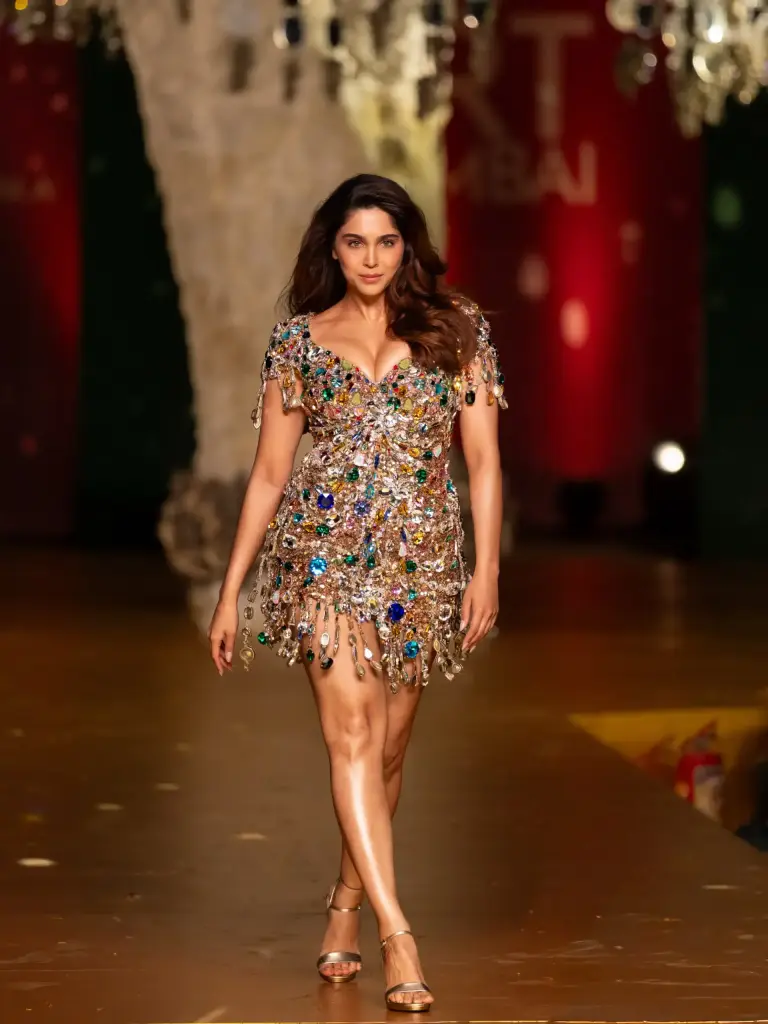
Sharvari’s first look was a fitted mini dress inspired by the house’s Raj collection.
The short creation featured an intricate arrangement of multicoloured Swarovski crystals, oversized stones and metallic embellishments.
Silver formed an important part of the overall composition, punctuated by flashes of emerald green, cobalt blue and other vibrant jewel tones.
The dress featured a plunging neckline and structured short sleeves, while dangling crystal tassels along the sleeves and hem added movement.
These fringed details were particularly effective because they allowed the dress to shimmer dynamically with each step.
Sharvari wore strappy metallic heels and kept additional accessories minimal, letting the densely embellished outfit command attention.
Second look: A dramatic red concept sari
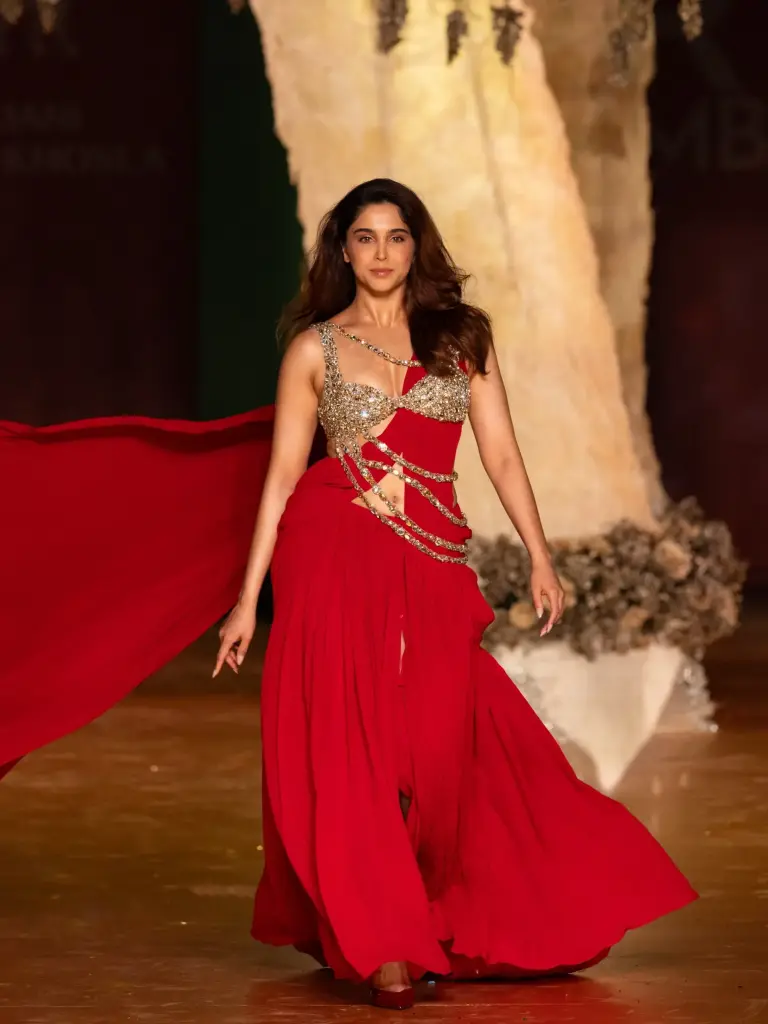
For the finale, Sharvari transformed into a contemporary Indian disco diva.
Her second ensemble featured a flowing crimson drape with a dramatic, sweeping train, paired with a heavily embellished crystal and stone blouse in metallic gold and silver tones.
The upper portion incorporated a sculpted bralette-like silhouette, intricate crystal work, diagonal straps and metallic detailing that wrapped around the waist.
The dramatic red fabric contrasted beautifully with the structured, jewellery-like bodice.
This was a particularly successful example of the designers combining traditional Indian draping with the bold sensuality associated with disco-era fashion.
The fluid red silhouette brought a sense of movement and romance, while the embellished blouse gave the outfit its theatrical glamour.
Hair and makeup
For both looks, Sharvari wore her long hair in loose, voluminous, side-parted waves.
Her makeup was comparatively understated, with softly defined eyes, sculpted eyebrows, warm blush and nude lips.
It was an intelligent styling choice. With the outfits already carrying so much colour, sparkle and texture, heavily embellished hair or exaggerated makeup might have overwhelmed the overall appearance.
5. The music, choreography and runway presentation
Disco Inferno was conceived as an immersive performance rather than a conventional procession of runway models.
More than 100 models and dancers participated in the presentation, with choreographed dance sequences bringing additional energy to the elaborate setting.
Music director Sahil Bhatia, known as Sum of My Music, composed an approximately 35-minute original soundtrack specifically for the show.
Contributors included Isheeta Chakrvarty, Sagarika Joshi, Arshiyaa, Indus, Nayantara, Mridul Luthra, Nigel Rajaratnam and Keshav Dhar.
The original music allowed the designers to build an atmosphere around their own interpretation of disco rather than simply relying on familiar hits from the period.
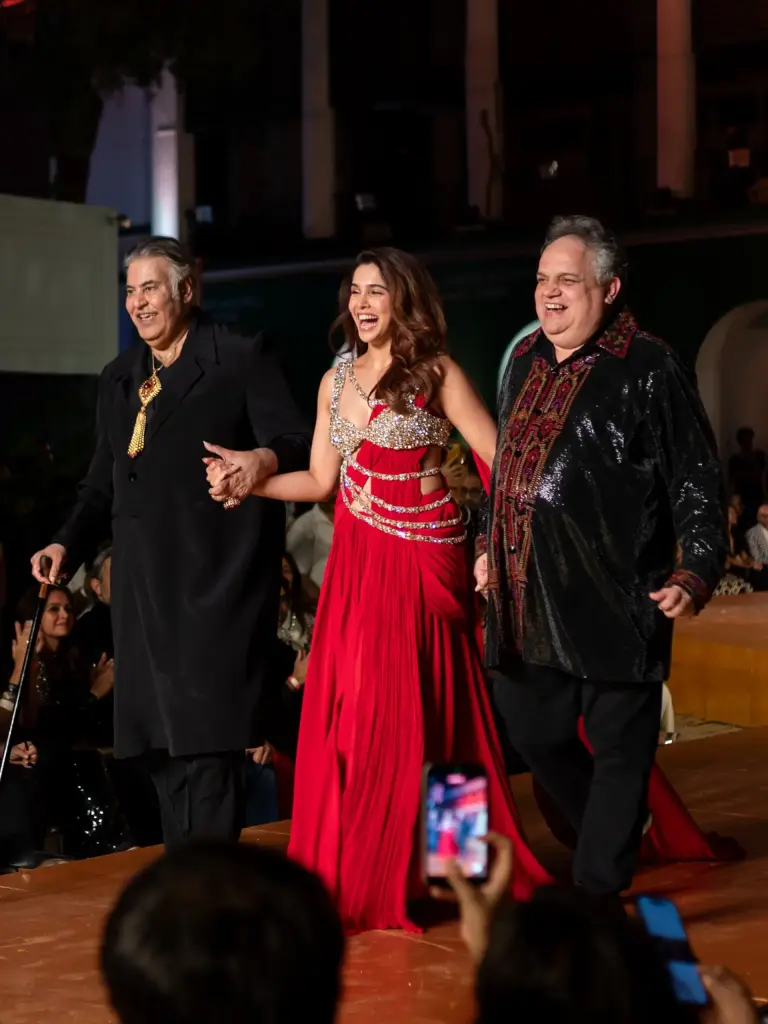
The finale brought Sharvari together with Abu Jani and Sandeep Khosla, with the three celebrating through dance as the show concluded.
6. Celebrity guests and the designers’ milestone year
The event attracted several familiar faces, including Jaya Bachchan, Ananya Birla, Ahsaas Channa and Nataša Stanković.
It also followed an important milestone for Abu Jani and Sandeep Khosla, who celebrated their 40th anniversary in August 2026, alongside the launch of their flagship store Mubarak Baug and their debut jewellery line, Iconic Jewels.
In that context, Disco Inferno felt like a celebration of the designers’ history without becoming a retrospective. Archival design ideas appeared alongside newer experiments with fabric, silhouette and embellishment.
Glamcheck’s collection assessment
What makes Disco Inferno interesting is that the theme could easily have become an exercise in nostalgia. Sequins, disco balls and exaggerated eveningwear are familiar references, but Abu Jani and Sandeep Khosla gave them a recognisably Indian couture identity.
The strongest aspect was the relationship between craftsmanship and movement. The crystal fringe, fluid drapes, shimmering surfaces and dramatic silhouettes were designed to make an impression in motion, something particularly appropriate for a disco-inspired collection.
Sharvari’s two outfits captured that contrast beautifully. The multicoloured mini dress was an exuberant piece of wearable jewellery, while the crimson drape showed how Indian couture could express the same sense of glamour through a very different silhouette.
And then there was Rani. By combining traditional mirror-work and gota with the reflective language of disco, the elephant installation brought the show’s two creative worlds together in one extraordinary centrepiece.
The overall presentation was extravagant, certainly, but it was also deeply personal. Four decades into their career, Abu Jani and Sandeep Khosla are still finding ways to celebrate Indian handcraft through fashion that feels playful, expressive and unabashedly glamorous.