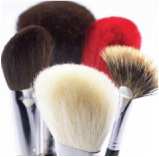
Make-up brushes are specialized tools for blending color and applying it precisely. Design varies by function and by brand, and using the wrong shape is a common reason an application looks patchy when the product itself is fine.
What brushes are made from
Brush heads are made either from natural fibers, most often squirrel, goat or horse hair, or from synthetic fibers.
The practical guidance is to own enough different brushes that you can use them daily rather than washing one between steps.
Eye brushes
Eyebrow brush
Used to work the brow hairs into shape. It is used before plucking, so you can see the actual shape of the brow before removing anything.
Eyeliner brush
For applying liquid or cream eyeliner. It looks similar to a lip brush. Note that pencil eyeliner needs a sponge to smudge it rather than a brush.
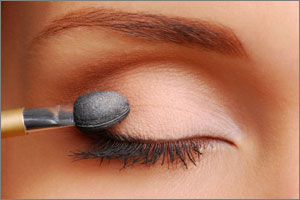
Eyeshadow brush
Gives a more uniform application and a more natural finish than a fingertip or a sponge applicator.
Own two rather than one, keeping one for dark colors and one for light. This is the single most useful habit in eye make-up, because a brush loaded with a dark shade will contaminate every light color you use afterward.
An angled eyeshadow brush is worth adding as well. It is flatter than a regular shadow brush and its angled end reaches into tight spots, which makes it the tool for highlighting the eyelid crease.
Blending brush
For blending multiple eye shades together and softening dramatic edges and fine lines around the eye. Blending is what separates a finished eye from a visibly applied one.
Concealer brush
Tapered to fit the area around the eye and to work into the corners, for concealing under-eye discoloration.
Crease brush
For blending color into the crease of the eye, which is where depth and definition come from.
Face brushes
Foundation brush
Blends foundation smoothly, producing a more even finish by distributing the product equally across the face.
Concealer brush
For applying concealer precisely and blending it into the foundation around it.
Powder brush
The largest brush in a kit, for applying pressed powder, loose powder or bronzer evenly across the whole face.
Blush brush
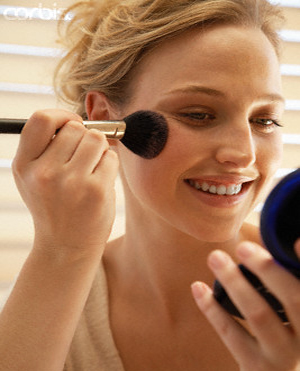
Smaller than a powder brush, for depositing color smoothly and evenly on the cheeks.
Lip brush
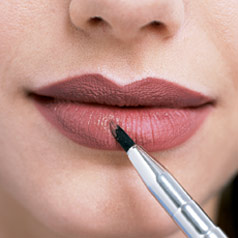
Applies lipstick evenly and precisely. The pointed tip reaches the thinnest part of the lips, which is where applying straight from the bullet goes wrong.
Frequently asked questions
Why do I need two eyeshadow brushes?
To keep dark and light shades separate. A brush used with a dark color will carry it into every light shade afterward.
What is an angled eyeshadow brush for?
Highlighting the eyelid crease. It is flatter than a standard shadow brush and its angle reaches into tight areas.
Should I use a brush or a sponge for pencil eyeliner?
A sponge, to smudge it. Brushes are for liquid and cream liners.
Natural or synthetic bristles?
Both are used. Natural fibers come from squirrel, goat or horse hair; synthetics are the alternative.
See also make-up essentials and tools.