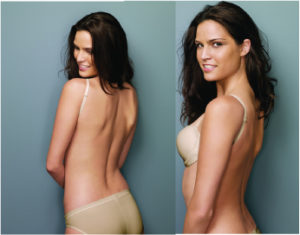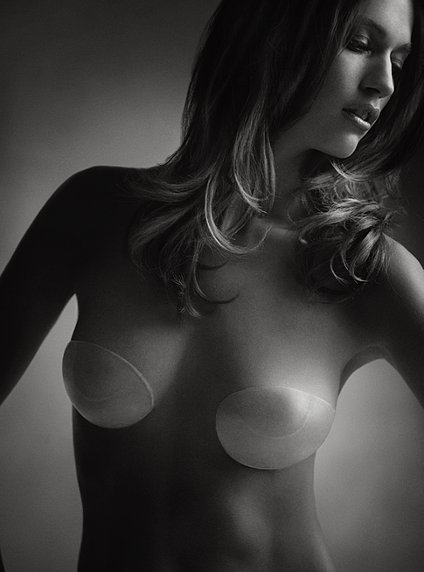
Bras have real effects on comfort and posture, and they attract a large number of health claims that range from well established to entirely unsupported. This guide separates the two, because getting it wrong in either direction is unhelpful.
Bras and back pain
This one is well established and is the clearest health argument for getting fit right. Back pain from bras is most common among women with larger breasts, and an ill-fitting bra genuinely can do more harm than good.
The mechanism is straightforward. When the band and cups do not provide sufficient support, the entire weight of the breasts transfers to the shoulder straps. The straps are not built to carry that load, and the result contributes to back, shoulder and muscle pain, along with headaches.
A cup too small to accommodate you makes the problem worse, because tissue is compressed and displaced rather than supported.
The fix is a firmer band rather than tighter straps. This is covered in detail in a properly fitting bra.

Bras and breast pain
Breast pain, known medically as mastodynia or mastalgia, is frequently experienced during strenuous physical activity or exercise.
A properly fitting sports bra helps considerably here, because it controls movement rather than simply covering. This is one of the clearest practical benefits a bra provides, and it is the reason sports bras are treated as a separate category rather than a style variation.
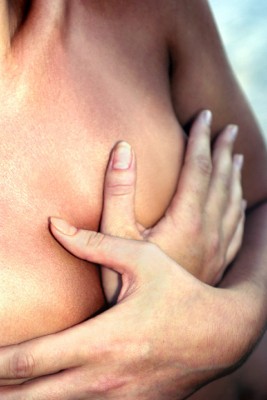
Bras and breast cancer risk
This claim circulates widely and should be treated with caution.
Sidney Ross Singer and Soma Grismaijer proposed that bras which are too tight or wrongly sized exert enough pressure on the breasts and surrounding tissue to restrict the flow of lymph, and that toxins and waste materials consequently remain in the breast rather than being flushed away.
There is no substantial body of research supporting a link between bras and breast cancer. The proposal cannot be stated with confidence, and it should not be treated as established.
What follows from this is modest and sensible regardless of the claim. Wear a bra that fits you properly, and give yourself time without one where you can, including while sleeping. Those are reasonable comfort recommendations on their own terms, and they do not depend on the cancer hypothesis being correct.
Bras and asymmetrical breasts
Almost all women have one breast larger than the other. For some the difference is barely noticeable and for others it is obvious, and both are entirely normal.
The practical sign is that one cup fits well and the other does not.
What to do about it
- Fit the cup to the larger breast, then adjust from there. Fitting to the smaller side compresses the larger one, which causes real discomfort.
- Adjust the straps individually. Tighten the strap on the smaller side slightly more than the other.
- Choose stretch fabric in the cup, which accommodates a difference that a rigid cup cannot.
- Use fiber-fill, light padding or a molded cup. Any of these smooths out a visible size difference.
- Use removable cookies. Padded bras with removable inserts let you take the pad out of one cup only, which evens the appearance directly.
- Try a push-up bra, since these usually carry an easily removable padded section beneath the breast that can be used on one side only.
Bras and sagging
There is no published, authoritative medical literature supporting the claim that bras prevent breasts from sagging. It is worth stating plainly, because the claim is used to sell a great many products.
What actually causes it
Sagging is a natural and largely inevitable process that affects most women at some point. Those with fairly small breasts may be less affected, while larger breasts are more prone to it.
Breasts contain no muscle, only ligaments and connective tissue, which is why they have no support of their own. What determines how much they change over time is a combination of factors, none of which is the wearing of a bra.
- Skin and ligament elasticity, which varies between individuals.
- Genetics.
- Diet and nutrition.
- Age, as a normal process.
- Gravity, which pulls the breasts downward over time and stretches the ligaments.
- Breast involution, the process in which the milk-producing system inside the breast shrinks once it is no longer needed. This occurs mainly after menopause, and after pregnancy in women who do not breastfeed.
A properly nutritious diet supports the elasticity of skin and ligaments, which is the one lever in that list you have meaningful control over.
Frequently asked questions
Can a bra cause back pain?
A badly fitting one can. When the band fails to support, the weight moves to the straps, which contributes to back, shoulder and muscle pain.
Do bras cause breast cancer?
There is no substantial research supporting a link. The hypothesis exists but is not established, and should not be treated as fact.
Which cup should I fit to if my breasts are different sizes?
The larger one, then adjust the strap on the smaller side and use a removable pad if needed.
Do bras prevent sagging?
There is no authoritative medical literature supporting this. Sagging is driven by elasticity, genetics, age, gravity and breast involution.