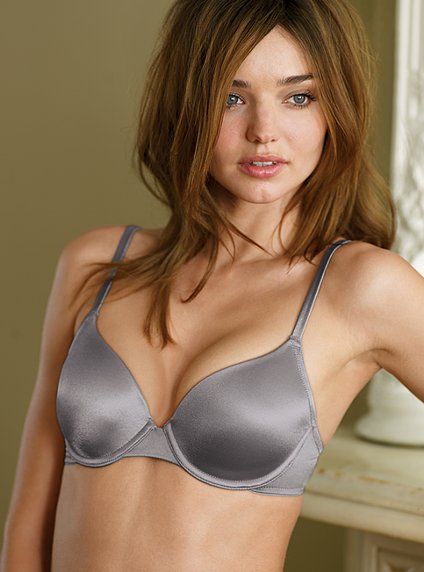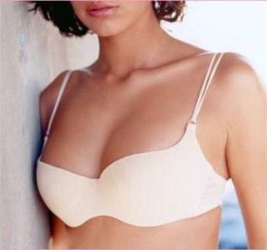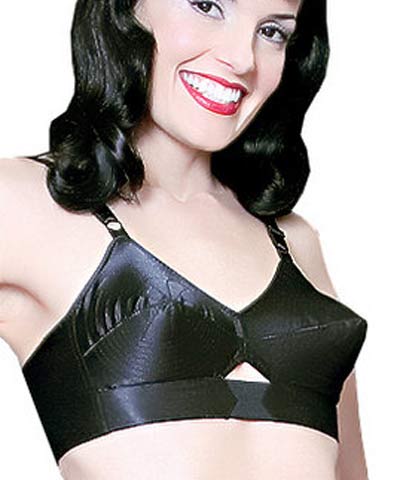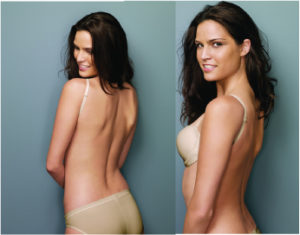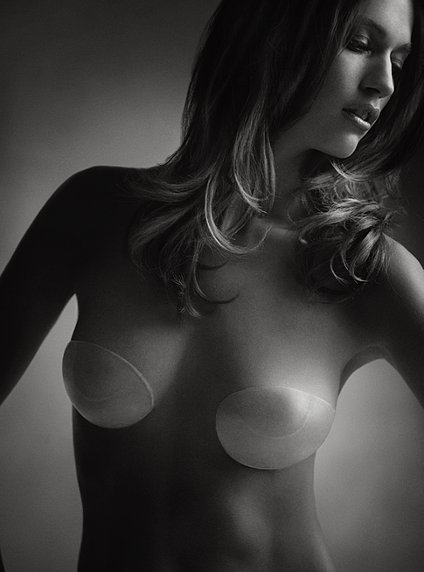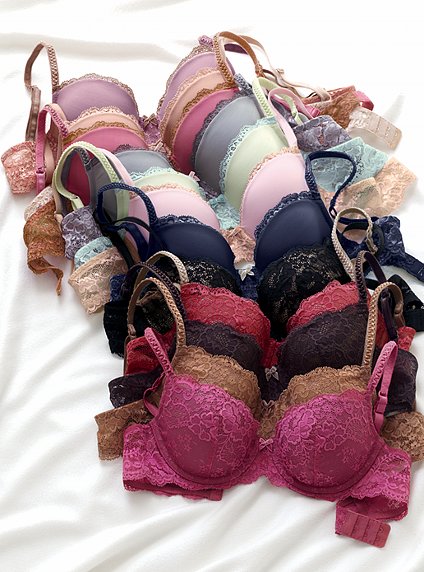
These three represent three different design priorities. The convertible bra is built for flexibility, the cupless bra for display, and the contour bra for a consistent, predictable shape.
Convertible bras
The convertible bra is the most versatile garment in the category, and it is the single most useful bra to own if you wear a variety of necklines.
How they work
The straps detach completely, so the bra functions as a strapless. They can then be reattached at several different points to reconfigure the garment entirely: halter, racer-back, cross-back and one-shoulder are all standard configurations.
Some convertible styles include clear straps, which go essentially unnoticed under a dress and extend the range further.
What it covers
One convertible bra handles strapless tops, halter necklines, racer-backs, cross-backs, one-shoulder cuts, spaghetti straps and low-backed clothing. That is most of the difficult cases in one garment, which is why it earns its place ahead of buying four specialist bras.
The trade-off is that a convertible is rarely the best solution for any single one of those necklines. It is the best compromise across all of them.
Cupless bras
Cupless bras, also called open-cup or portrait bras, consist of a brassiere-like frame with no support cups at all. The frame sits beneath and around the breasts, leaving them exposed.
These are erotic pieces designed to reveal rather than to support, and they are usually worn as part of a set rather than alone, most often paired with a teddy or a harness.
Materials
Cupless bras are made from plastic, cotton and spandex, though leather is the most popular choice. Fishnet versions are also made, producing a see-through effect across the frame itself.
Contour bras
A contour bra has shaped or molded cups that are always padded or lined. The cups hold their shape whether or not the bra is being worn, which is the defining characteristic and the source of every advantage the style has.
Construction
The cups use foam or fiber-filled linings, and underwires are a standard feature, providing the support and coverage the molded shape needs to sit correctly.
What they do
- A rounded, symmetric shape. The cup imposes a consistent contour, so both sides read identically.
- A smooth, sculpted silhouette under clothing, with no seams or edges printing through.
- Symmetry where breasts differ in size. Because the cup holds its own shape, it evens out a natural difference between sides, which is one of the most practical uses of the style.
What they do not do
Contour bras do not add inches to the bust. They shape and smooth rather than enlarge, and that is a genuine distinction from a push-up. If you want volume, this is the wrong category.
Choosing between them
| Style | Built for | Everyday wear |
|---|---|---|
| Convertible | Covering many necklines with one garment | Yes |
| Cupless | Display, worn as part of a set | No |
| Contour | A smooth, symmetric, predictable shape | Yes |
Frequently asked questions
Is a convertible bra as supportive as a standard one?
Close, provided the band fits. The strap configuration changes where the straps sit, not how much the band carries.
What is the difference between a contour and a padded bra?
A contour bra is molded and holds its shape off the body. Padding can be added to any cup without making it a contour cup.
Do contour bras make you look bigger?
No. They round and smooth the shape without adding volume. A push-up is what adds apparent size.
Which bra helps if my breasts are different sizes?
A contour bra, because the molded cup holds its own shape and evens out the difference between sides.
For the whole range see bra categories, and for fitting a difference between sides see bras and your health.