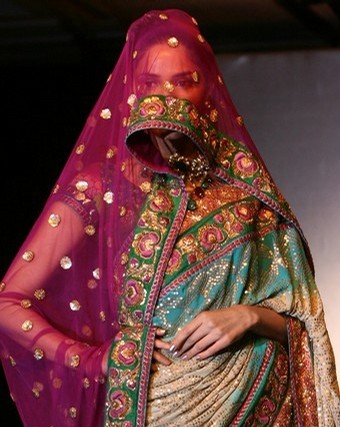
New Delhi hosted the eleventh edition of the Bridal Asia exhibition at the Ashoka hotel, from 9 to 21 September.
Who showed
Fashion designers
- Rina Dhaka
- Siddartha Tytler
- Taandon
- Pallavi Jaikishan
- Prashant Verma
- Nikki Mahajan
- Anjalee and Arjun Kapoor
- Falguni and Shane Peacock
Jewelry designers
- Notandas and Sons
- Falguni Mehta
- Sangeeta Javeri
Accessories and handbags
- Malini Agarwalla
- Sonali Dalwani
The mix is worth noting. A bridal exhibition that carries clothing, jewelry and accessories together reflects how the purchase actually happens, since an Indian bridal trousseau is assembled as a whole rather than piece by piece from separate categories.
The recession-proof argument
Bridal Asia founder Divya Gurwara argued that weddings sit outside the ordinary economic cycle, and that buyers do not hesitate to spend on good design:
I have always believed that wedding is a recession-proof industry.
The scale behind that claim was substantial. The Indian wedding market was estimated at roughly 500 to 600 billion rupees, growing at around 15 percent annually.
Gurwara also pointed to international demand as evidence for the exhibition’s position, noting that the event had attracted many international buyers drawn by the quality of the products on offer.
Why bridal behaves differently
The reasoning behind the recession-proof claim holds up under examination. Weddings are planned long in advance, they are once-in-a-lifetime purchases for the buyer, and they carry social expectation that ordinary discretionary spending does not. Households defer many things in a downturn; a wedding already scheduled is rarely one of them.
Frequently asked questions
Where was Bridal Asia held?
At the Ashoka hotel in New Delhi, from 9 to 21 September.
How large was the Indian wedding market?
Estimated at around 500 to 600 billion rupees at the time, with annual growth near 15 percent.
This report dates from 2009.