Pamela Anderson used one of Venice’s most glamorous nights to talk about something deeply personal.
At the amfAR Gala Venezia 2026, held during the Venice Film Festival, Anderson was honoured with the organisation’s Award of Courage. Instead of giving a light acceptance speech, she spoke openly about the hepatitis C diagnosis that once made her believe her life might be cut short.
Her words turned the evening from a celebrity gala into something much more emotional.
“It Was a Death Sentence”
Anderson recalled being told by her doctor that she might have around 10 years to live after her hepatitis C diagnosis.
She described the news as a “death sentence,” but said the fear was not really about dying. What frightened her most was the thought of what could happen to her children if she was no longer there. At the time, her sons Brandon and Dylan were still young.
That fear, she explained, affected the way she lived and the decisions she made. The diagnosis did not just become a medical issue. It changed how she saw herself.
The Emotional Damage Lasted Longer
One of the strongest parts of Anderson’s speech was that she did not present the story as a simple illness, treatment, recovery journey.
She spoke about the shame and guilt that stayed with her long after the physical illness was treated. She described feeling like “damaged goods,” linking that emotional burden to other painful experiences from her past.
That honesty made the speech feel especially powerful. Being medically cured did not automatically erase the fear or the damage left behind.
She Was Eventually Cured
Anderson lived with hepatitis C for years before newer treatment options became available.
In 2015, she publicly announced that she was hepatitis C free after undergoing treatment. She has previously spoken about how expensive that treatment was, and in Venice she said paying for it took everything she had in the bank.
That experience has also shaped her support for wider access to treatment.
amfAR is best known for its work around HIV and AIDS, but the organisation also supports hepatitis C research, which made Anderson’s speech especially relevant to the evening.
“I’m Not a Victim, I’m a Victor”
Anderson ended her speech on a very different note from where it began.
She spoke about using art and creative work as a way to process what she had been through, and said she no longer sees herself through the language of victimhood.
Her message was simple: “I’m not a victim, I’m a victor.”
It was a strong line, but it worked because the speech had already acknowledged the fear, shame and uncertainty that came before it.
The message was not that everything had been easy. It was that she had survived it.
A Different Kind of Venice Moment
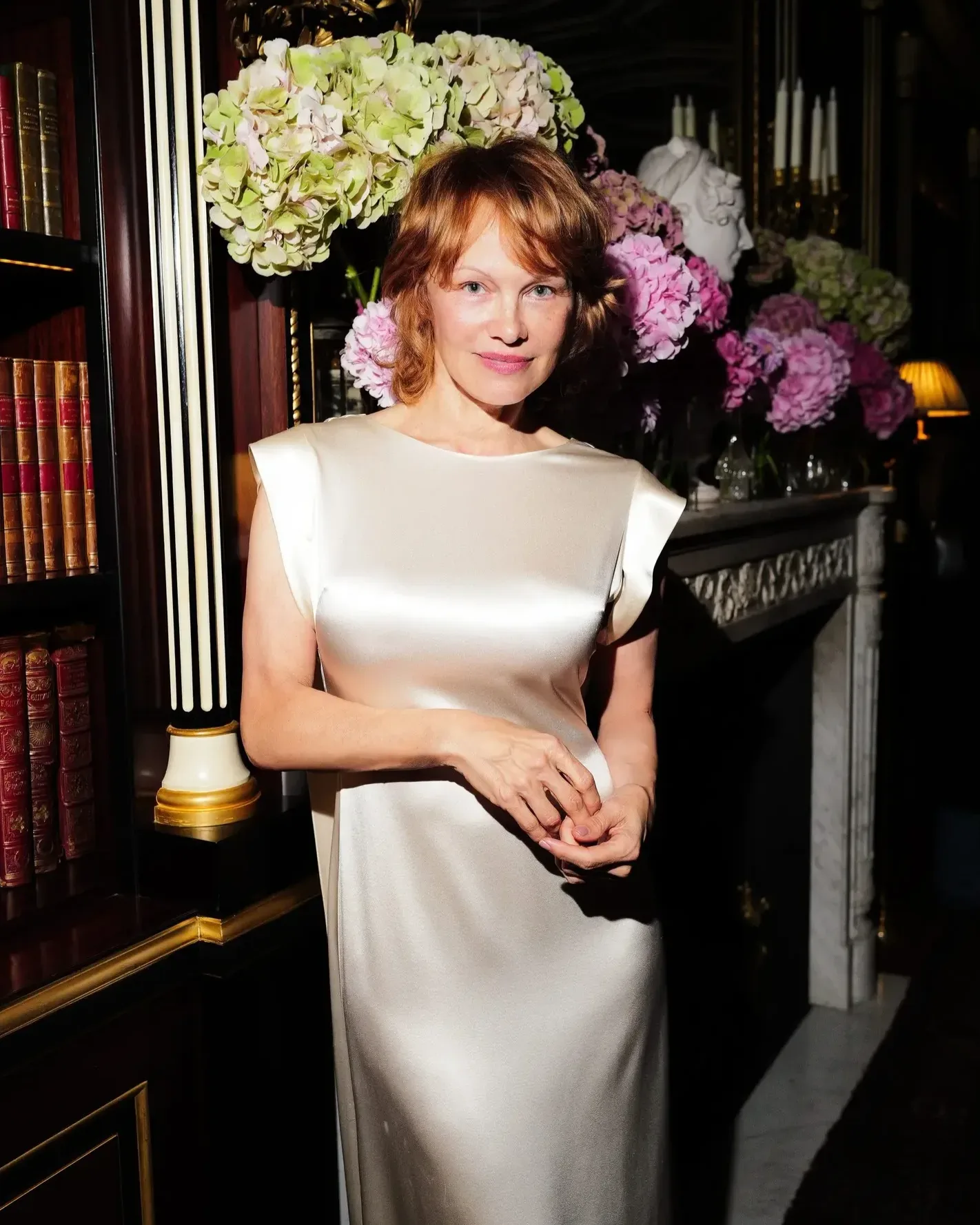
Anderson attended the gala in a custom Calvin Klein Collection clementine satin gown, but the fashion was almost secondary to the speech itself. The look was elegant and striking, yet the real focus of the evening was what she chose to say.
At a festival usually dominated by premieres, couture and red carpet images, Anderson gave the night something much more personal.
She reminded people that even someone whose public image has been built around glamour can carry years of fear behind it.
Why the Speech Matters
Pamela Anderson’s public image has changed dramatically over the years.
For a long time, she was seen mainly through the lens of Baywatch, celebrity culture and tabloid attention. More recently, she has been reclaiming her own story through acting, writing and a much more stripped back public image.
This speech fits into that larger shift. It was not about asking for sympathy.
It was about speaking honestly about what happened, what it cost her emotionally and how she chose to move forward. That is what made the moment feel so strong.
Glamcheck Take
Pamela Anderson’s Venice speech was powerful because it did not turn survival into something neat or inspirational for the sake of it.
She talked about fear. She talked about shame. And then she talked about getting through it.
That final line said everything: not a victim, a victor.