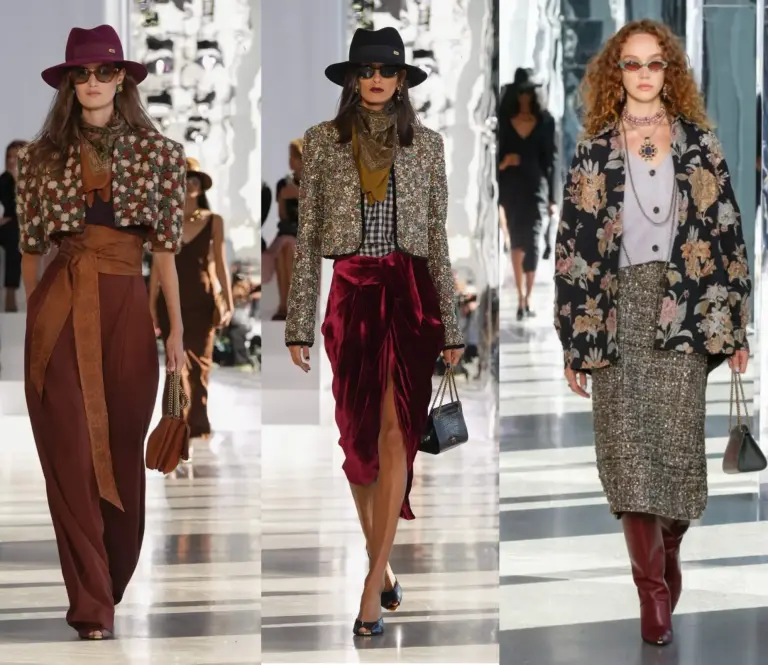
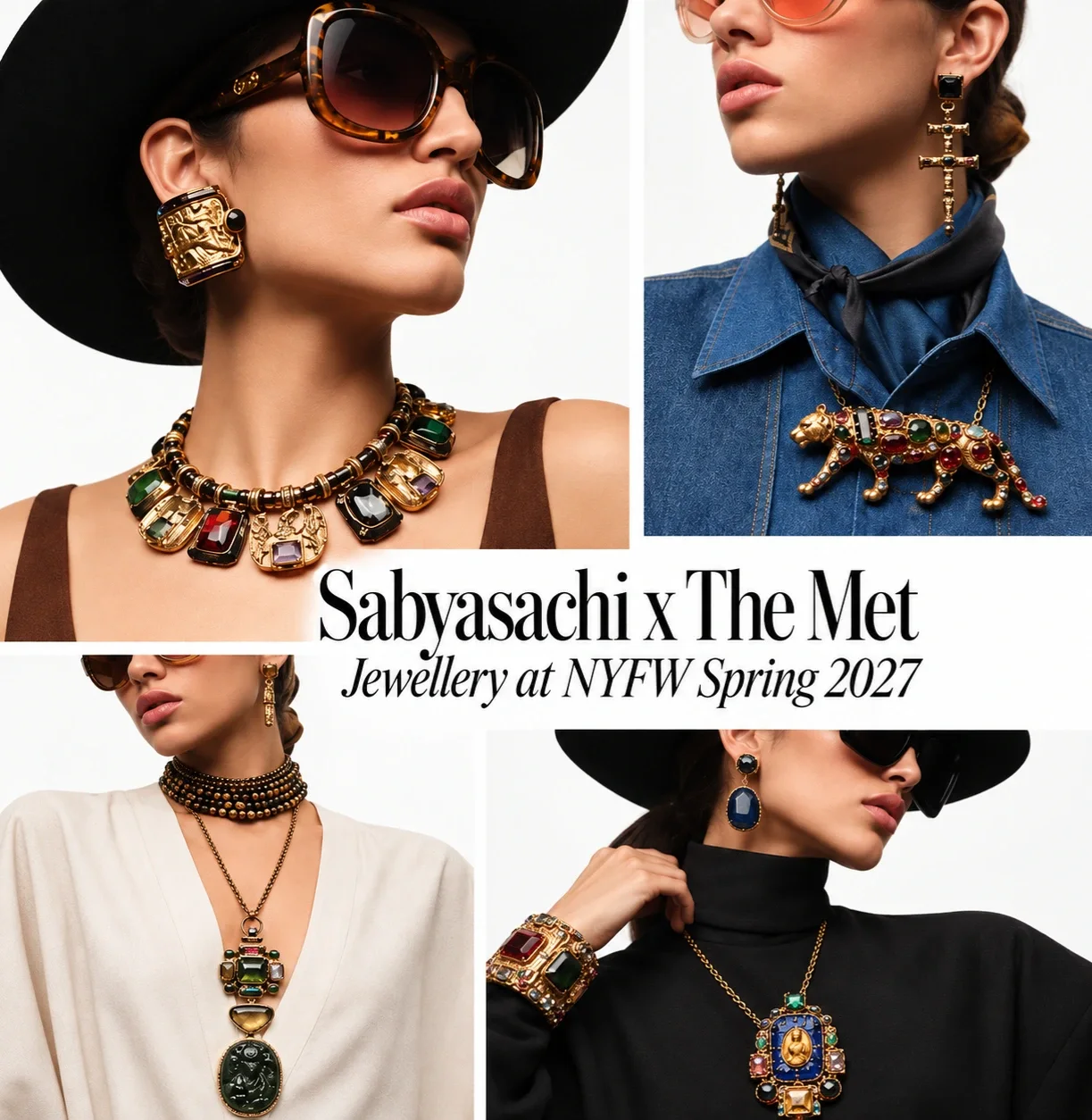
At Sabyasachi’s Spring 2027 New York Fashion Week show, the jewellery did not behave like an accessory.
It had weight, symbolism and personality of its own.
The debut The Met x Sabyasachi high jewellery collaboration is the first chapter of a multiyear partnership with The Metropolitan Museum of Art. Sabyasachi looked across Byzantine, Greek, Roman, Medieval, Islamic and Mughal references within The Met’s collections, then filtered those histories through Indian craftsmanship and his own instinct for colour, scale and excess. The result is not jewellery that simply quotes the past. It feels more like history has been broken apart and rebuilt for the present.
Jewellery That Carries History
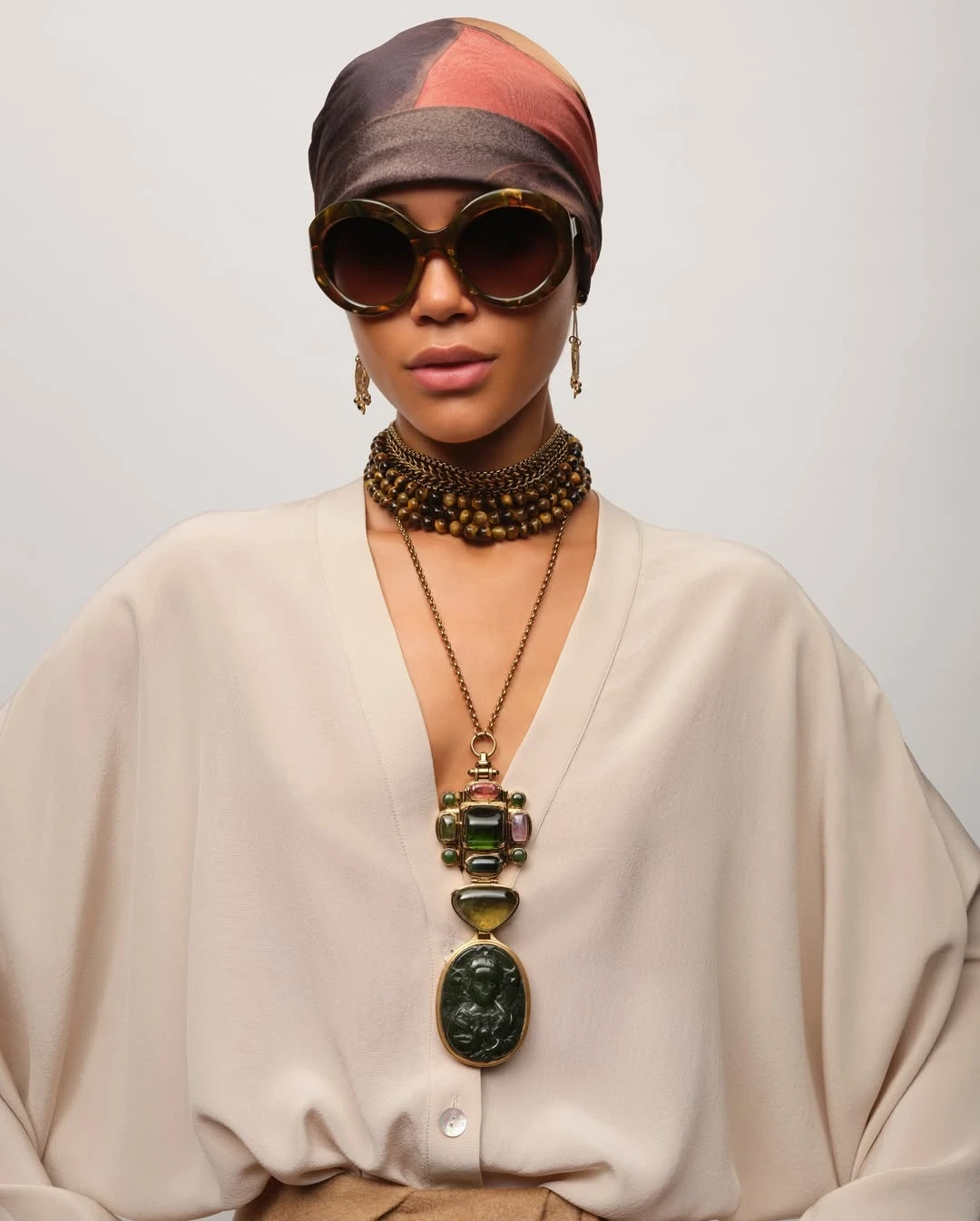
The most interesting thing about these pieces is that they do not feel designed to sit quietly beside the clothes.
They are large, sculptural and deliberately visible. On the runway, that mattered because the clothing often gave them room to breathe. Denim, tailoring, simple blouses, black knits and relaxed shapes created a relatively restrained backdrop. Against those clothes, the jewellery became even more commanding. Sabyasachi himself described the wider collection as a mix of East and West, with precious and everyday elements placed together in a deliberately free spirited way.
A heavy pendant over denim immediately feels different from the same pendant with eveningwear. A large cuff worn with tailoring starts to read almost like armour. A gemstone necklace on a plain brown neckline becomes the entire look.
That styling is where the jewellery becomes modern.
The Pantokrator Pendant: Sacred Scale, Modern Attitude
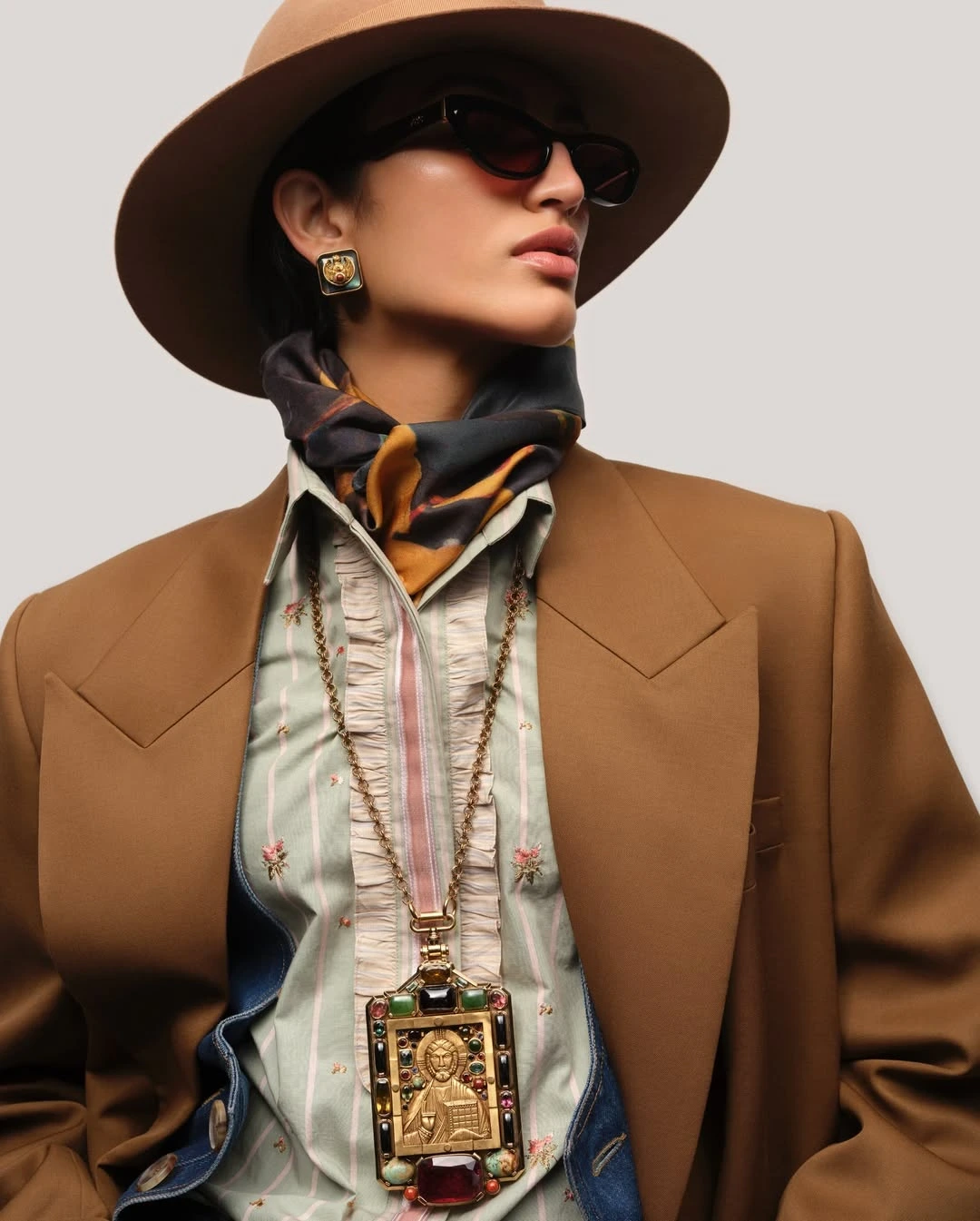
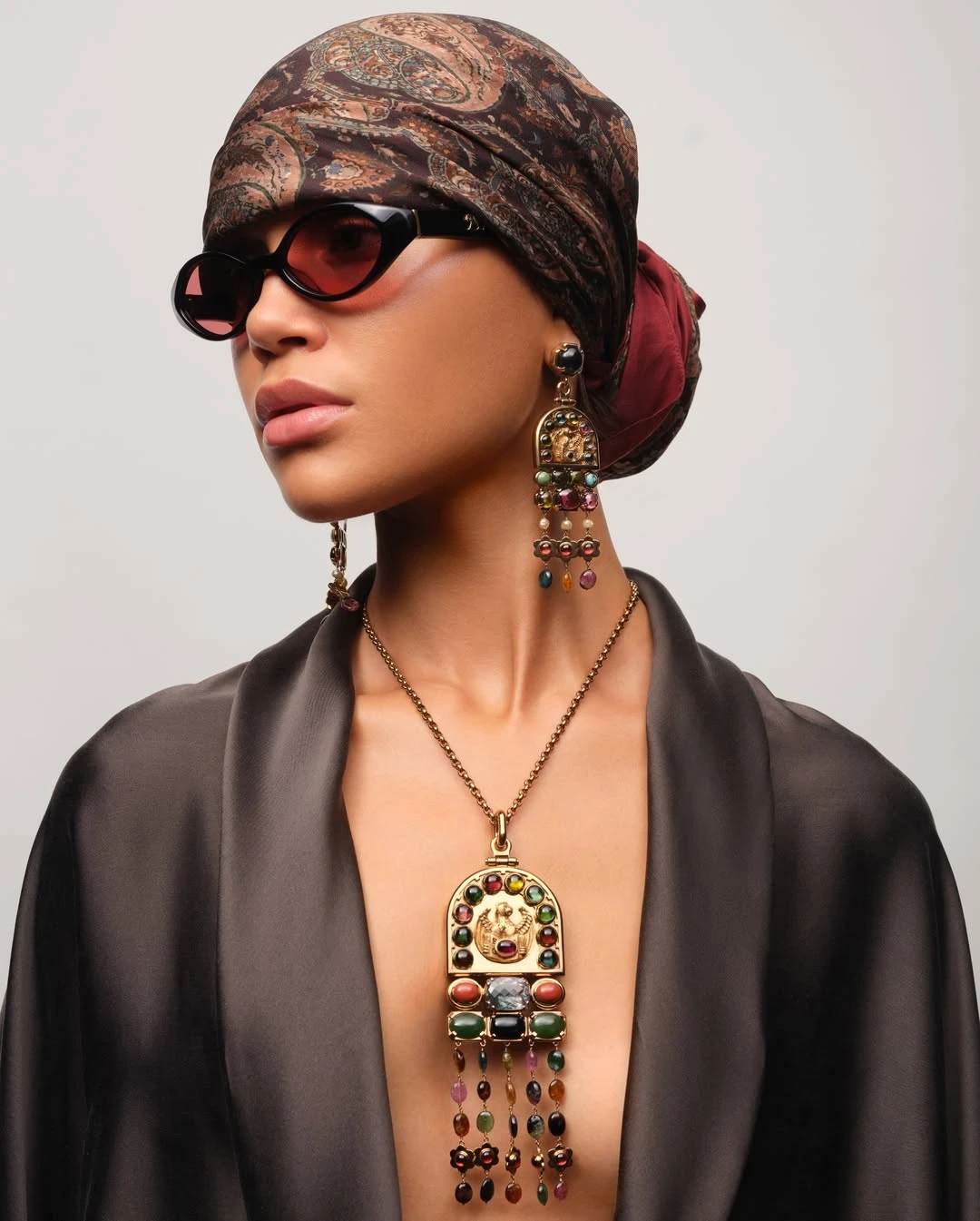
One of the collection’s defining pieces is the Pantokrator Pendant Necklace, inspired by an 11th to 12th century Byzantine ivory of Christ Pantokrator in The Met.
The original object is small in scale but commanding in presence, and Sabyasachi pushes that quality much further. The pendant is crafted in 18 karat and 22 karat gold and framed by a 55.4 carat faceted tourmaline, with sapphire, spinel, garnet, iolite, onyx, jade, jasper and turquoise adding colour and density.
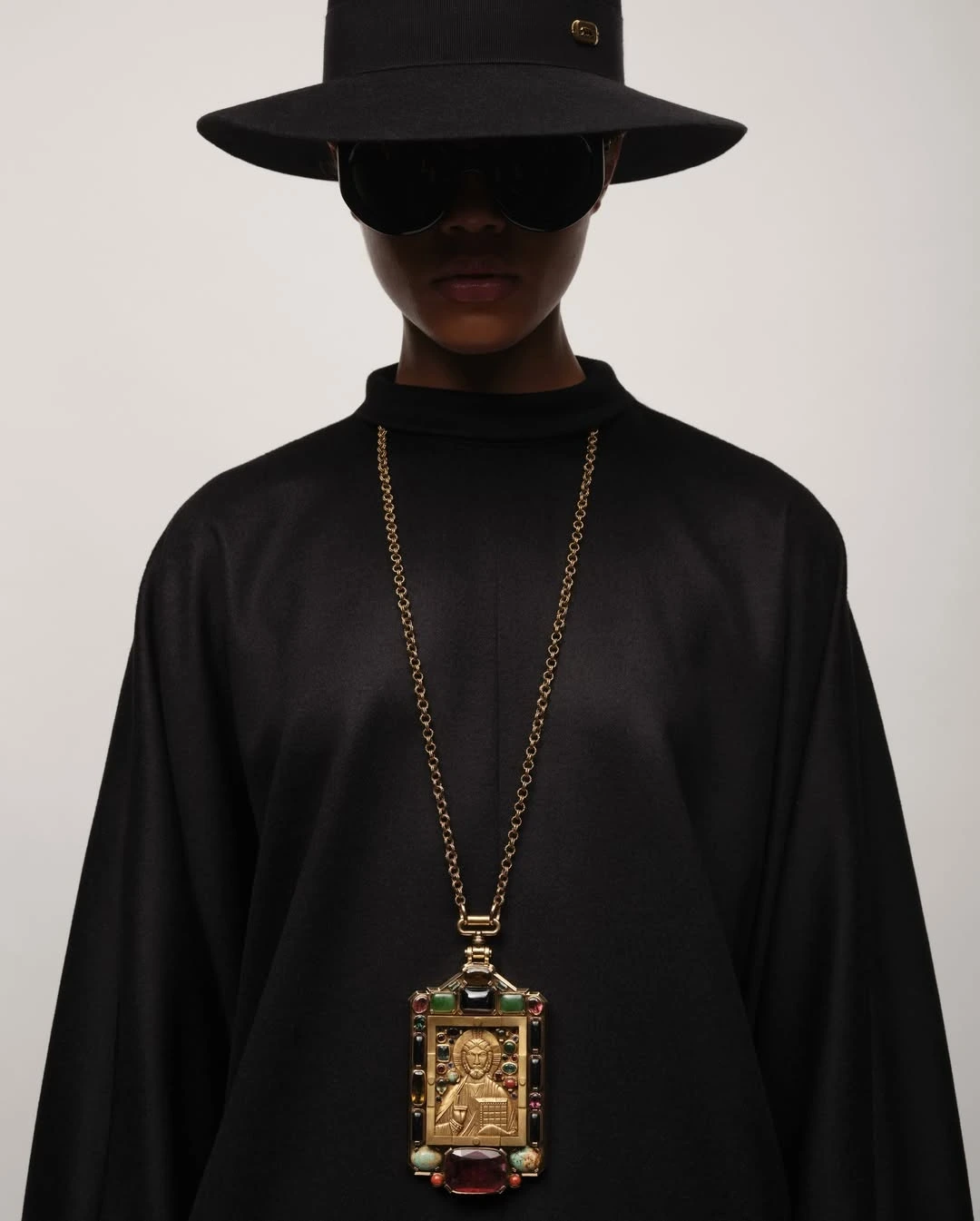
It feels part pendant, part reliquary. What makes it interesting on the runway is how that sense of reverence is disrupted. When worn over a simple blouse or dark knit, it does not feel ceremonial. It feels personal, almost as if a historic object has been pulled into an everyday wardrobe.
That contrast is powerful because it stops the piece from becoming costume.
The Dionysos Cuff: Jewellery as Armour
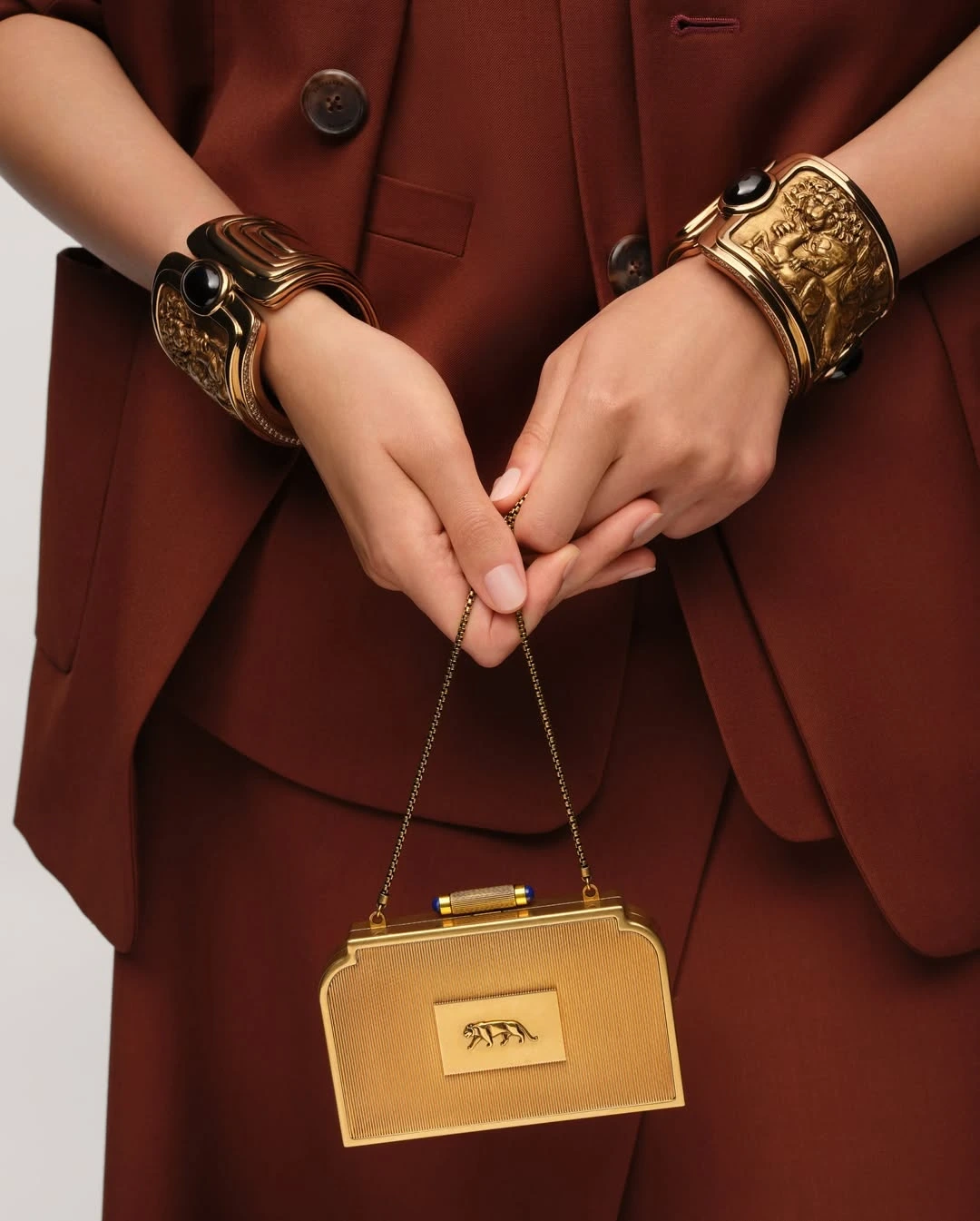
The Dionysos Cuff takes inspiration from a third century Roman sculpture showing Dionysos riding a panther, surrounded by the four seasons.
Sabyasachi translates that abundance into 18 karat and 22 karat gold, punctuated with cabochon garnets and tourmalines.
On the arm, the piece has real physical presence. With looser tailoring or fluid separates, the cuff feels almost protective. The clothes move while the jewellery remains visually solid. It adds authority to otherwise relaxed looks.
That tension between softness and strength runs through much of the collection.
The Bengal Tiger Turns Into a House Signature
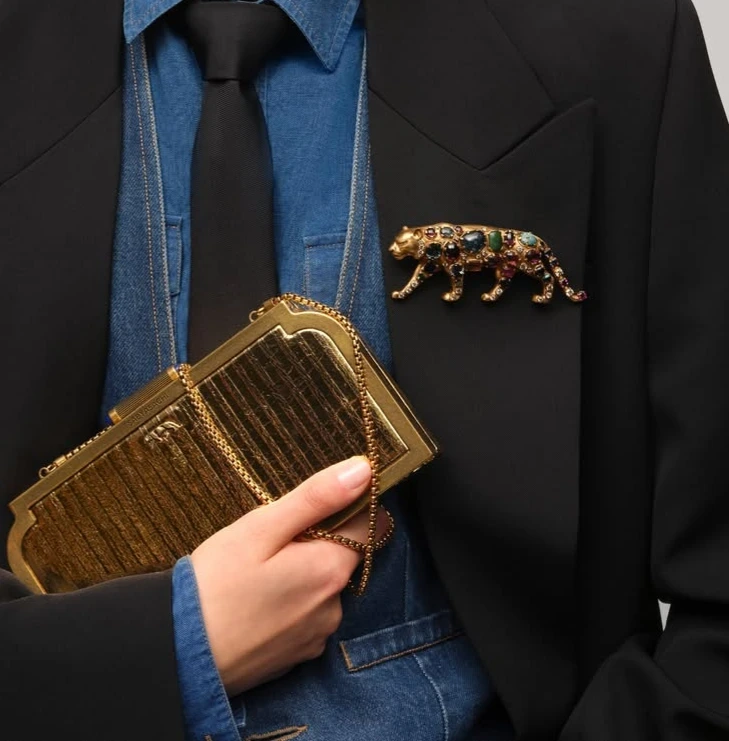
The Bengal Tiger is already one of Sabyasachi’s strongest house symbols, associated with beauty, ferocity and strength. His fine jewellery line has long translated the motif into 18 karat gold and diamonds.
On the Spring 2027 runway, the tiger appeared as a brooch pinned to tailoring. That styling completely changes the mood.
Against a black jacket, denim shirt and tie, the tiger feels almost like an inherited pin or military insignia, but with a more playful, luxurious edge. It brings personality to a strict menswear look without making it overly decorative.
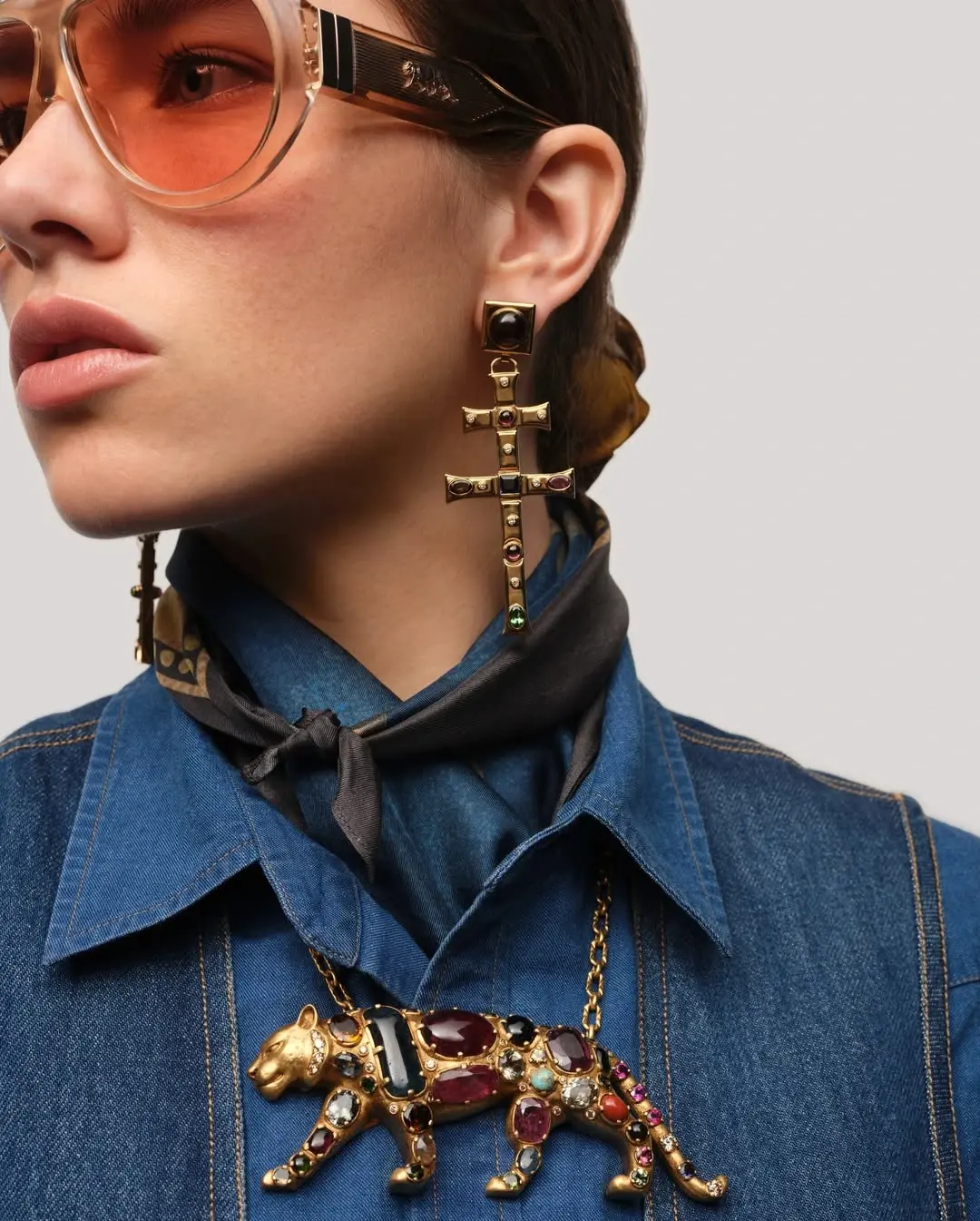
There is also a larger Bengal Tiger necklace within the wider Bengal Byzantine Broadway universe, built around hand engraved gold tigers and a spectacular 109.95 carat Zambian emerald, topped with a 5.06 carat old mine cut diamond and surrounded by multicoloured gemstones and diamonds.
That piece shows just how far the tiger motif can travel, from discreet brooch to full high jewellery spectacle.
Gemstone Collars Bring Colour to the Foreground
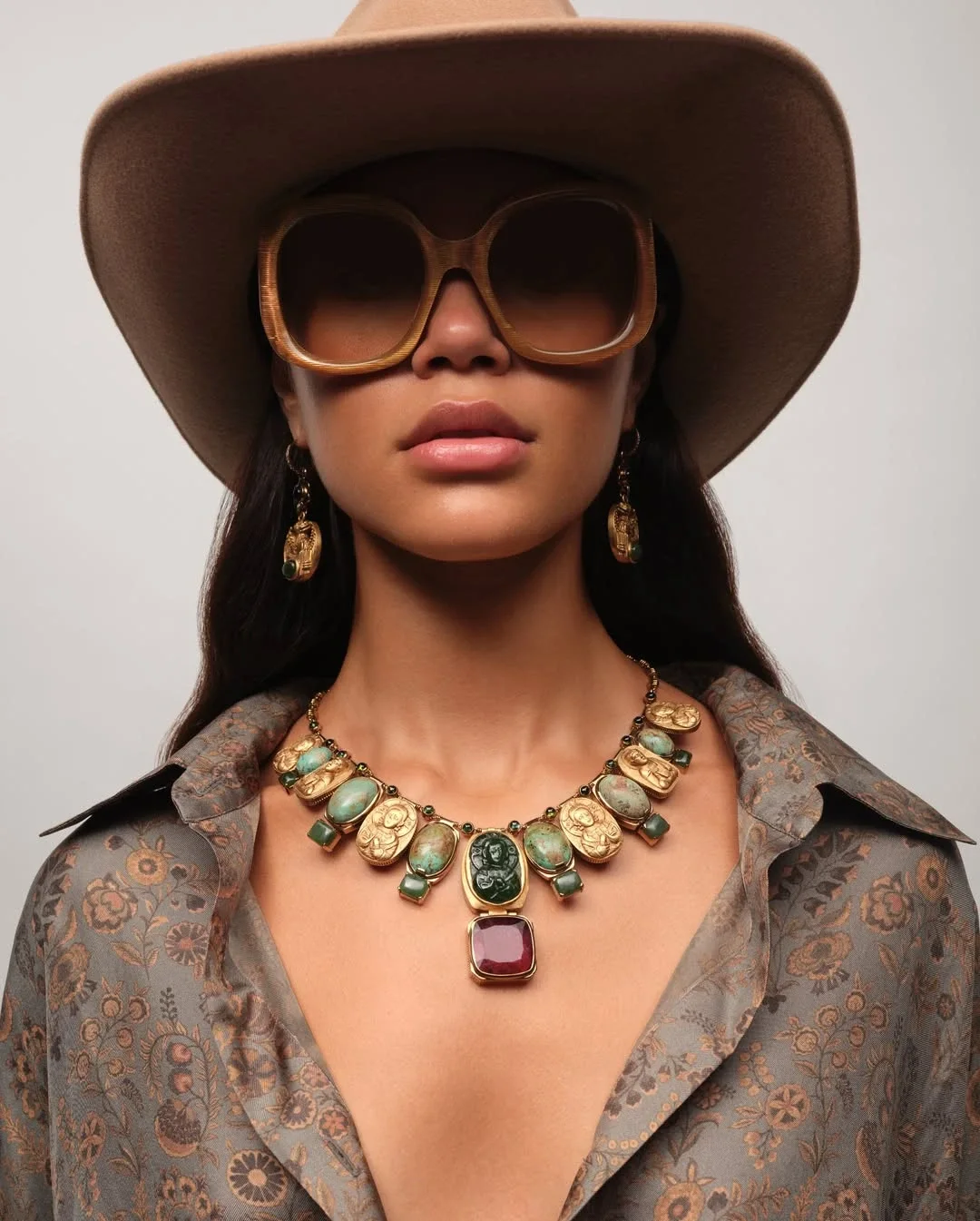
Another memorable look features a substantial collar necklace composed of large stones in gold, torquise, amber, red and smoky tones.
This is where Sabyasachi’s instinct as a colourist becomes very visible. Rather than creating a strict hierarchy around one dominant gemstone, he mixes stones with different tones and characters. He has spoken about deliberately disrupting the traditional ranking of precious stones and using multicoloured gems more freely.
Worn with a printed shirt, the necklace becomes the whole story. There is enough richness in the stones that the outfit does not need anything else.
Pendants, Crosses and Objects That Feel Collected
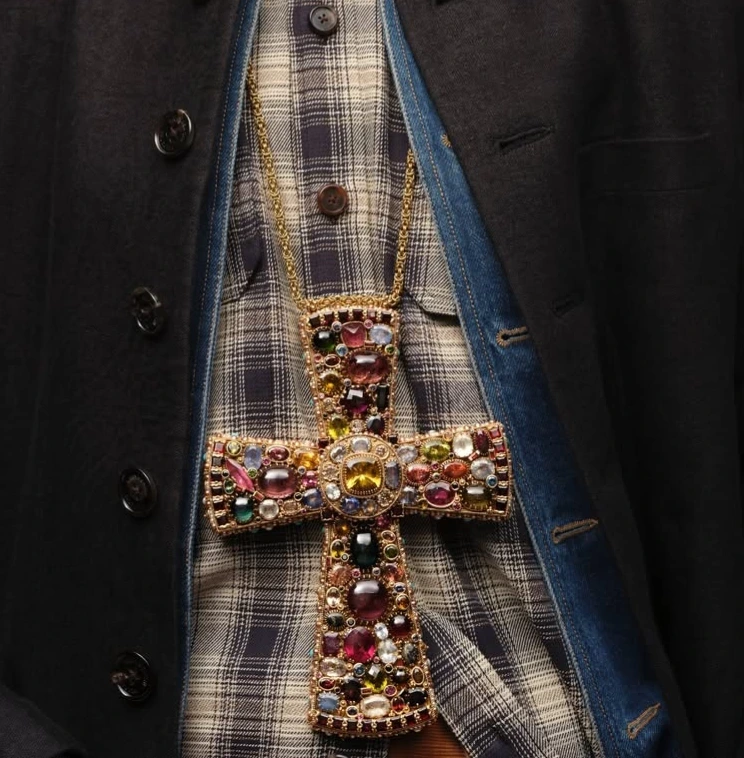
The other runway looks push the idea of jewellery as personal accumulation even further.
A long pendant necklace worn over a soft cream blouse feels relaxed despite its scale. Another look pairs denim with an oversized jewelled animal pendant and a large cross earring.
These pieces do not look like they came from one matching set. They look like objects gathered over years.
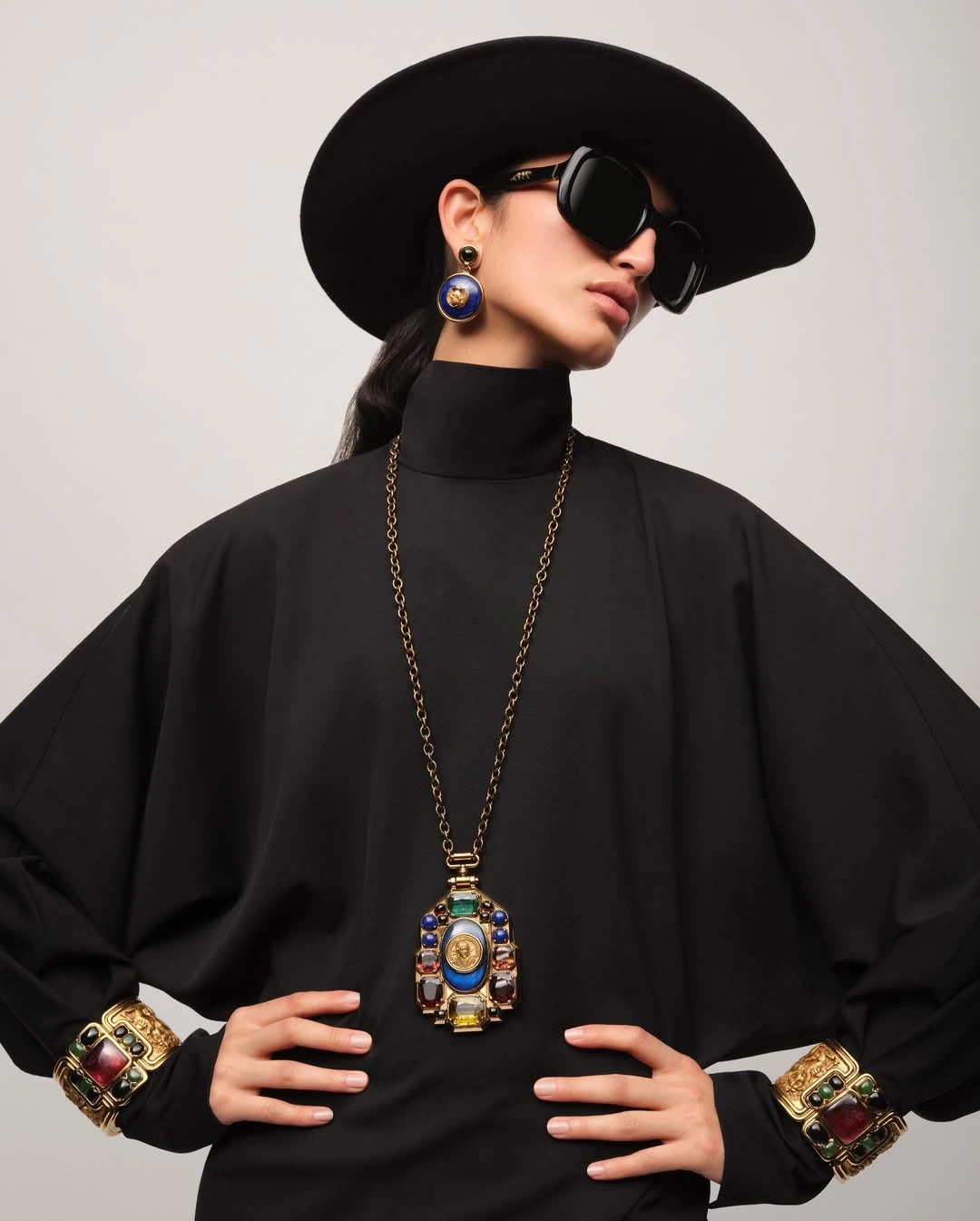
A black turtleneck look takes the opposite route. A long chain carries a richly framed blue and gold pendant, while substantial cuffs sit at both wrists. The simplicity of the black clothes sharpens every detail. The jewellery suddenly feels almost architectural
Earrings Give the Face Its Own Frame
The earrings deserve just as much attention. Large gold forms, coloured stones and strong geometric shapes are used to frame the face rather than simply decorate it.
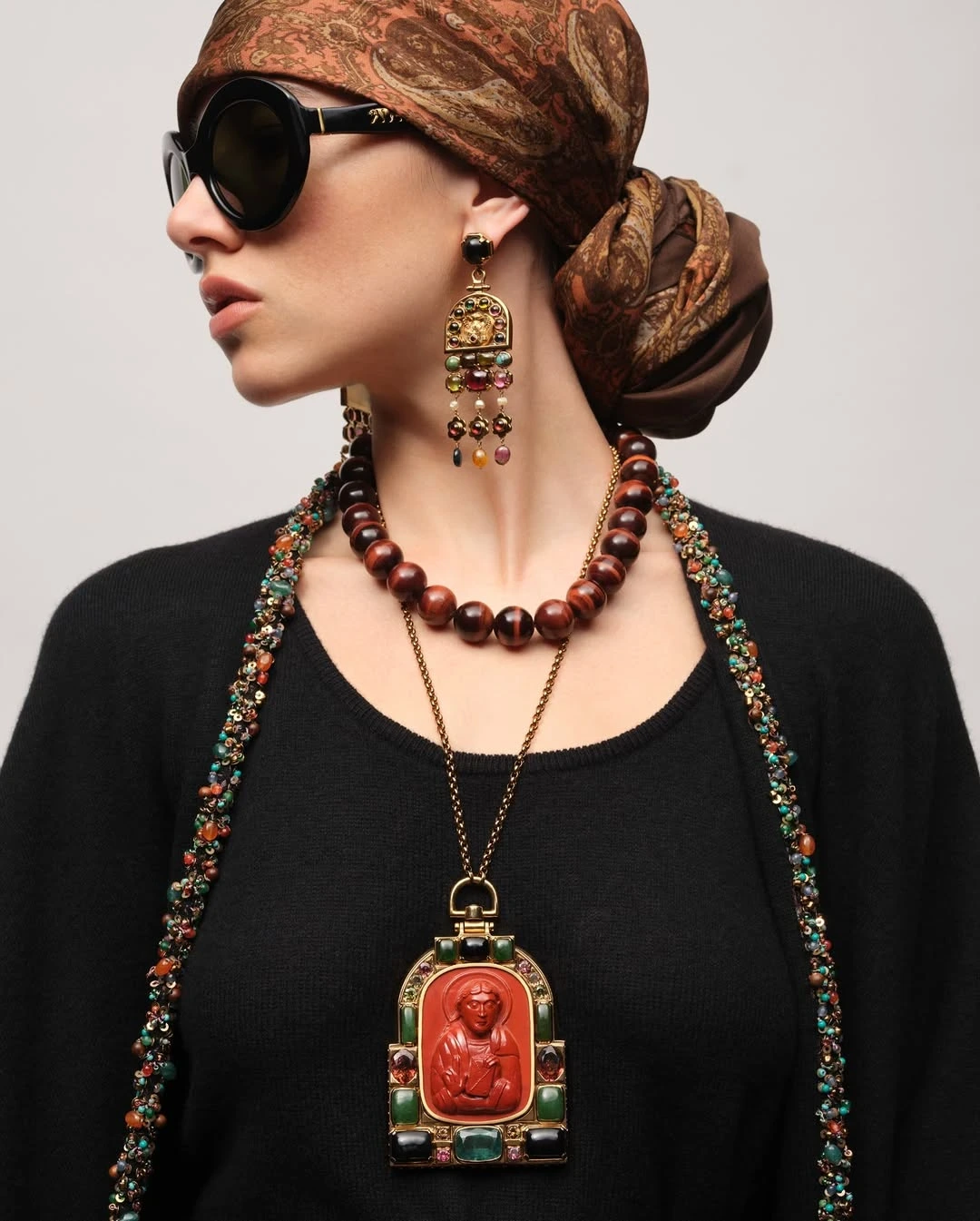
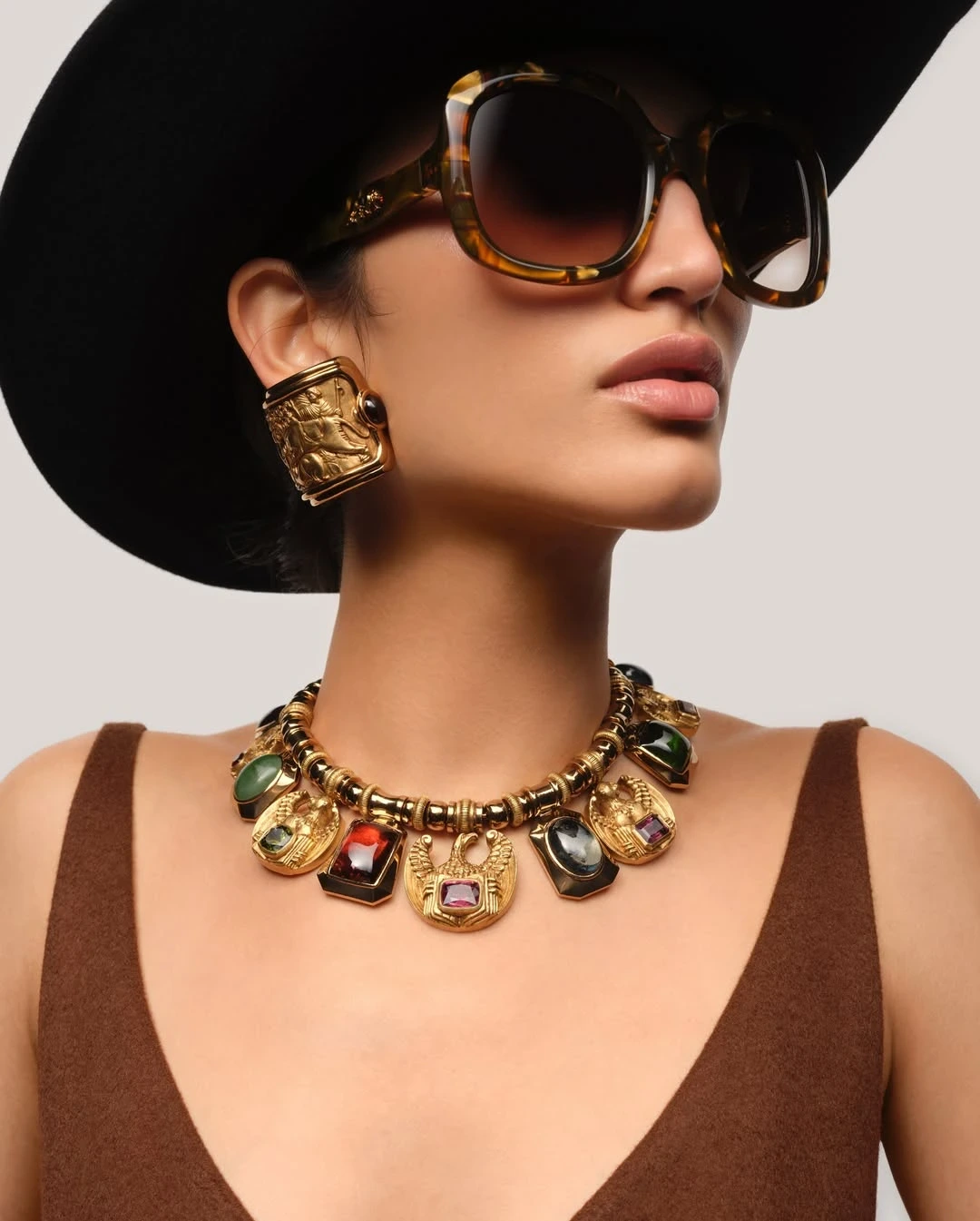
In one look, oversized square earrings sit beside a gemstone collar and exaggerated sunglasses. The scale is deliberate. These are not earrings designed to disappear into the overall look. They change the proportion of the face and become part of the silhouette.
The Styling Makes the Collection Work
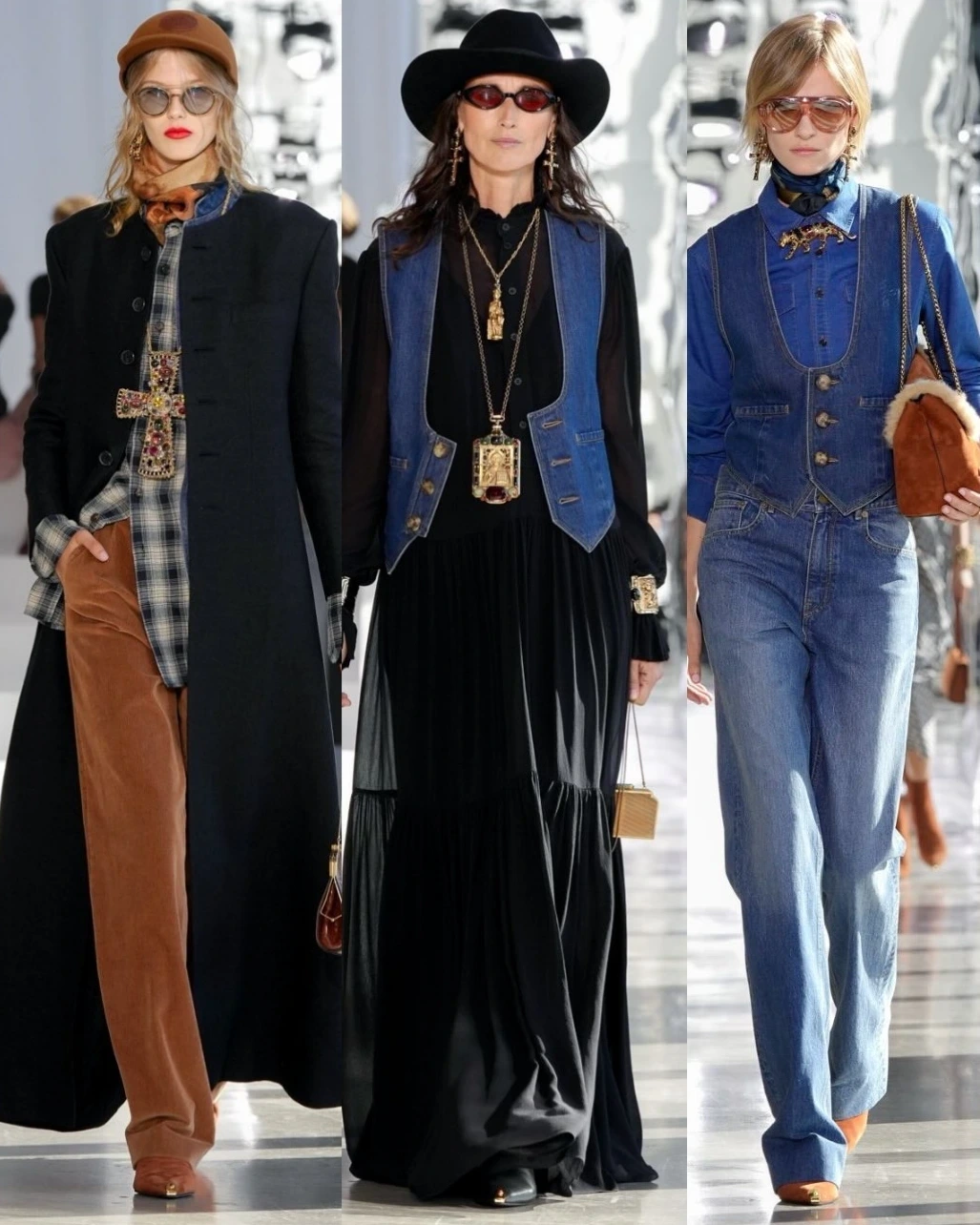
The strongest runway decision was to resist dressing all of this jewellery in equally ornate clothes.
Christy Turlington opened the show in denim, immediately setting the tone for a collection where couture level detail could sit beside very familiar clothing.
That idea continued throughout. Gold with denim. Gemstones with black knitwear. A tiger brooch with tailoring. A monumental pendant with a loose blouse.
The effect is almost anti ceremonial. The jewellery is extraordinary, but the styling refuses to treat it as precious in the conventional sense.
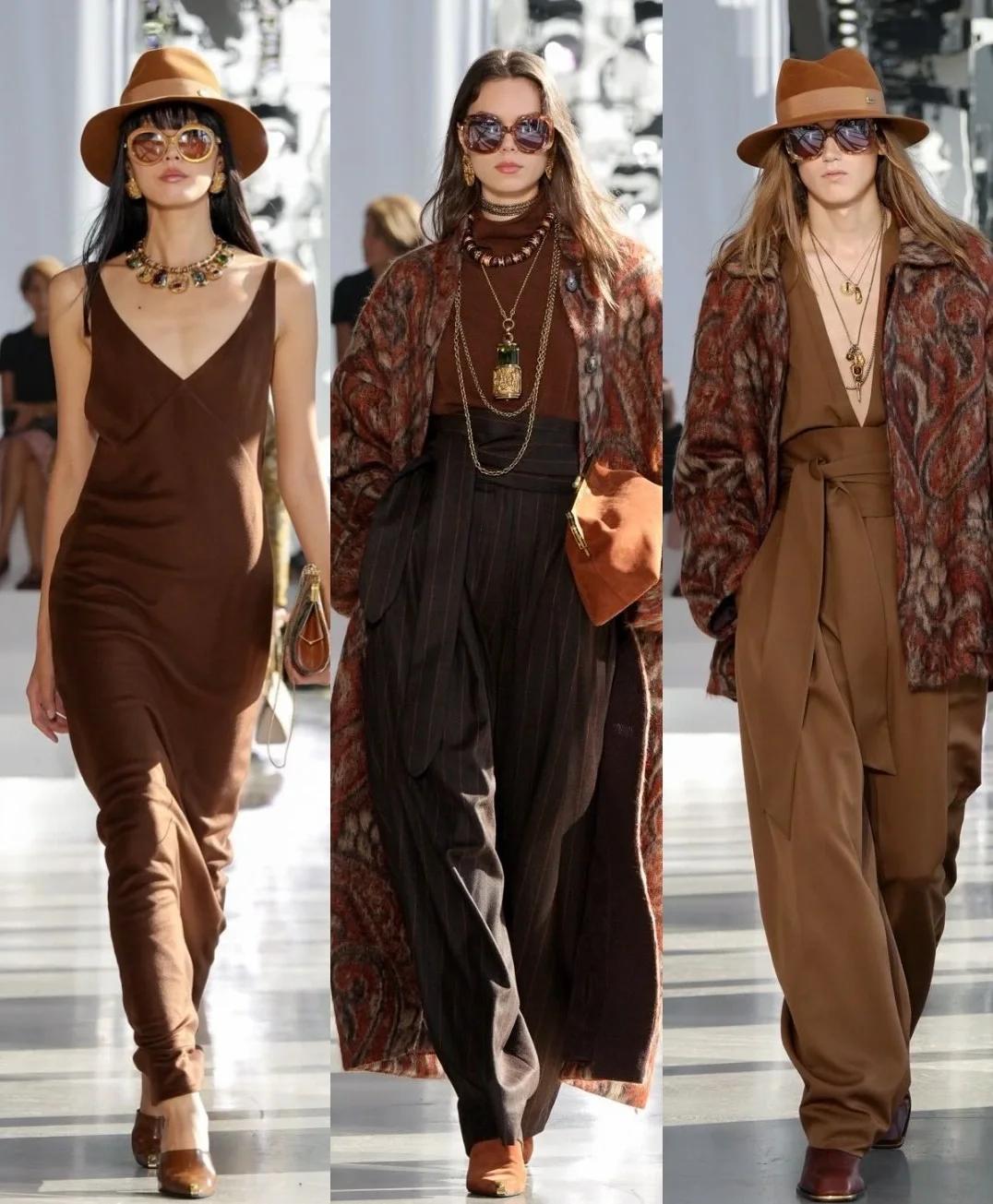
Glamcheck Take
The real strength of Sabyasachi x The Met is not simply the craftsmanship or the historic references.
It is the interpretation. The jewellery carries Byzantium, Rome, Mughal India, Bengal and centuries of trade and cultural exchange, but none of that feels trapped in a museum display.
The Pantokrator pendant becomes intimate despite its scale. The Dionysos cuff feels like armour. The Zodiac Rivière turns astrology and imperial coinage into something sensual. The Bengal Tiger brooch brings wit and identity to tailoring. The coloured stone necklaces and layered pendants feel as though they have been collected, inherited and worn repeatedly rather than purchased as immaculate sets.
That is what makes the collection feel alive.
Sabyasachi does not ask these jewels to behave politely. He lets them dominate, clash, carry history and become part of the personality of the wearer. At Spring 2027, the clothes created the world. The jewellery gave it memory.