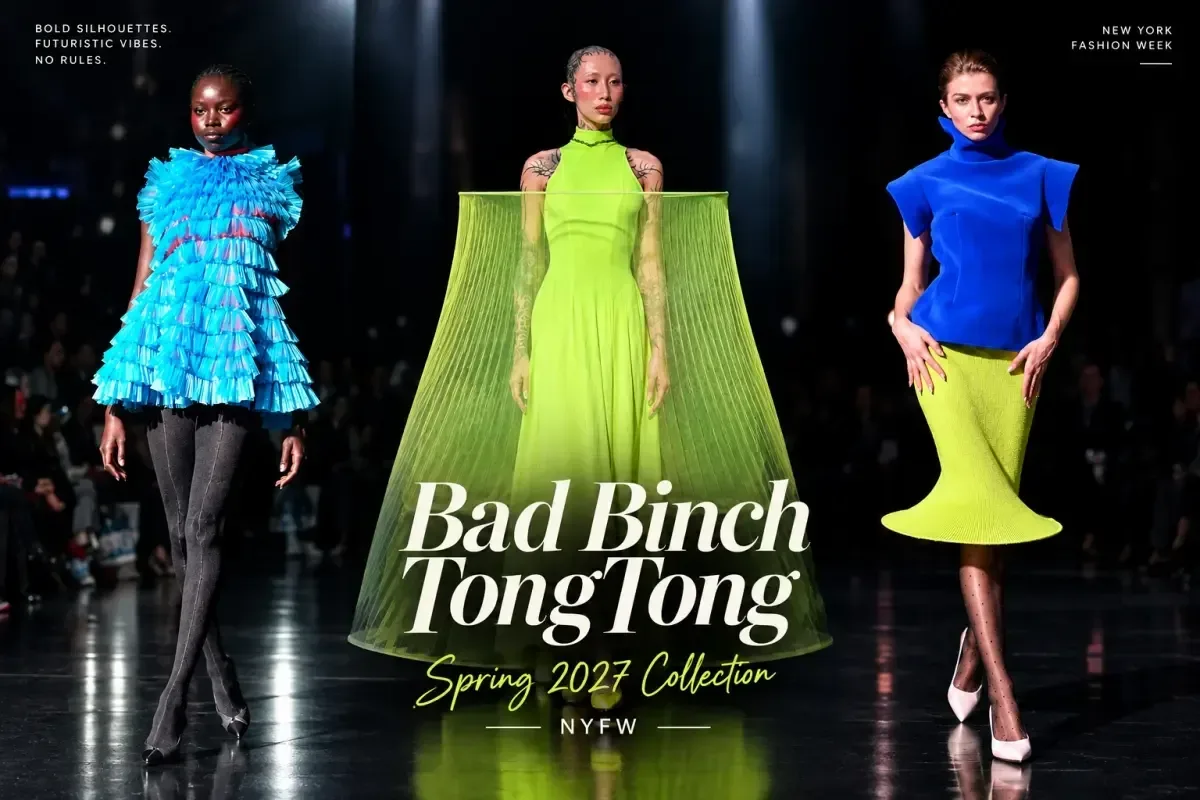
Bad Binch TongTong does not really make clothes that politely sit on the body. Terrence Zhou prefers pieces that expand, float, distort and sometimes seem to have their own personality.
For Spring 2027, that instinct became the whole point. After a two year break from the New York Fashion Week runway, Zhou returned with a collection that felt less like a conventional fashion show and more like stepping into a strange, colourful universe where proportions had stopped following the usual rules.
Presented at the Balloon Museum in New York, the setting already suggested that scale, air and movement would matter. The clothes followed through.
The Collection Starts With a Feeling, Not a Dress Code
Zhou has spoken about working from ideas of energy, aura and emotion, and Spring 2027 feels very much like a collection built from instinct rather than wardrobe logic.
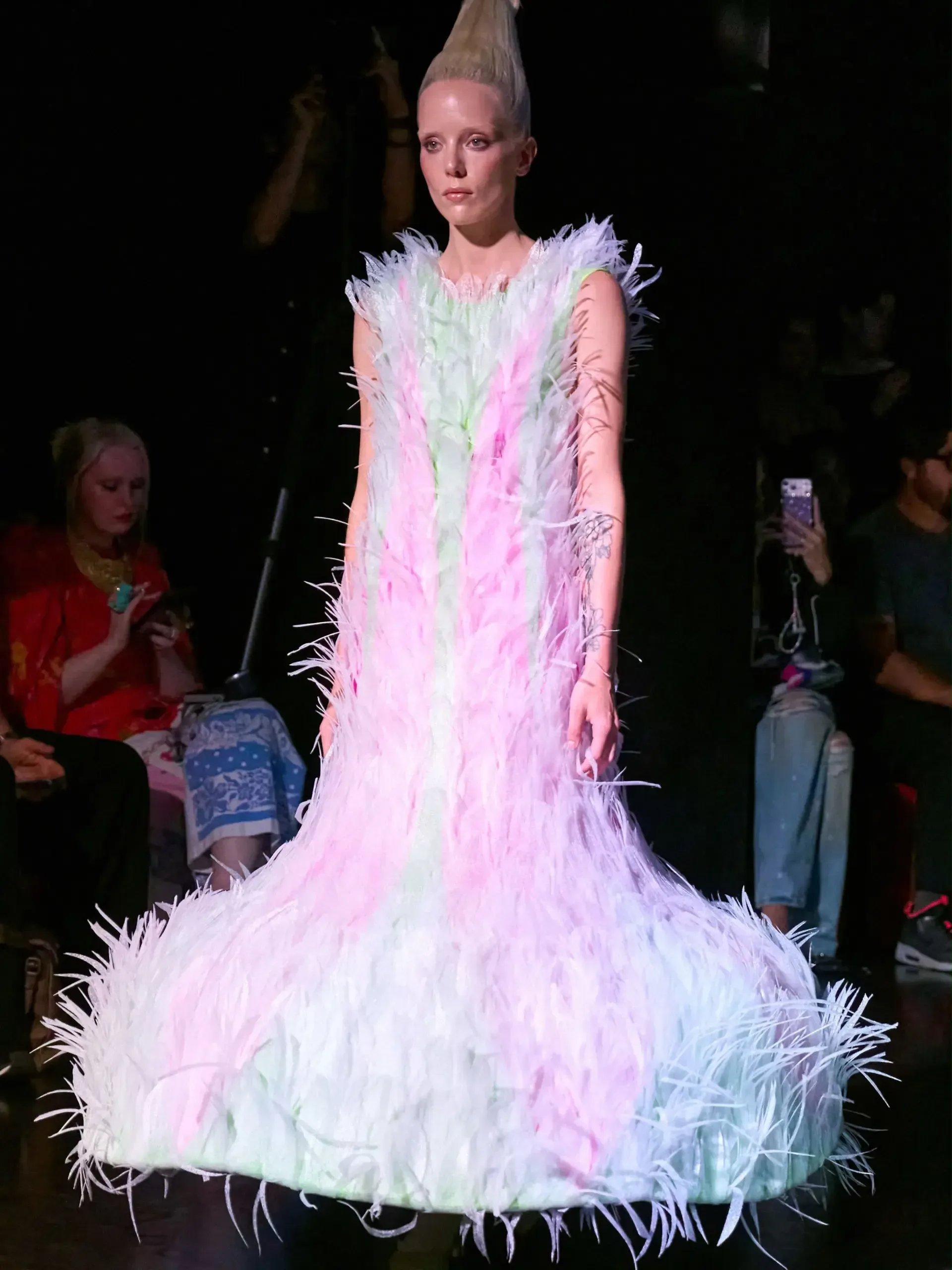
There are obvious fashion references, but the clothes rarely stay inside them for long. A skirt becomes a floating circle. A dress swells away from the body. A familiar fitted silhouette suddenly meets an exaggerated shape that changes how the wearer moves through space.
That unpredictability is what keeps the collection interesting. You never quite know whether the next look will feel sculptural, humorous, elegant or completely absurd.
Usually, it is some combination of all four.
The Body Is Constantly Being Redrawn
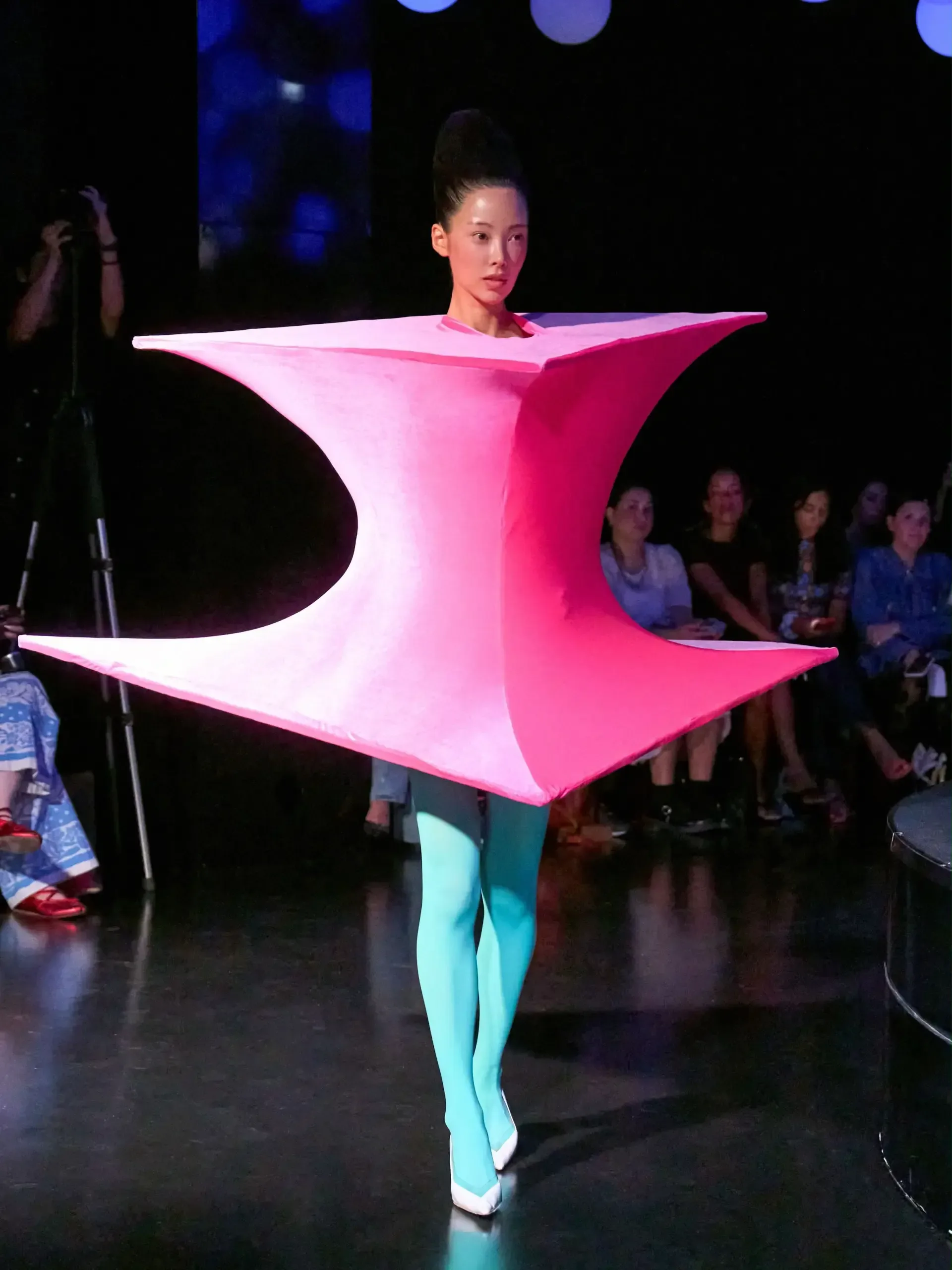
The most memorable part of the collection is the way Zhou plays with silhouette.
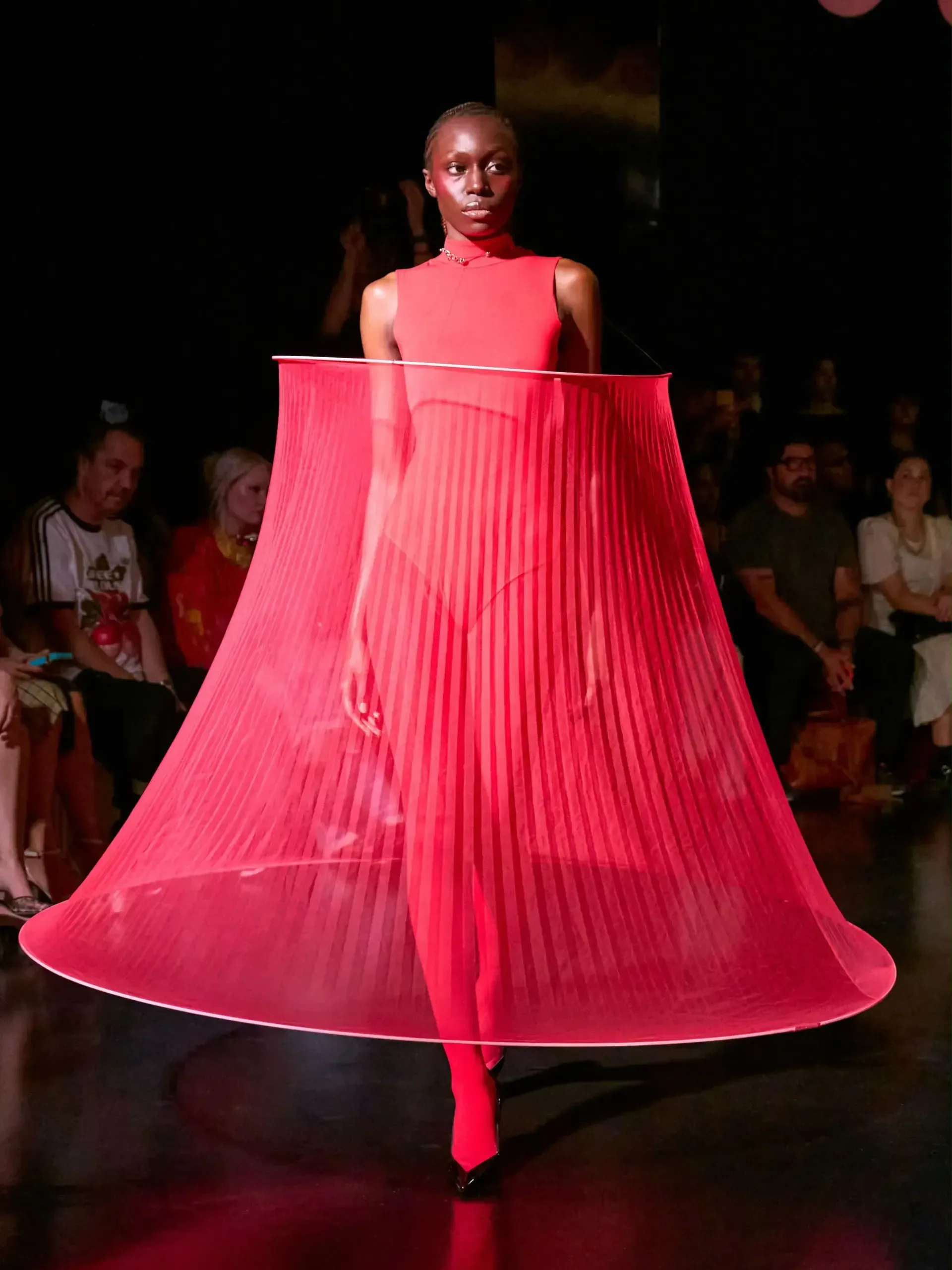
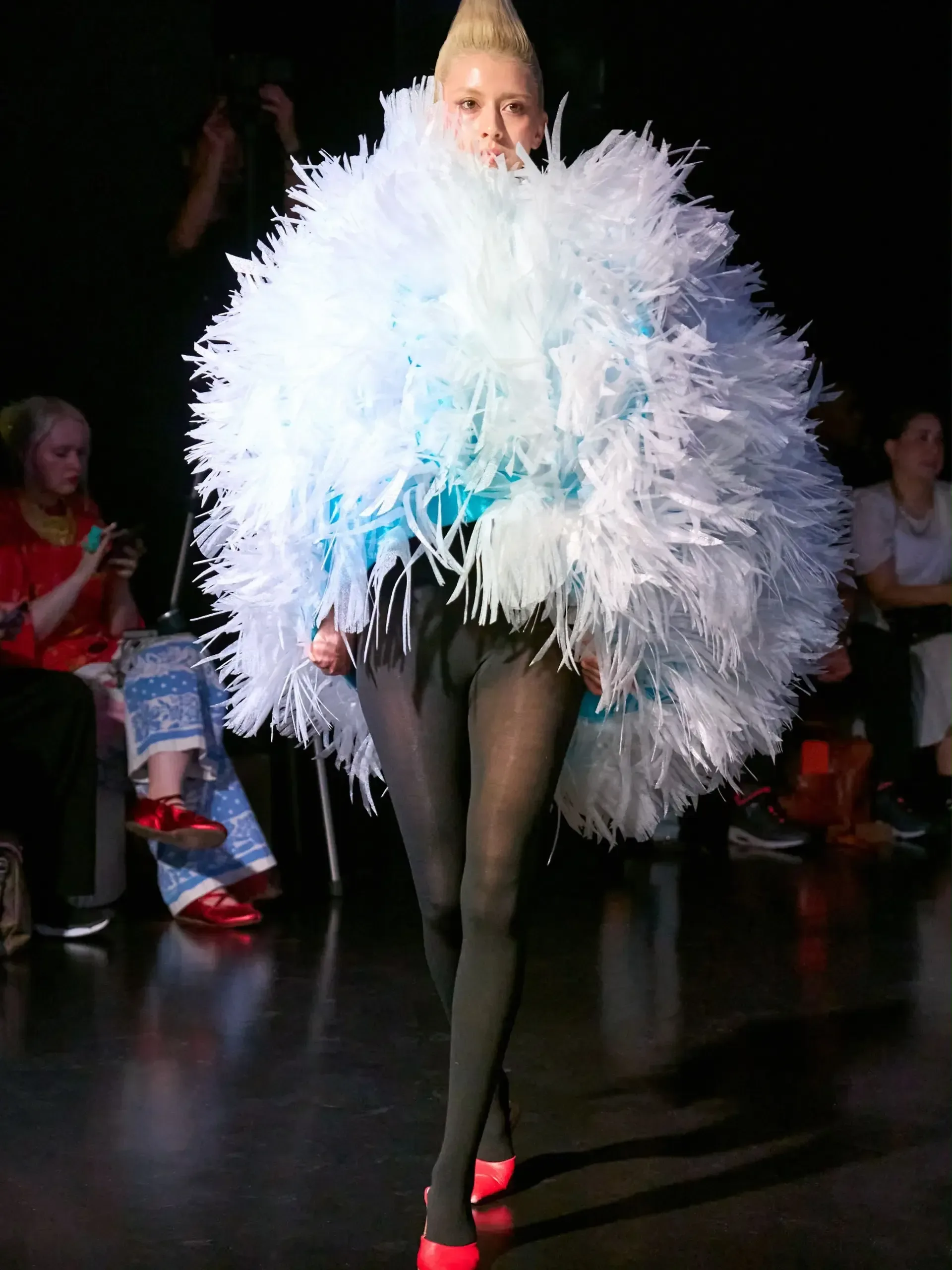
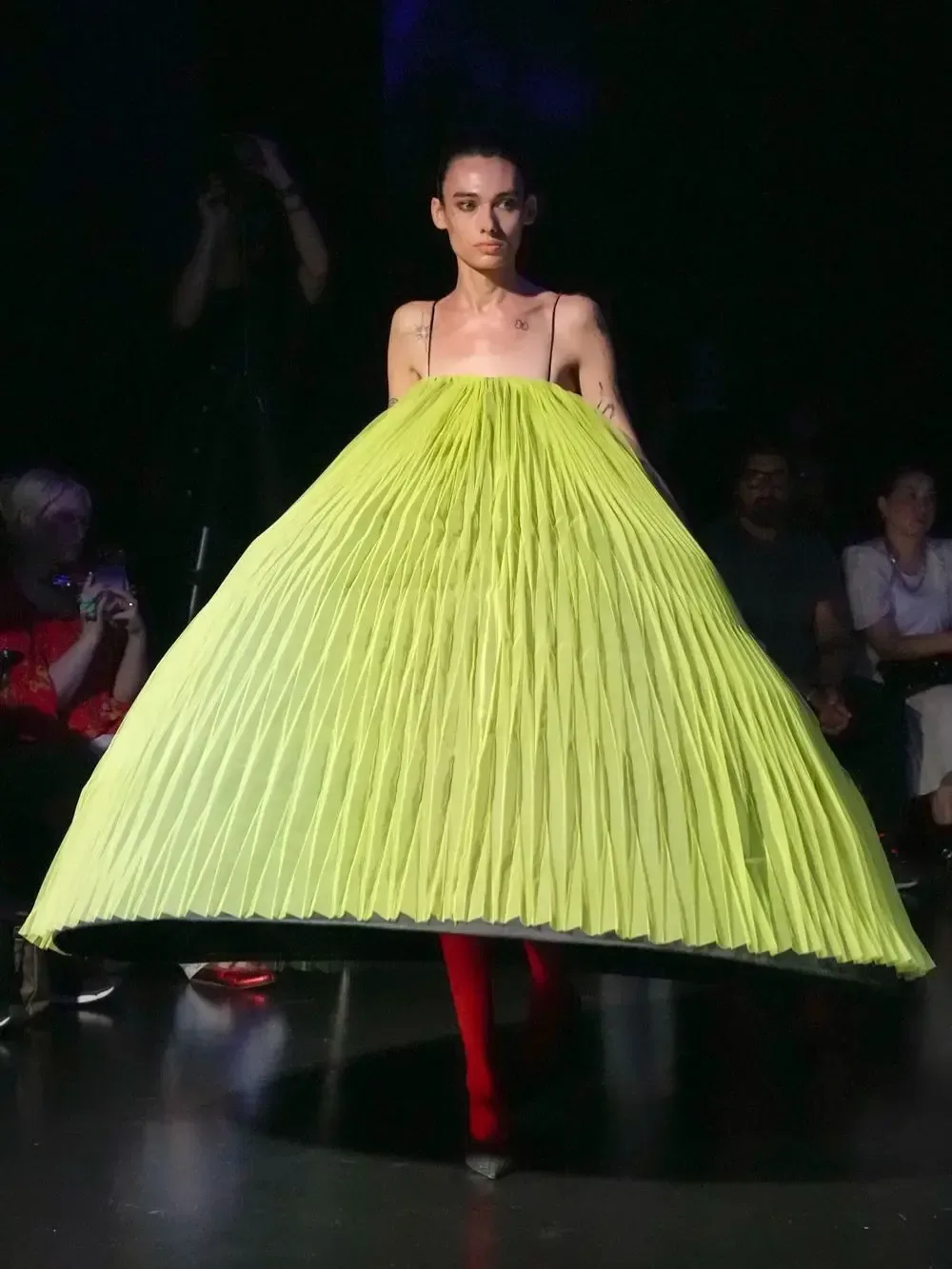
Hooped skirts extend far beyond the hips, orb shaped forms create the illusion of clothes suspended around the body, and some dresses feel closer to wearable installations than traditional garments. The proportions are exaggerated, but they are not heavy in the usual sense. Many of the pieces seem to bounce, sway or hover as the models move.
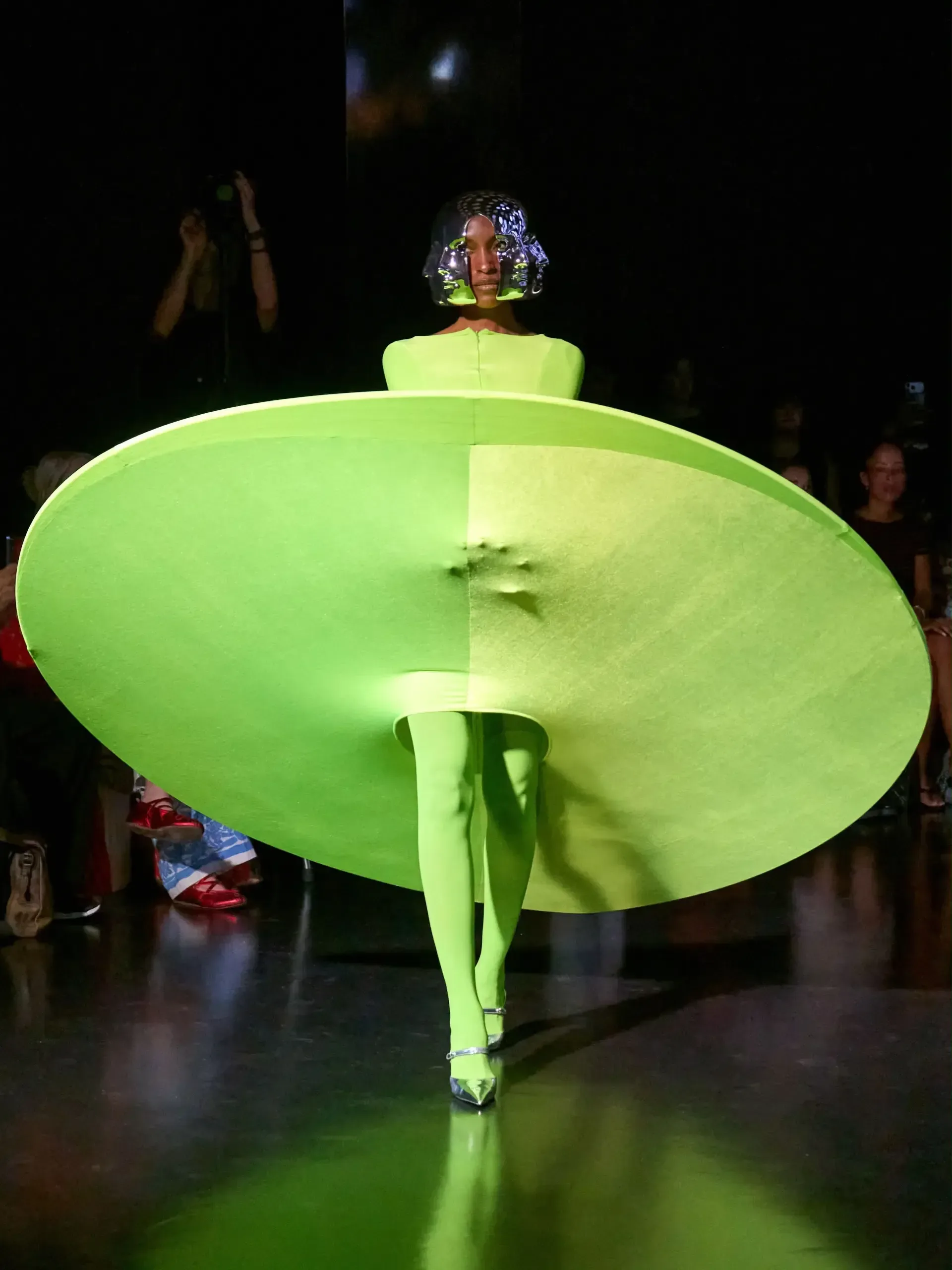
That sense of lightness is important. Without it, the collection could easily have become too theatrical. Instead, the shapes often feel playful, as though Zhou is testing how far fabric can move away from the body before it stops being fashion altogether.
Colour Keeps the Fantasy From Becoming Too Serious
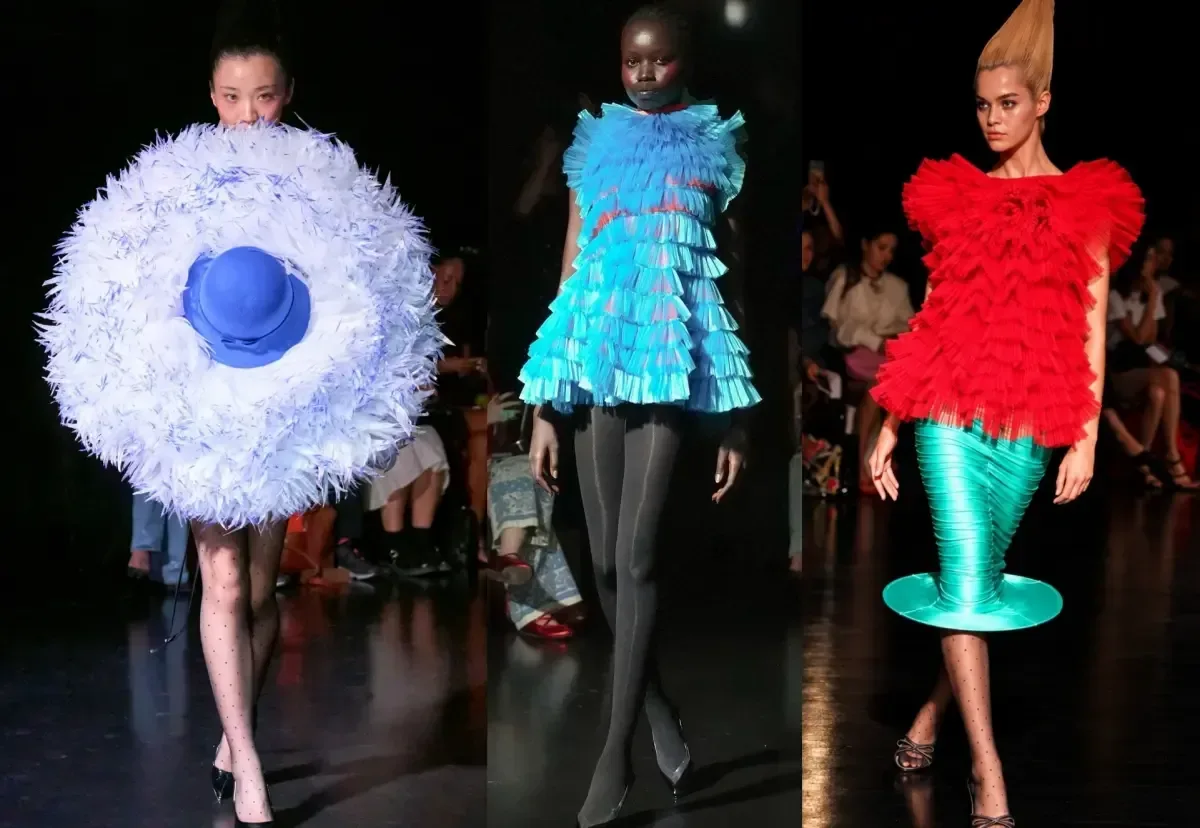
The palette is unapologetically bright. Electric blue, acid green, saturated red, teal and hot pink cut through the show with almost cartoon like intensity. These colours are not subtle accents. They are part of the personality of the clothes.
That brightness gives the collection a sense of joy, even when the silhouettes become strange or slightly surreal. It also stops the conceptual side from feeling too intellectual. Bad Binch TongTong may be experimental, but it is never afraid of fun.
Texture Does a Lot of the Work
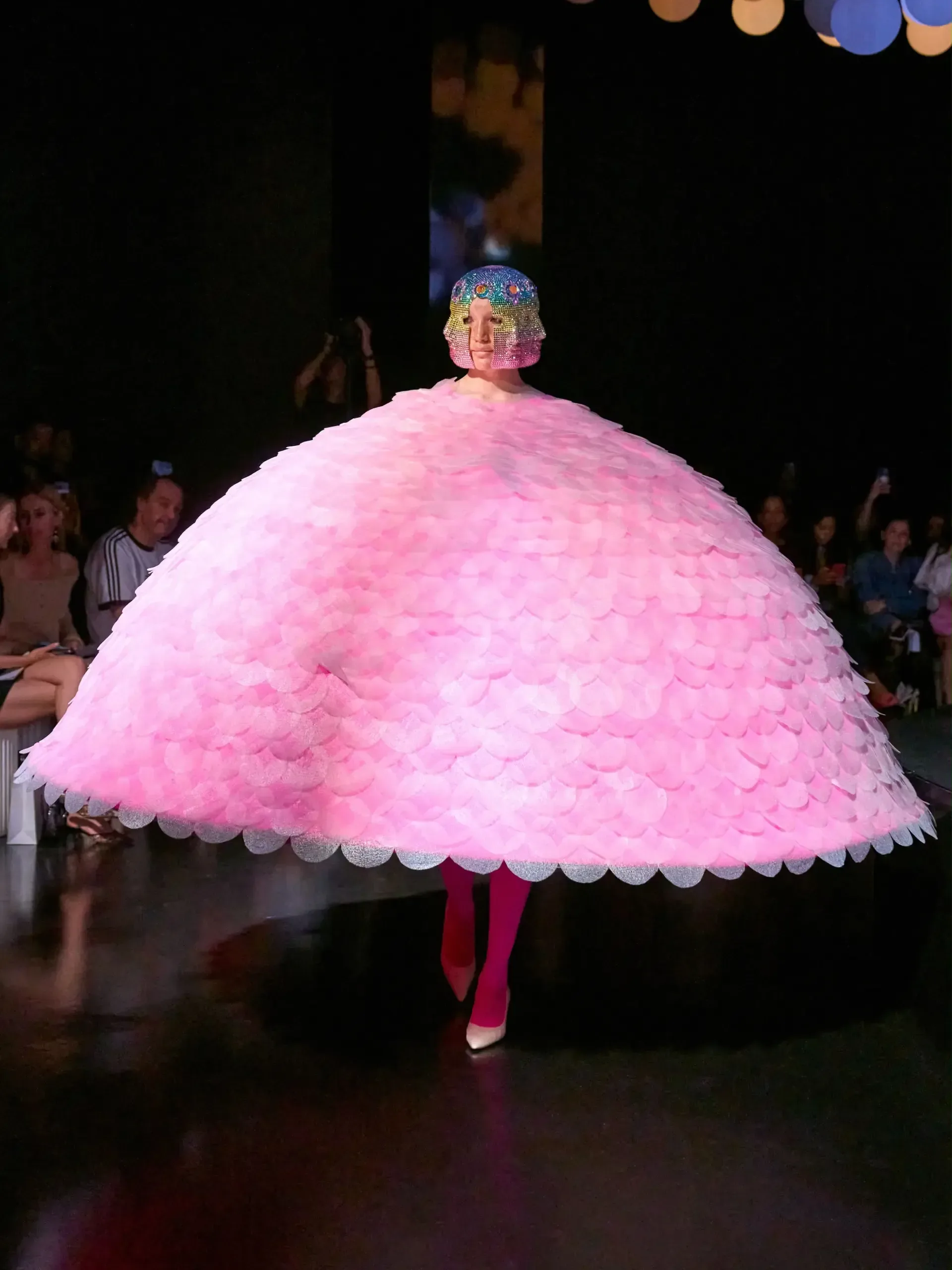
Neoprene, pleating, ruched surfaces and foam like constructions give the collection its physical character.
Some pieces look tightly controlled, while others seem deliberately inflated or shredded. The contrast between smooth and rough, fitted and expanded, polished and chaotic gives the runway a restless energy.
What is interesting is that texture is not being used simply as embellishment. It actually helps determine the shape and behaviour of the garment. That makes the clothes feel engineered rather than decorated.
The Quieter Looks Matter Too
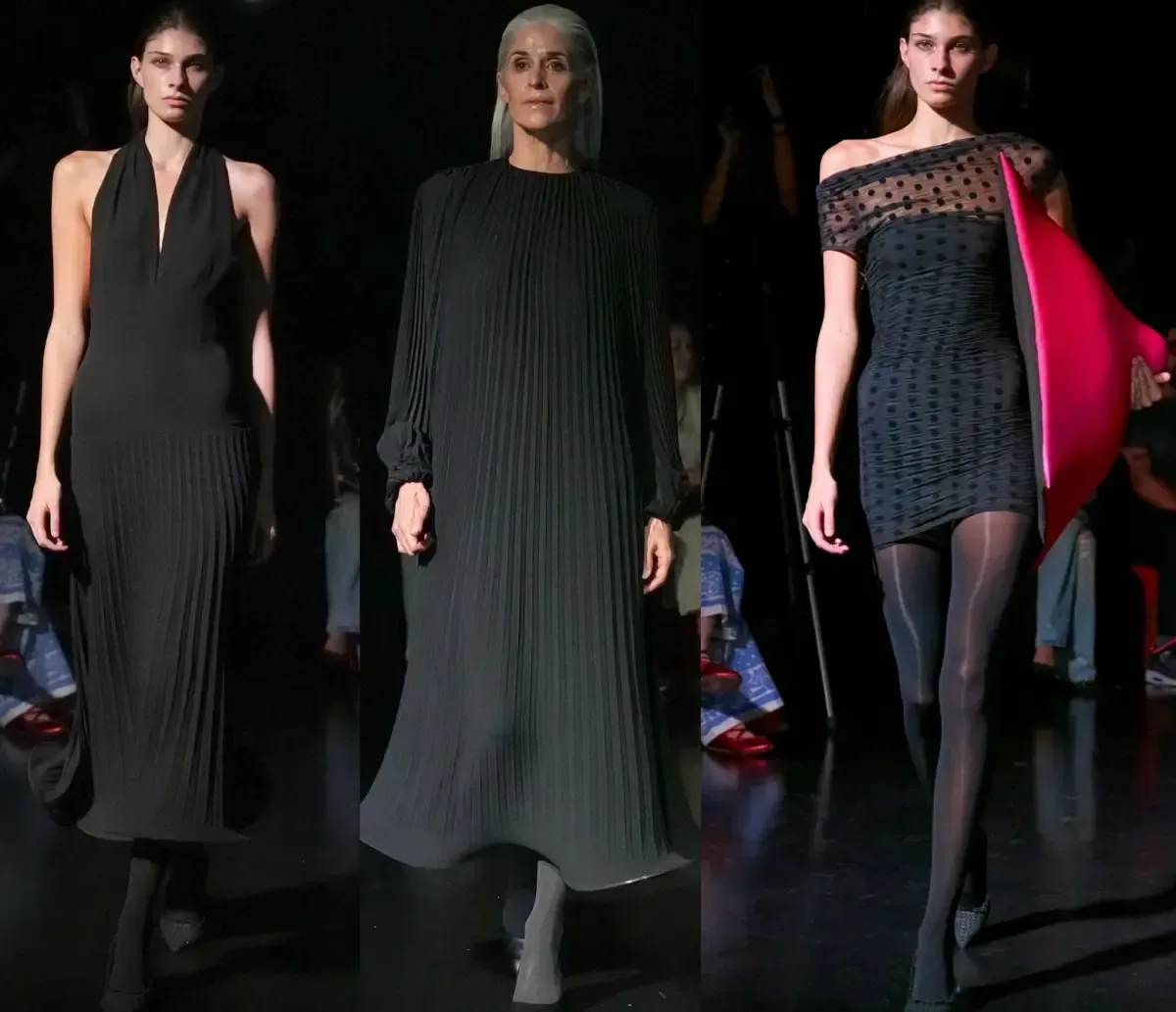
For all the oversized drama, the collection is stronger because Zhou allows a few more wearable moments into the mix.
Ruched skirts, fitted tops and softer separates give the eye a break between the larger sculptural pieces. Those looks still carry the brand’s sense of humour and colour, but they are easier to imagine outside the runway.
That balance is important because it proves the design language can translate beyond spectacle.
Without those quieter moments, the collection might have felt like performance art only. With them, it becomes easier to understand how Zhou’s ideas could move into an actual wardrobe.
The Finale Goes Full Fantasy
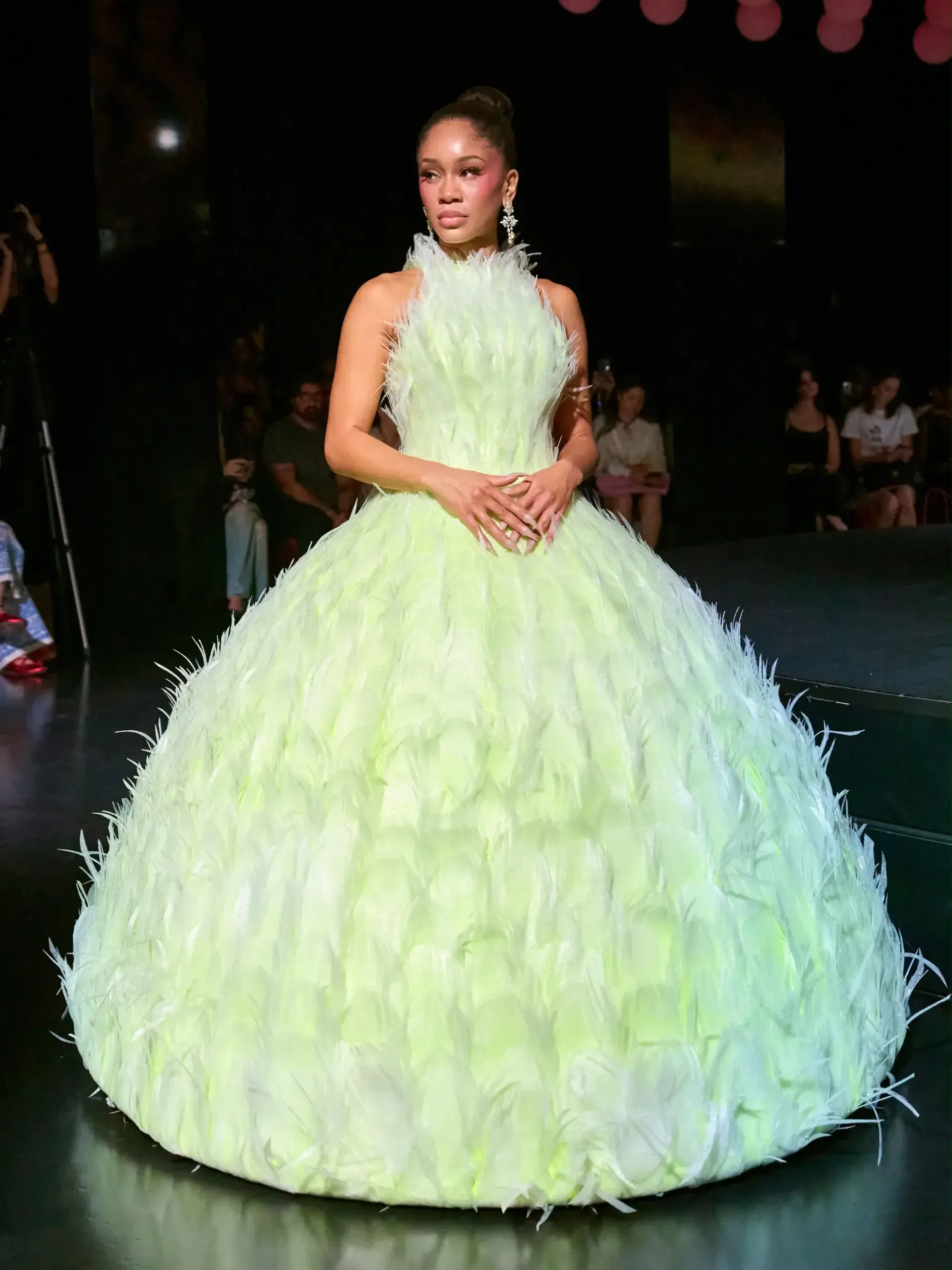
Then, just when the collection seems to have found some balance, Saweetie appears in an enormous hovering dress and reminds everyone what kind of show this is.
The finale is pure Bad Binch TongTong: oversized, theatrical, instantly memorable and completely unconcerned with practicality. It is the kind of image that works because the collection has earned it.
By that point, the audience has already been introduced to Zhou’s world of exaggerated volume and movement, so the final look feels like a natural escalation rather than a stunt added at the end.
Hair and Makeup Add to the Surreal Mood
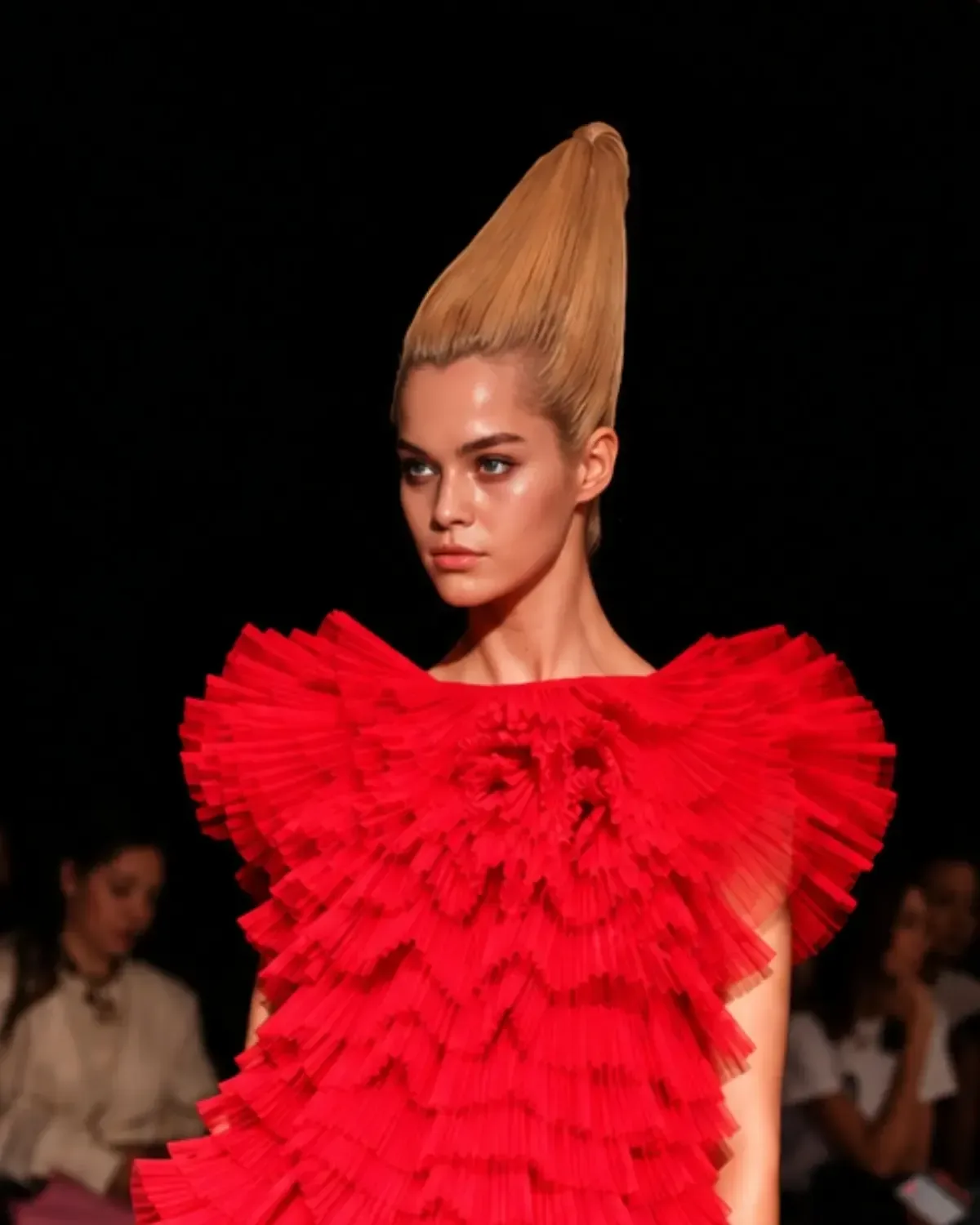
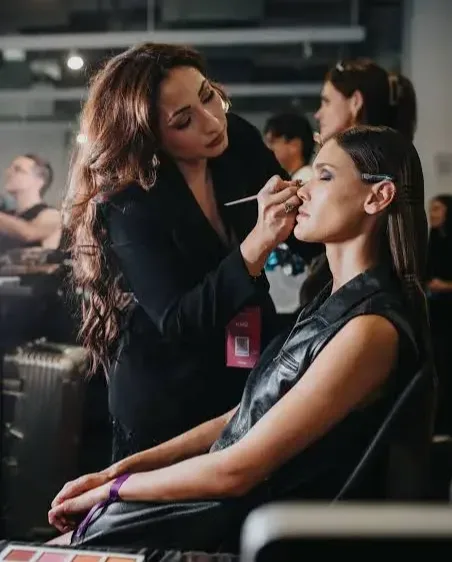
The beauty look followed the same slightly off-kilter logic as the clothes. Hair was not treated as something that needed to look traditionally glamorous. Instead, it moved between sleek, close-to-the-head shapes and more playful, exaggerated finishes, giving the models an almost character-like quality that suited Terrence Zhou’s surreal silhouettes. Against the huge hoops, inflated forms and neon colour, the hair felt intentionally graphic rather than decorative.
The makeup stayed relatively restrained, but there was still a sense of personality in the faces. Skin looked clean and fresh, while brows and eyes were kept defined enough to hold their own against the scale of the clothes. That restraint was important. With so much happening in the silhouettes, a heavy beauty look would have made the show feel too costume driven.
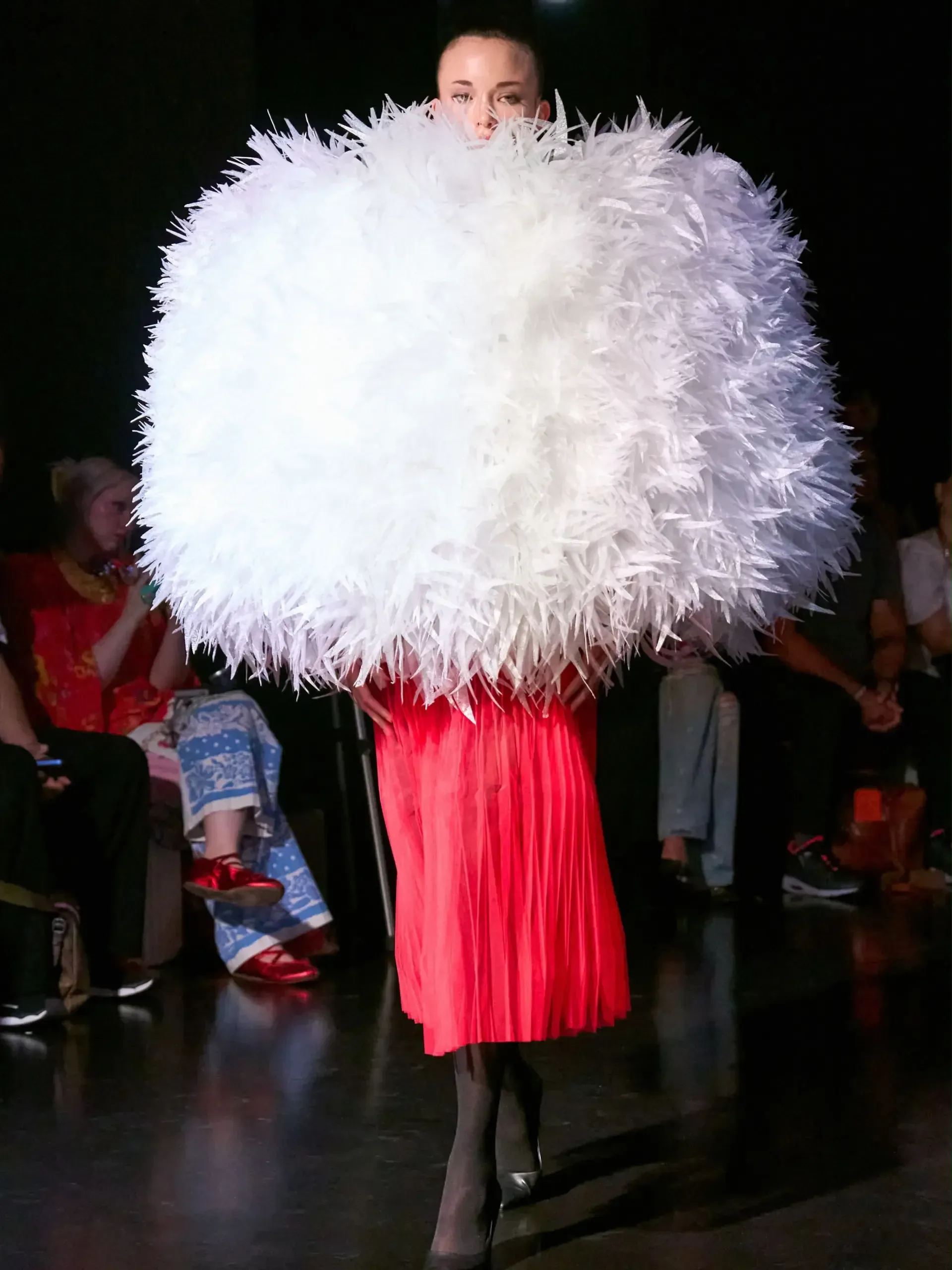
What worked was the contrast. The garments were loud, sculptural and sometimes almost cartoonish, while the beauty stayed more controlled. It gave the models enough individuality without pulling attention away from the clothes, and helped keep the overall presentation firmly in fashion rather than performance costume.
Why the Collection Works
What makes Spring 2027 successful is not simply that the clothes are unusual. Fashion can be strange without being interesting. Here, the weirdness has consistency. The exaggerated shapes, bright colour, physical textures and shifting proportions all belong to the same visual language. There is a clear point of view behind the chaos.
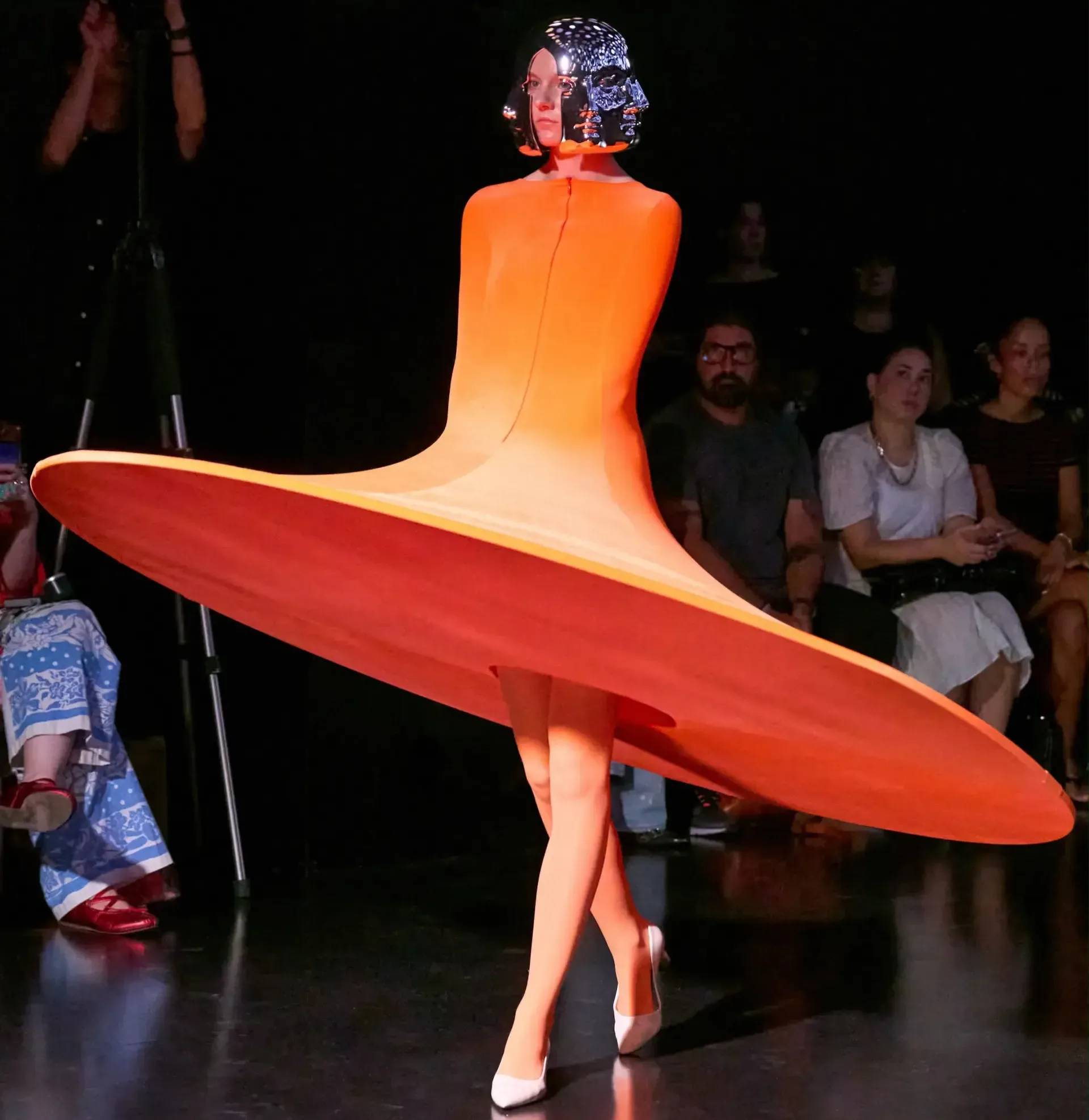
Bad Binch TongTong does not ask whether a garment is flattering in the traditional sense. It asks whether it changes the way you see the body. And that is a much more interesting question. After two years away from the runway, Terrence Zhou returned with a collection that feels joyful, strange and completely committed to its own world.
Exactly what fashion week needs more of.