Decorating the head is one of the oldest ornamental customs there is. The practice traces back to the ancient Greeks, where wreaths of flowers, oak leaves, myrtle and olive were worked in gold, and the tiara descends directly from the diadem worn then.
The modern category splits into two overlapping things. Hair accessories are anything worn in the hair. Hair jewellery is the subset made from precious or semi-precious materials: platinum, gold and silver, set with pearls, diamonds, crystals, rhinestones and beads. Swarovski and Austrian crystals are the most common settings, and Victorian pieces are the most sought after of the vintage designs.
Function and decoration
Almost everything in this category does two jobs at once, and it is worth knowing which one a given piece is really for.
Mainly functional. Barrettes, headbands, hair sticks, combs, pins and clips all hold hair in place, and the decoration is added on top of a working design.
Mainly decorative. Hair magnets, snap clips, floating gems and hair strings hold very little. They are ornaments that happen to attach to hair.
Buying a decorative piece expecting it to hold an updo is the most common mistake in the category.
Choosing for your hair
Hair accessories are made for every hair type and length, from thick long hair to fine short hair, and for curly, wavy and straight textures alike. That range is exactly why trying several is worth the effort: what holds well in one texture slides straight out of another.
Flowers and feathers are the most common decorative motifs, carved or mounted onto bands, clips and combs.
The category runs from everyday to formal without a break. The same shapes appear on red carpets, at the Golden Globes and the Academy Awards, at proms and weddings, and in an office, separated only by how much they are embellished.
Coverings
Hair nets
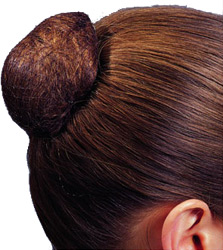
A cap-shaped piece of stretchable mesh running from the crown to the nape, with elastic at the rim to grip the head. It goes over a bun or another set style to hold everything in place.
They are sold in hair shades: black, brown, blonde. Worn by men and women alike.
Bouffant caps
Built on the same principle as a hair net, but in non-woven, unbonded polypropylene, semi-transparent and usually white.
These are workplace equipment rather than ornament, used anywhere loose hair is a hazard or a contamination risk, food service above all. The name comes from the bouffant hairstyle, where hair is piled high with some left loose at the sides.

Snoods
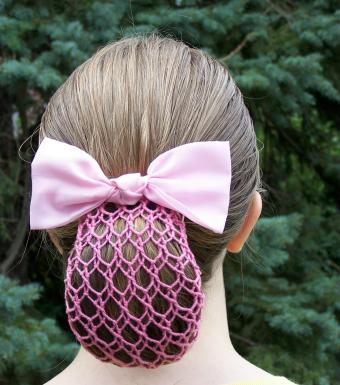
A snood covers the hair and stops long hair falling down. It is worn at the middle of the head, gathering the hair around the nape, held originally by a band or ribbon and now almost always by elastic.
Its appeal is speed. A knot or bun takes time and skill; a snood takes neither, and it produces a finished look on fine hair that will not hold an updo, including the illusion of more length and thickness than you have.
It is also protective. A snood in a thick fabric shields hair from heat, sun and airborne pollutants. In periods when women wore hats routinely, it was how long hair was managed underneath one.
Two styles. The nape style sits above and around the back of the neck, and is the bridal and evening version, often worked with beads, pearls, small flowers or jewelled pins. The full-coverage style sits at the crown and covers all the hair, which is the workplace version.
Color is normally matched to the hair. Bobby pins keep it in place, and jewelled pins, clips or barrettes are the usual way to dress it up.
Sticks and forks
Hair sticks
Familiar from Chinese and Japanese painting, and functional and decorative in equal measure. A long shaft disappears into the hair and only the head shows, which can be plain or elaborately carved.
They hold twisted knots, French twists, chignons and upswept styles generally. Materials are metal, plastic, bamboo, bone or wood. The traditional form is straight; wavy and curved versions are newer.
Starting out, use longer sticks. They are easier to place. Once the technique is familiar, shorter sticks give a better result.
Hair chopsticks
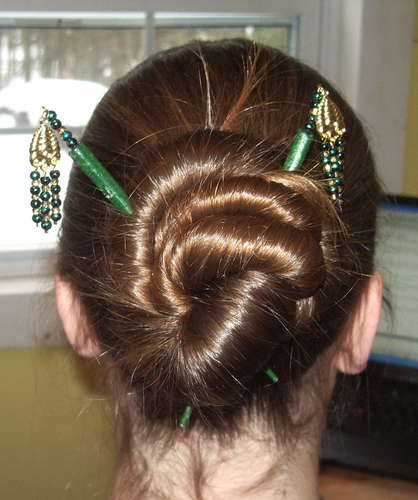
Hair sticks shaped like Chinese chopsticks, easy to use and woven into a bun so the style does not slide. Used properly, a stick or a pair holds hair all day. The line between a hair stick and a hair chopstick is not a firm one.
Hair forks
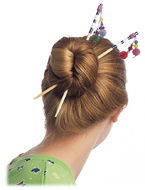
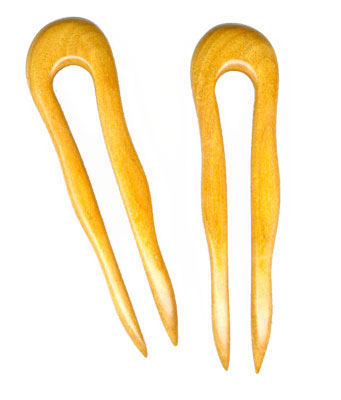
A double-pronged fork, working like a hair pin but with more grip. Good for chignons and buns.
Pins
Hair pins
Smaller than clips, and used differently: a pin slides into a section of hair rather than clamping onto it. Many have double or triple prongs, which is where the holding power comes from.
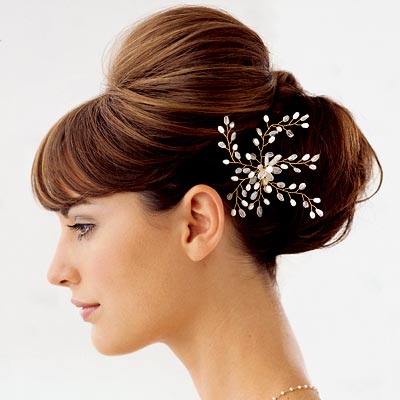
They suit styles built from small clustered sections rather than one large mass of hair. Because they are small, several can be scattered through a style for an understated effect. Heads can be plain or set with gemstones and pearls, which is what turns a hair pin into hair jewellery.
Chignon pins and decorated hair pins are generally kept for formal occasions, where bobby pins do everyday duty as well as dressy.
Bobby pins
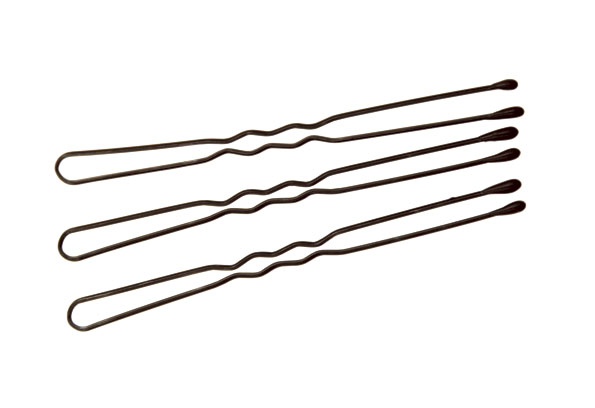
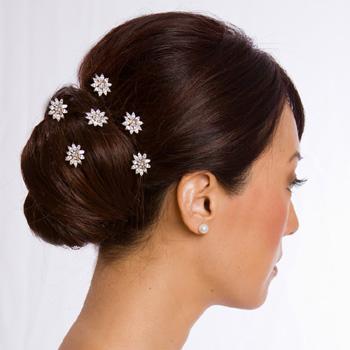
The simplest hair pin there is, used to secure strands and hold updos. Versions with crystals, pearls or precious settings on the head, often shaped as a flower, count as hair jewellery.
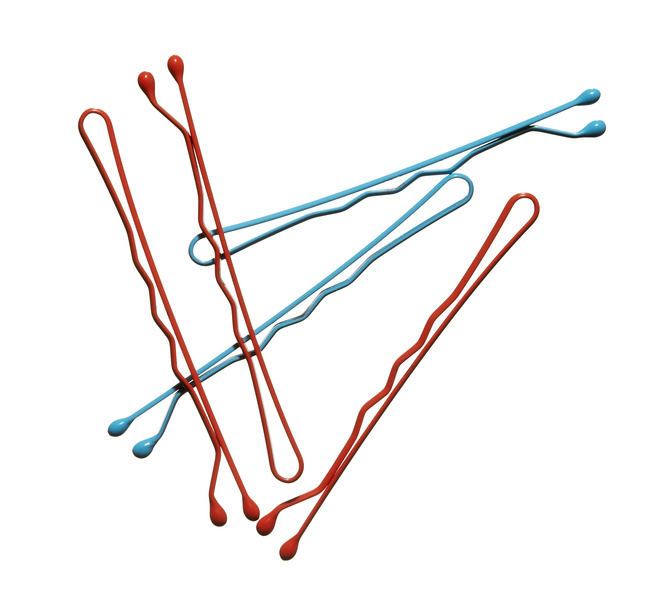
The practical trick. A single bobby pin grips loosely. Two together, either parallel or crossed, hold far better, and that is the fix for a pin that will not stay put.
Clips
Clip covers a wide range of closures, shapes and mechanisms, all sharing one idea: the clip snaps onto a section of hair, or all of it, and holds it. Clips are the best way to pull hair back off the face, and they handle more volume than pins do.
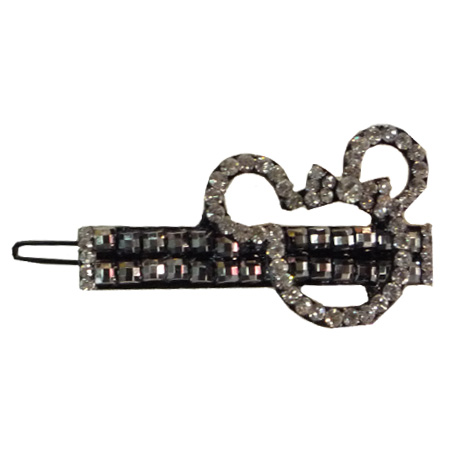
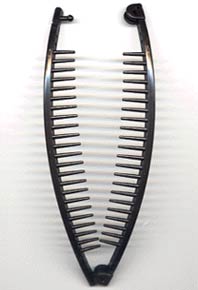
Banana clips
Also called alligator or concorde clips. Usually plastic, with small teeth along both sides that lock hair from the nape upward.
They suit short to medium hair, because they create a ponytail effect that makes hair look longer than it is, and they add apparent volume to fine hair.
Clutch or butterfly clips
Mostly plastic, in every shape and size, with large teeth on both sides that hold hair firmly between them. Good for updos. The name comes from the butterfly or bow shape of the decoration.
Spring latch and condor clips
The most standardised clip design. Hair is held between two metal pieces that close into a hinged latch.
Hair claws and jaws
Clips that gather a large volume of hair between their jaws, or a small section, depending entirely on the size you buy.
Barrettes
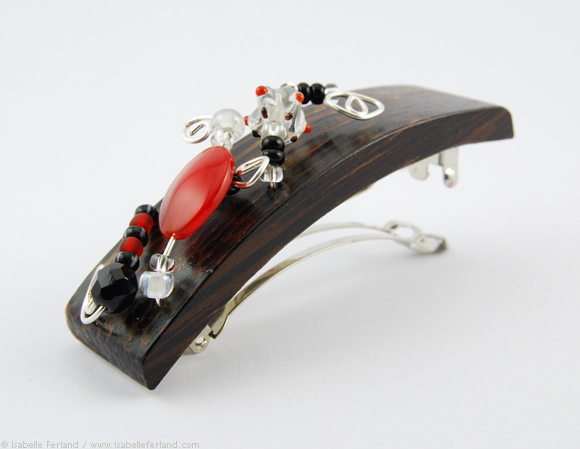
A barrette clips into the hair, snapping or clasping shut over a section. The base is metal, wood or plastic, with a curved, carved or plain surface mounted on it. The most common design of all is a bow, in fabric, glass, ceramic or metal. Precious versions are set with metals and gemstones.
The typical use is pushing a lock away from the forehead and holding it up.
The one limitation is capacity. A barrette holds a lock, not a head of hair, and the clasp will not close over too much. The length and width of the clasp is what decides how much it takes, so check that before buying rather than after.
By wearer. Small plastic barrettes with cartoons, flowers or butterflies, and an easy clip closure, are the children’s version. Elegant and jewelled designs suit formal wear, and plain ones work at an office.
Alligator clamps
Made from small to medium sizes, opening by squeezing one end and closing onto the hair. They take a small to medium amount.
Snap clips
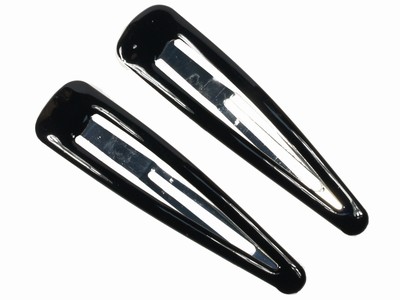
Mostly decorative, holding only a small strand. They snap into the hair and grip better than hair magnets do, which is their advantage over the more ornamental options.
Worn near the scalp or the hairline, they suit swept-back and upswept styles and work across most hair textures and lengths.
Decorative pieces
Floating hair gems
Decorative only, and named for the effect: they appear to float on the hair. They attach with velcro, snaps, wire or tiny magnets.
Set with rubies, pearls, rhinestones or similar stones, and sized from a quarter inch to an inch across. They suit any age, hair length and texture.
Hair magnets
A strand of hair is sandwiched between a metal top and a magnet underneath.
They suit some hair and not others. Medium-length and curly hair holds them well. Fine, silky or short hair does not, and a heavy piece will simply slide out of it.
Placement matters. Position them close to the scalp, which is where the hold is best, and combine them with invisible pins if you need more security.
Bands and combs
Headbands
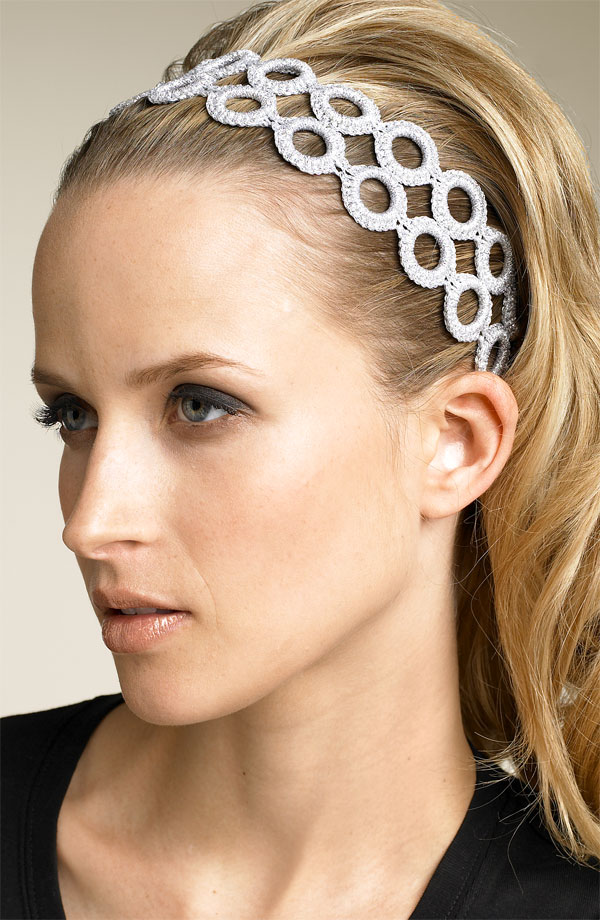
Worn at the highest point of the head, resting behind the ears, holding hair back off the forehead while letting it fall freely at the back. Worn closer to the forehead, the same band reads as retro.
Getting the size right is the whole game. It should hold the style securely without slipping, pinching or being noticeable to wear. Those are the three failure modes, and all three are apparent in the shop.
The teeth matter. Most headbands have small teeth along the base for grip, and those teeth are also what gives curly hair a smooth even finish at the hairline. Fabric bands in cotton or satin usually have no teeth and rely on elastic instead.
Materials. Plastic, metal, suede, vinyl, leather, wood and fabric, with or without gripping combs. Wire-based and fabric bands adjust to different sizes; plastic ones do not adjust and break instead. Soft wrap styles go right around the head.
Shapes run rounded, wavy and straight-edged. Construction is glued or hand-stitched, and the simplest handmade version is a length of ribbon tied under the hair. Braiding several fabrics together is a common way to get a custom look.
Matching band to hair. Long thick hair needs a wide band with a strong run of teeth to get enough grip. A wider, thicker band also gives a neater, flatter finish. Fabric bands can be further secured with clips, prongs and ties.
Hair combs
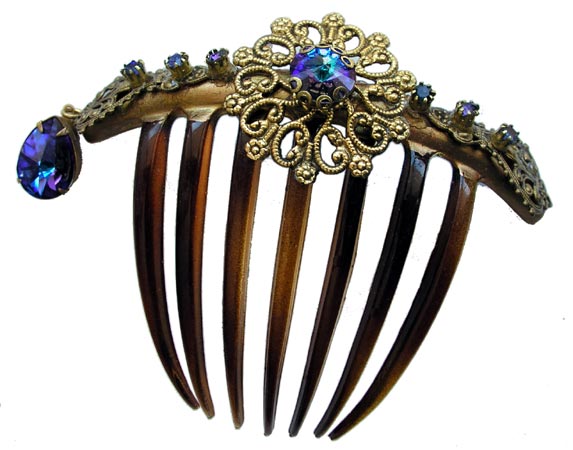
Worn to hold hair back from the forehead and face, and the standard choice for upswept styles. They suit long or thick hair particularly, and give grip across every texture.
Ponytail holders
Made in metal, fabric and leather, with cotton, nylon, hosiery and stretch fabrics all in use. Almost all have elastic at the inner edge, which is what provides lift and grip. They hold ponytails, knots, braids, pleats and buns.
Match the thickness to your hair. A medium holder covers most styles and hair types. Thin ties suit small sections and light tie-backs. Long, thick hair and upswept braids, knots and buns need thick holders with stronger elastic.
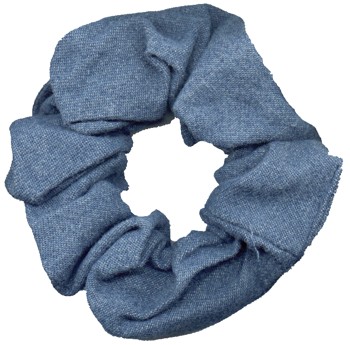
Scrunchies
A ponytail holder with the elastic sewn inside a strip of fabric, gathered into ruffles or bunches. The strip can be thin or thick.
Decorative elastics
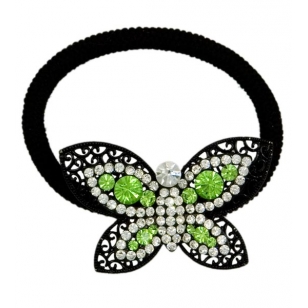
Ponytail holders with a pattern, design or ornament set at the center.
Tiaras and wreaths
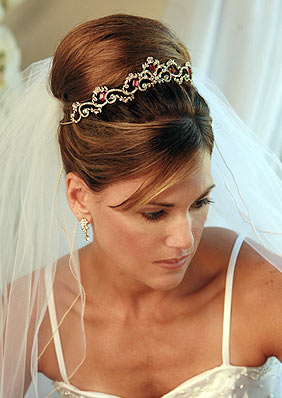
Tiaras
Once markers of rank, tiaras remain luxury pieces, and in some cultures, India among them, they are part of what a bride is expected to wear. They work with everything from long loose curls to a sweeping updo.
They are set with studs and stones, pearls, crystals, semi-precious and colored stones, in gold and silver. Constructions include single and double headbands, hair combs, bun rings and V-bands. A tiara comb fixed at the crown is the version for thin or short hair. Convertible tiaras, which become a bracelet or another piece, are widely made.
Choose it against your face. The tiara has to be in proportion to the face it sits above, and shape does real work here.
Round face: choose a tiara with some height to it, even a centimetre or two, which adds length. A square-topped shape reduces roundness; a circular one increases it.
Long face: flat designs work best, since height exaggerates the length.
Small face: a longer tiara running further around the head adds an illusion of length.
Most tiaras need pins or clips to stay put. Jewelled bobby pins do the job and add to the effect rather than hiding from it. The simplest headband tiaras are made with crystals or pearls, or with gemstone-set flowers mounted on the band.
Hair wreaths
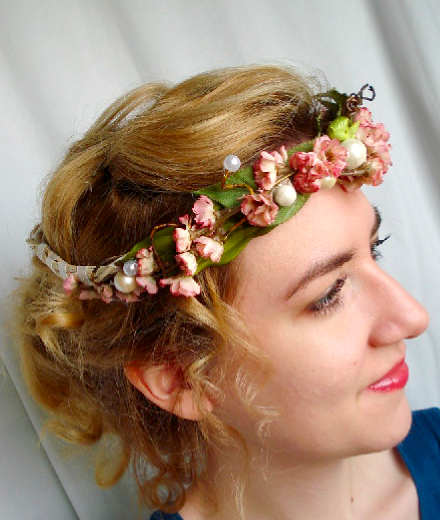
A garland worn around the forehead. The recurring designs are gold leaves, olive and vine, sprigs, flowers and bunches of grapes, which is the ancient form still in circulation. Precious versions use gemstones, beads, studs, pearls, crystals and diamonds.
Wreaths were at their most popular in the Victorian era.
Quick reference
| Accessory | Holds | Best for |
|---|---|---|
| Hair net | A finished style | Holding a bun or updo in place |
| Bouffant cap | All the hair | Workplaces where loose hair is a hazard |
| Snood | All the hair | Fine hair, speed, protection, bridal and workplace |
| Hair stick | A knot or twist | Chignons, French twists, upswept styles |
| Hair fork | A bun or chignon | More grip than a single stick |
| Hair pin | A small section | Styles built from clustered sections |
| Bobby pin | A strand | Everyday and dressy; use two for grip |
| Banana clip | Most of the hair | Short to medium and fine hair |
| Claw or jaw clip | A large volume | Gathering hair quickly |
| Barrette | A lock | Holding hair off the forehead |
| Snap clip, magnet, floating gem | Very little | Decoration only |
| Headband | Hair off the face | Every length; wide with teeth for thick hair |
| Hair comb | Hair back off the face | Long or thick hair, upswept styles |
| Ponytail holder | A ponytail, braid or bun | Thickness matched to the hair |
| Tiara, wreath | Nothing | Formal and bridal wear |
Frequently asked questions
What is the difference between a hair accessory and hair jewellery?
Materials. A hair accessory is anything worn in the hair. Hair jewellery is the subset made from precious or semi-precious materials, such as gold, silver or platinum set with pearls, diamonds, crystals or rhinestones. The same barrette can be either, depending on what it is made of.
Which hair accessories actually hold hair, and which are only decorative?
Barrettes, headbands, hair sticks, forks, combs, pins and clips hold. Hair magnets, snap clips, floating gems and hair strings are decorative and hold very little. Buying the second expecting the first is the usual disappointment in this category.
What works on fine or thin hair?
Snoods, which produce a finished look on hair that will not hold an updo and add the illusion of thickness. Banana clips, which add apparent volume. Tiara combs fixed at the crown. Avoid heavy hair magnets, which slide straight out of fine hair.
Why does my bobby pin keep slipping?
One bobby pin grips loosely by design. Use two together, either parallel or crossed over each other, and the hold is far stronger.
How do I choose a tiara for my face shape?
Proportion first. A round face suits a tiara with a little height and a squared top, which adds length and cuts the roundness. A long face suits a flat design. A small face suits a longer tiara that runs further around the head.
What headband should I buy for thick hair?
A wide one with a strong run of teeth along the base. Thin bands and toothless fabric bands do not have enough grip for long, thick hair, and a wider band also gives a neater finish at the hairline.
Originally written by Sujata.
See also the history of hair jewellery, the earrings guide and the necklace guide.