A dress form is a designer’s essential tool: a male or female dummy figure used to take basic body measurements, draft paper patterns, drape fabric and check alterations. More than anything else, it lets you get the feel of a garment before it exists.
Forms come in many sizes, shapes, colors and materials, and are usually lightweight, made from wire, rattan or foam.
What makes a dress form a measuring instrument rather than a mannequin is the set of marked landmark lines on it. Every measurement and every pattern piece is referenced to these.
Vertical lines
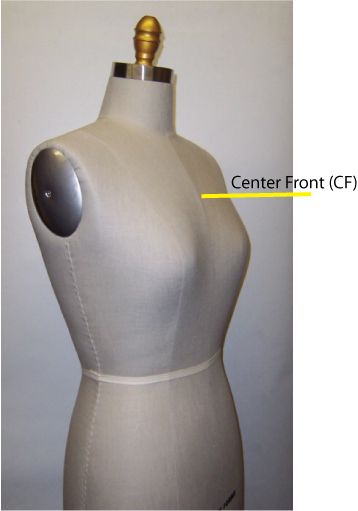
Center front
A vertical line running down the center, dividing the form into halves. Abbreviated CF.
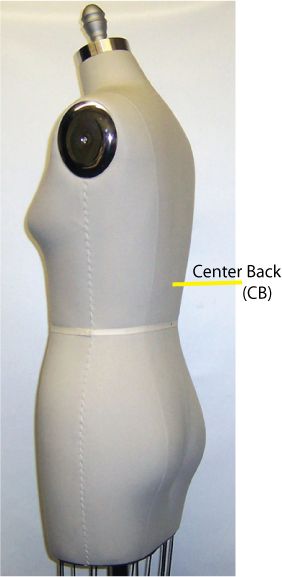
Center back
The same line on the back of the form. Abbreviated CB.
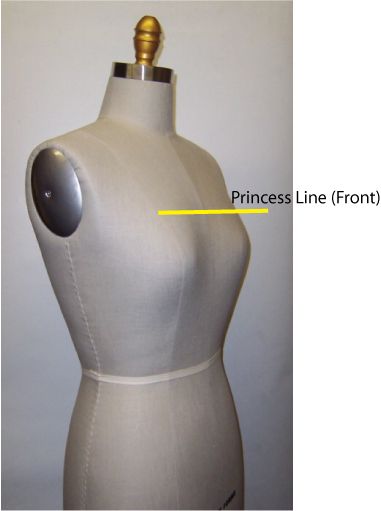
Princess lines
A pair of lines running between the center front and the side seam, passing over the bust level and dividing the shoulder into halves.
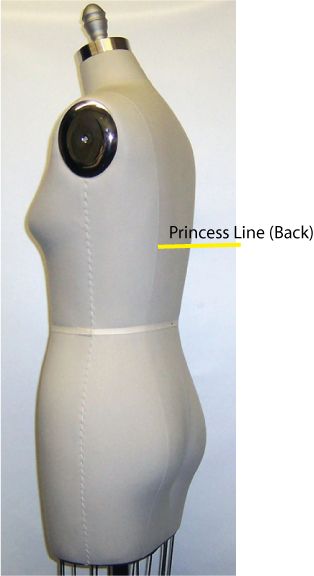
The back princess lines run between the center back and the side seam across the back.
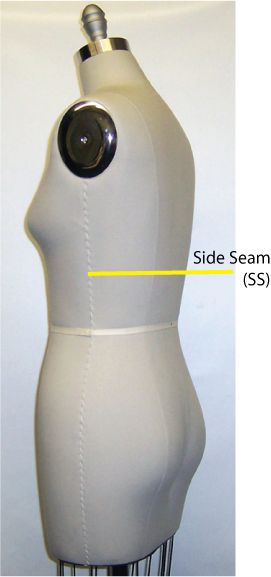
Side seam
Runs laterally down both sides, starting under the armhole and continuing down the form. Abbreviated SS.
Horizontal lines
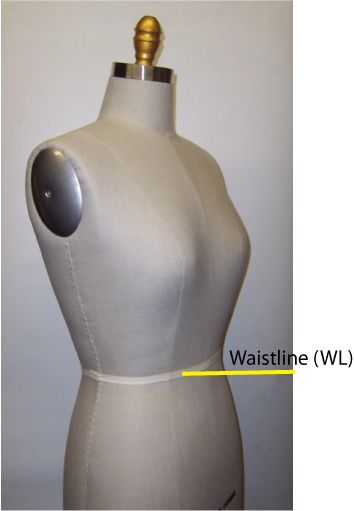
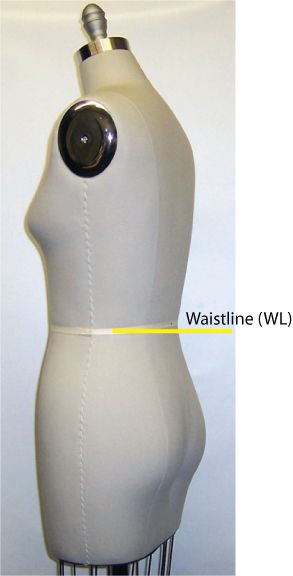
Waistline
A uniform central band around the form.
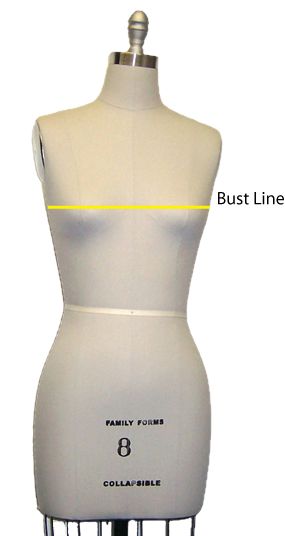
Bust line
A line running across the bust, passing over the apex.
Horizontal balance line
A line running parallel to the floor, abbreviated HBL.
This is the reference that everything else is checked against. If a draped piece is not sitting parallel to the HBL, it is hanging incorrectly, whatever it looks like from the front.
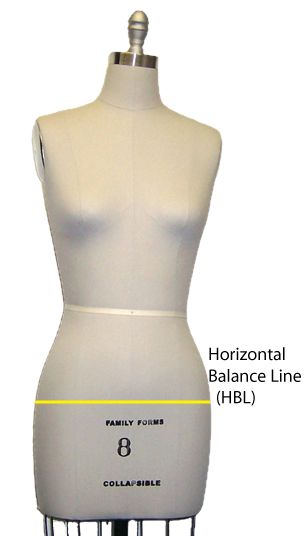
The upper body
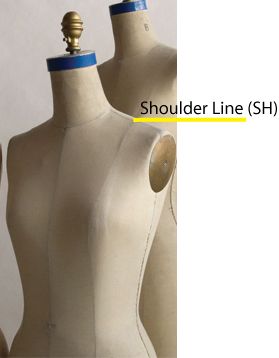
Shoulder line
Runs from the neckline to the armhole. Abbreviated SH.
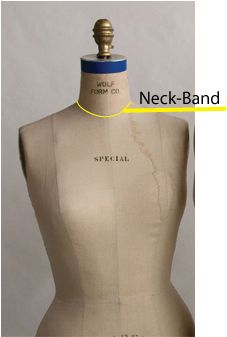
Neck band
Also called the neckline, encircling the neck.
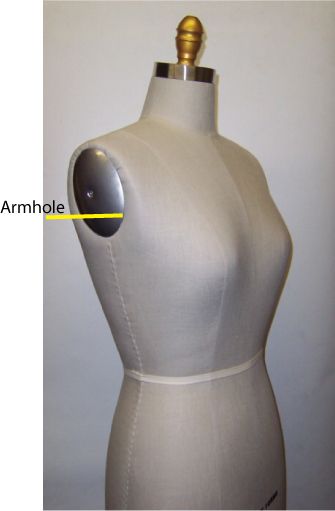
Armhole
Marked for both arms.
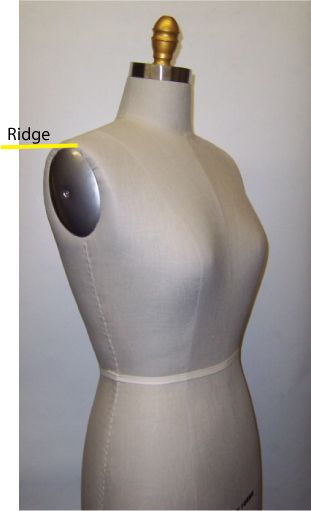
Armhole ridge
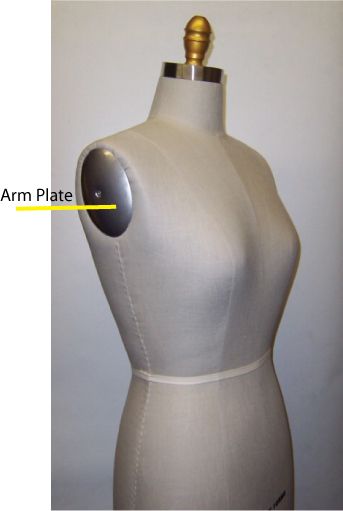
A slightly raised portion where the arm plate and the shoulder line meet.
Arm plate
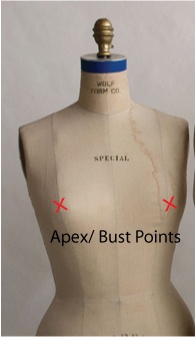
Apex or bust point
The highest point on the bust line. Abbreviated BP.
The apex is the single most important reference point on the front of the form. Darts are directed toward it, and its position determines whether a fitted bodice sits correctly.
All landmarks together
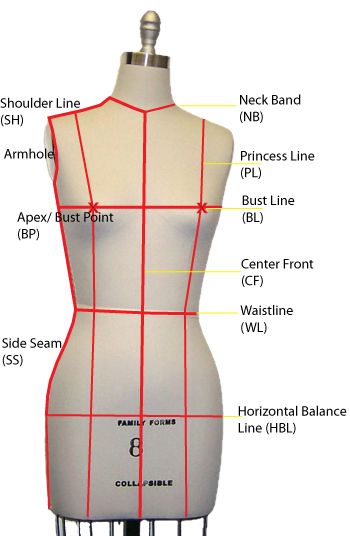
Abbreviations
| Abbreviation | Landmark |
|---|---|
| CF | Center front |
| CB | Center back |
| SS | Side seam |
| SH | Shoulder line |
| BP | Bust point, or apex |
| HBL | Horizontal balance line |
Frequently asked questions
What is a dress form used for?
Taking body measurements, drafting paper patterns, draping fabric and checking alterations, all while getting the feel of the garment in three dimensions.
What is the apex?
The highest point on the bust line. Darts point toward it, and its position determines whether a fitted bodice sits correctly.
What is the HBL for?
It runs parallel to the floor and is the reference for checking that a garment hangs level.
See also intersection points on the dress form and pattern making tools.