An anklet is an ornament worn around the ankle, also known as an ankle chain or ankle bracelet. It is one of the oldest continuously worn pieces of jewelry in India, and it remains one of the few that carries both everyday and ceremonial weight.
Materials
Anklets are made in gold, silver, leather, plastic, nylon and a range of other materials. In India silver is by far the most popular, and silver anklets are considered an important piece of jewelry rather than a casual accessory.
Beyond the traditional metals, the market carries an enormous range of anklets built from beads, chains, gemstones and applied embellishments, which has widened the style well past its formal origins.
The two constructions
Anklets divide cleanly into two types based on how they are made, and the difference determines how the piece sits and moves.
Flexible anklets
Made by linking elements together into a chain. The piece bends freely, follows the shape of the ankle and moves as you walk. Traditional Indian examples include the paayal, the pajeb and the jhanjhar, all of which are widely worn.
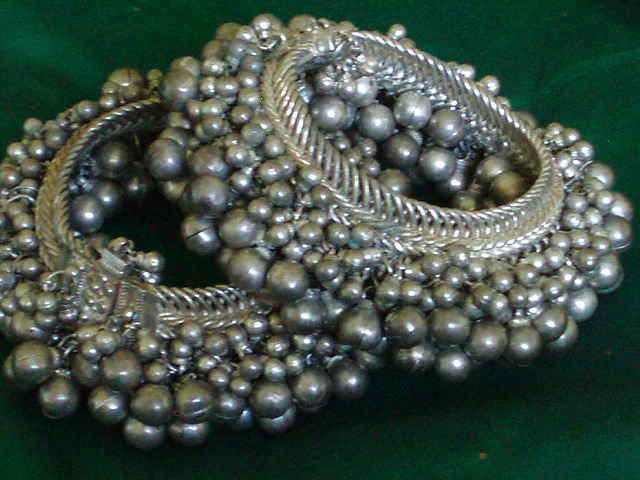
Inflexible anklets
Made by shaping a flat sheet of metal, or rubber, into a fixed form. These hold their shape rather than draping, so they sit in one position on the ankle and do not move with the foot.
The drape
Where an anklet sits is a matter of preference, and it changes the look considerably.
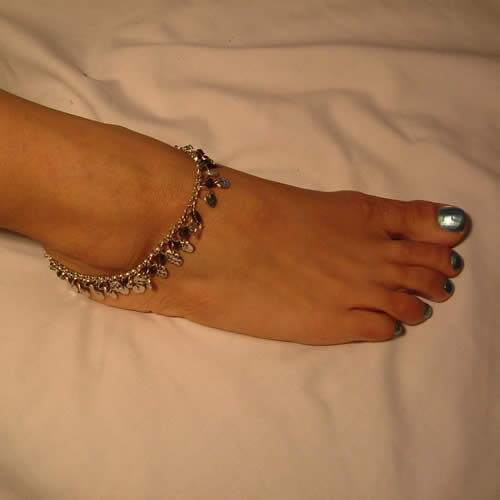
Some wearers prefer a drape that falls above the ankle, fitting almost tightly. This reads as neater and more deliberate, and it keeps the piece from moving during wear. Others prefer a looser drape that reaches below the ankle bone, which gives more movement and a softer line.
Neither is more correct. It is worth trying both before buying, since a chain that looks right in the hand can sit quite differently on the foot.
What to wear with what
Anklets add brilliance and sparkle to almost anything, but the pairing matters. The general principle is to match the complexity of the anklet to the complexity of the outfit.
- Traditional clothing. Anklets built from a series of chains worked together into an intricate web suit traditional outfits particularly well, where the density of the piece matches the detail of the garment.
- Simple modern outfits. A single fine chain, or a plain rigid band, reads as a deliberate accent rather than a competing element.
- Bare feet and sandals. The anklet shows to best effect when the ankle and foot are visible, which is why the style belongs to warm weather and to open footwear.
Wearing one well
- One ankle, not both, unless the pair is designed to be worn together as many traditional sets are.
- Mind the fit. Too tight is uncomfortable and marks the skin. Too loose slides under the heel and catches.
- Consider the sound. Traditional Indian anklets are often made with small bells and are meant to be heard. That is a feature, and it is worth deciding whether you want it.
- Keep the metals consistent. Silver with silver, gold with gold, unless you are mixing deliberately throughout the outfit.
Frequently asked questions
What is a paayal?
A traditional Indian flexible anklet made of linked chain work. Pajeb and jhanjhar are related forms, all widely worn in India.
Should an anklet be tight or loose?
Either, and it is a genuine preference. A close fit above the ankle bone is neater; a looser drape below it moves more.
Can anklets be worn with closed shoes?
They can, but they are hidden and can rub inside a shoe. The style is designed to be seen with open footwear or bare feet.
Are silver anklets only traditional wear?
No. Silver is the traditional and most popular choice in India, but plain silver chains are worn casually and read as entirely modern.