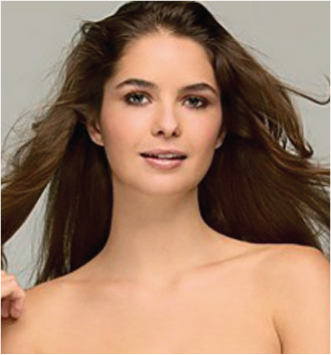
This is an archive trend report from the Fall Winter 2009/2010 season.
The organizing principle that season was balance. The approach was to mix subtle with bold rather than doing everything at one intensity: bright lips with natural eye shadow, or shimmering eyes with pale lips, cheeks and brows.
The rule that follows is worth keeping regardless of season. Choose the feature you want to emphasize, take it dark or bright, and let everything else recede. Doing all of them at once cancels the effect.
Skin
Matte was the runway preference. Pale, smooth and clear skin in its natural tint, functioning as a background rather than a feature.
That is the logic behind it: a matte, even complexion gives the eyes and cheeks something neutral to sit against, and any shine on the skin competes with them.

Cheeks
Pink throughout, in a range covering pink-blue, carnation, cherry blossom and natural tan hues.
Two application points from the season. Match the blush to either the eyes or the lips rather than choosing it independently, so the face reads as one scheme. And apply the strokes so the cheeks appear stretched out, which lengthens rather than rounds the face.

Lips
Pink again, ranging from violet and fuchsia through light pink to pale shades close to the skin.
Matte lipstick rather than gloss. The reasoning is the same as with the skin: a matte lip keeps attention on the eyes, while gloss pulls it to the mouth.
Red was reserved for formal occasions rather than treated as an everyday option.
Eyes
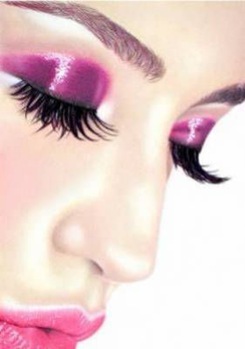
The focal point of the season, and the place to concentrate effort.
- Shadow in pink or purple, emphasized rather than subtle, ranging from smoky through to naked tones.
- Skip false lashes. Very long lashes were out of favor. The alternative given was a dark pencil worked at the corner of the eye line, which enlarges the eye without adding anything artificial.
- Thick brows. The season moved decisively away from thin, narrow shaping toward fuller natural brows.
The one qualification
Wear the hues that suit your skin tone. Not every color in a season’s palette works on every complexion, and a trend shade that fights your skin looks worse than a conventional one that does not.
Frequently asked questions
Why matte rather than dewy skin?
A matte finish acts as a neutral background so the eyes and cheeks stand out. Shine on the skin competes with them.
Should blush match the lips or the eyes?
Either, but pick one. Matching it to something keeps the face reading as a single scheme.
Why avoid lip gloss that season?
Because the eyes were the focal point. A matte lip keeps attention where it was intended to be.
See also make-up essentials and tools.