Slingbacks, loafers and mules are all shoes that solve the same problem differently: how to hold a shoe on the foot without a full closed back. Each answer produces a different shoe with a different use, and the differences are worth knowing precisely.
Slingbacks
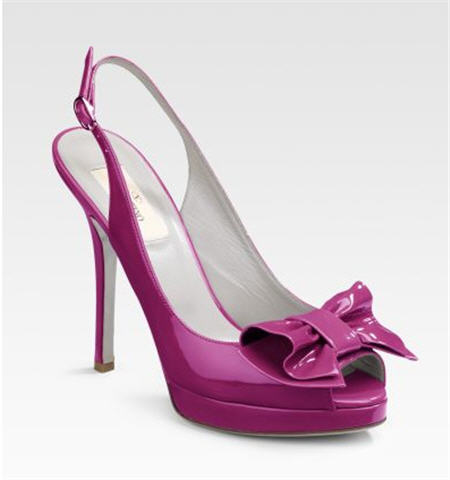
A slingback has a narrow strap that pulls up over the heel. The strap does not wrap all the way around the heel, and that is the defining detail. It secures the shoe at a single point while leaving the rest of the heel as exposed as possible.
Slingbacks usually have a heel, and the toe is either rounded or pointed. The result is a shoe that is more secure than a mule and considerably more open than a pump.
The exposure is the point of the style. Because so little of the heel is covered, the shoe interrupts the line of the foot less than a closed back would, while still staying on properly when you walk.
Loafers
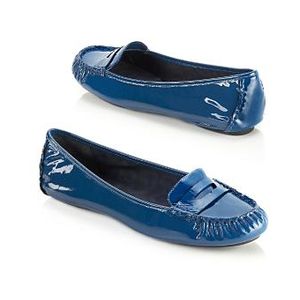
Loafers are flat slip-on shoes, typically with a square toe, and they are made in the full range of everyday colors, most commonly black and brown.
They have a reputation for not being especially feminine in appearance, and that reputation is not entirely unfair. What is also true is that a loafer is the most comfortable thing you can put on a foot while still looking properly dressed. There is no heel to balance on, no strap to rub, and no fastening to adjust.
That trade-off is worth making more often than most people make it. For a long day that involves walking and still requires looking put together, the loafer has no real competition.
Mules
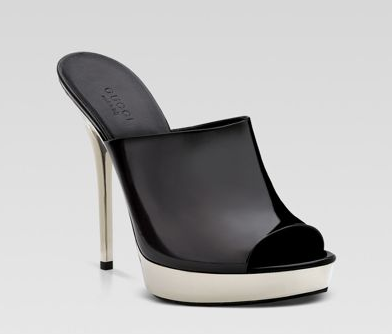
A mule slides onto the foot and leaves the heel and the back of the foot completely bare. There is no strap at all, which is what separates it from a slingback.
Mules are often closed at the toe, and they range from flat through to high heeled. A heeled mule works perfectly well as a dress shoe, and the pointed-toe version is one of the more striking shapes in footwear, since the long line of the toe is uninterrupted by any fastening.
The limitation is security. With nothing holding the back of the foot, a mule relies entirely on fit, and a poorly fitting pair will slip at the heel with every step.
Choosing between them
- Need to walk any distance? Loafers. The flat sole and secure fit make everything else a compromise.
- Want an open shoe that stays on? Slingbacks. The heel strap does exactly this job.
- Want the cleanest possible line? Mules, provided the fit is right. Nothing crosses the foot at all.
- Standing for hours? Loafers again, or a low slingback. A mule is the worst choice here because the foot works constantly to keep it on.
These three sit alongside the other main categories in our guide to pumps, clogs and sandals, and the toe shapes they are built with are covered in peep, squared-off and pointed toes.
Frequently asked questions
What is the difference between a slingback and an ankle strap?
A slingback strap crosses behind the heel only. An ankle strap goes all the way around the ankle, above the heel.
Are mules or slingbacks more secure?
Slingbacks, clearly. The heel strap holds the foot in place, while a mule depends entirely on the fit of the vamp.
Do loafers have to be flat?
The classic loafer is flat. Versions with a low heel exist and read as slightly dressier, but the flat sole is what the shoe is known for.
Why do my mules slip at the heel?
Because the vamp is not gripping. Mules have to fit closely across the top of the foot, since that is the only thing holding them on.