An afghan is a shawl or blanket, crocheted or knitted, worked in geometric shapes and stripes using bright and colorful yarns. The name comes from Afghanistan, where the geometric designs that define the form originated.
What makes a blanket an afghan
The distinguishing features are the technique and the design language rather than the size or the use.
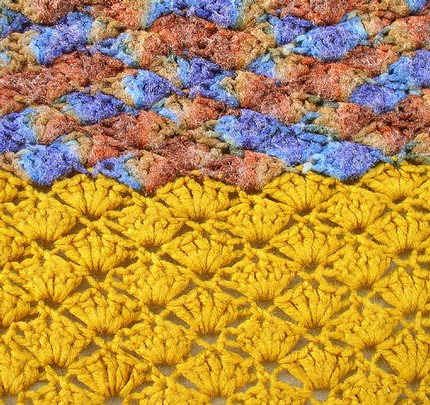
- Crocheted or knitted rather than woven or quilted. The construction is a looped fabric, which is what gives an afghan its characteristic weight, stretch and texture.
- Geometric design. Shapes and stripes are the foundation. There is almost always some defined shape on the blanket, and it is commonly surrounded by flower motifs or intricate vein-like designs.
- Bright, multi-colored yarn. Afghans are usually hand-made, and one practical consequence is that they come in a great many colors, often within a single piece.
The three main types
Afghans are usually classified by how the piece is built rather than by what it looks like, and there are three main approaches.
Mile-a-minute afghans
Worked as a single continuous piece using a minimum number of stitches. The name describes the experience of making one. Because there is no assembly at the end and the stitch pattern is simple, this is much the fastest route to a finished blanket, and the usual recommendation for a first attempt.
Motif afghans
Built from a number of separate small pieces, called motifs, squares or blocks, which are joined together once complete. This is the most versatile method. Each block is small enough to be portable, blocks can be made in different patterns or colorways, and the arrangement is decided at the assembly stage rather than the start.
The granny square blanket is the best known example of this construction.
Join-as-you-go afghans
A middle path. The piece is still made in sections, but each new section begins where the previous one finishes, so the blanket is joined as it grows rather than assembled at the end.
This avoids the part of motif construction most people dislike, which is sewing dozens of separate blocks together, while keeping the flexibility of working in manageable pieces.
Choosing a construction
- Want it finished quickly? Mile-a-minute.
- Want to work in short sessions or while traveling? Motif, since each block is small and self-contained.
- Want variety without the assembly? Join-as-you-go.
- Want to use up leftover yarn? Motif or join-as-you-go, because color changes happen naturally at block boundaries.
Frequently asked questions
Is an afghan knitted or crocheted?
Either. Both techniques are used, though crochet is the more common of the two for this style of blanket.
What is the difference between an afghan and a throw?
A throw is defined by size and use. An afghan is defined by how it is made and how it is patterned, so an afghan can be a throw, but not every throw is an afghan.
What is a granny square afghan?
A motif afghan built from crocheted squares worked in rounds, then joined. It is the most recognizable example of motif construction.
Which type is easiest for a beginner?
Mile-a-minute, because it uses a small number of simple stitches and requires no assembly at the end.