An adhesive is a compound that holds things together. The word covers an enormous range, from the glue stick on a school desk to the industrial compounds that bond the sole of a shoe to its upper, and the differences between them matter a great deal when choosing one.
Natural adhesives
Natural adhesives are derived from biological sources, and are also known as bio-adhesives. They come from plant and animal materials, and they have been in use for as long as anything has needed sticking together.
They are generally gentler, more forgiving to work with, and easier to reverse, which is why they remain standard in conservation and bookbinding. What they are not is especially strong.
Synthetic adhesives
Synthetic or man-made adhesives are considerably stronger than natural ones. This is why almost everything structural uses them, and why industrial construction relies on them rather than on natural glues.
Strength is not the only difference. Synthetics can be engineered for specific behavior: to stay flexible, to cure on contact, to set only under ultraviolet light, or to resist water and heat once cured.
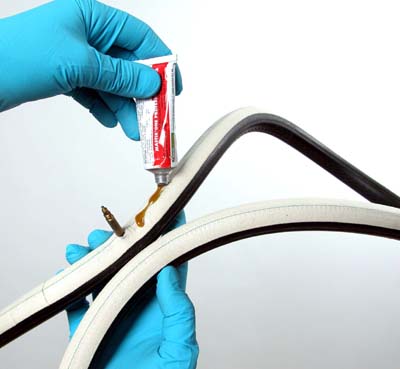
Types of synthetic adhesive and where they are used
Emulsions
Water-based adhesives that bond as the water leaves the film. They are the workhorse of woodworking and packaging, and they are widely used with fabrics and fabric-based components, where a flexible bond matters more than raw strength.
Contact adhesives
Applied to both surfaces and left to become tacky before the two are pressed together, at which point they bond immediately. Because the bond forms on contact rather than as the adhesive dries between the surfaces, they work on materials that no moisture can escape through.
This is the standard adhesive for lamination and for footwear, where a sole has to be bonded to an upper across a large area and stay bonded through constant flexing.
Drying adhesives
Adhesives that set as their solvent or carrier evaporates. These are the familiar household glues, suited to small repairs and craft work.
UV light curing adhesives
These stay liquid until exposed to ultraviolet light, at which point they cure rapidly. Because the operator controls exactly when curing begins, they are used to coat and seal products where positioning has to be precise.
Choosing an adhesive
- Match flexibility to the material. A rigid bond on a flexing material will crack. Footwear and fabric need adhesives that stay flexible.
- Prepare the surface. Most failed bonds are contamination, not adhesive weakness. Clean, dry and lightly abraded surfaces bond far better.
- Respect the open time. Contact adhesives need to become tacky before joining. Emulsions need to be joined while still wet. Getting this backward is the commonest mistake.
- Consider reversibility. If the join may ever need to come apart, a natural adhesive is often the better answer despite being weaker.
Frequently asked questions
Which adhesive is used in shoemaking?
Contact adhesives, because they bond immediately across a large area and stay flexible through the constant bending a shoe undergoes.
Are natural adhesives weaker than synthetic ones?
Generally yes. Synthetics are considerably stronger, which is why they dominate structural and industrial use.
Why did my glued fabric repair fail?
Usually because a rigid adhesive was used on a material that flexes, or because the fabric was not clean and dry when the adhesive went on.
What does open time mean?
The window between applying an adhesive and joining the surfaces. Every adhesive has one, and working outside it is the most common reason a bond does not hold.