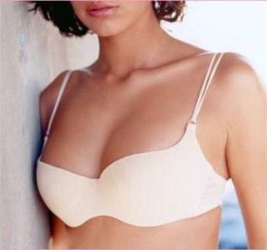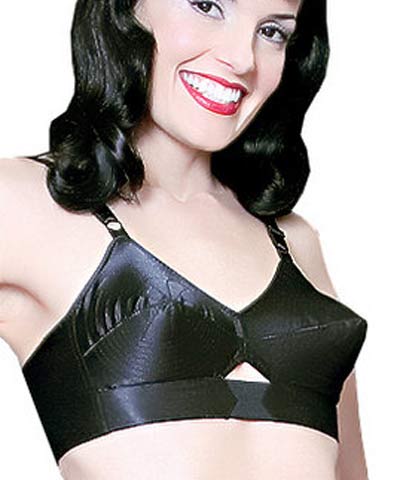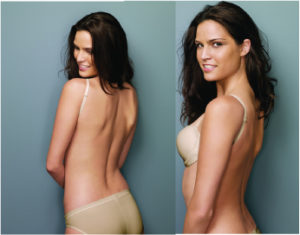
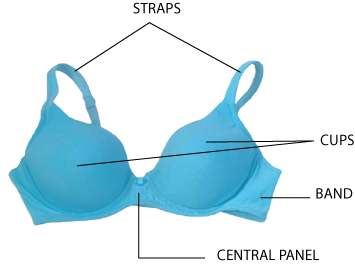
Every bra is assembled from the same four components. Understanding what each one does makes fitting problems far easier to diagnose, because almost every complaint about a bra traces back to one specific part not doing its job.
The bra band
The band runs around the torso, under the breasts. It can be a single layer or lined, and it does most of the supporting work in a well-designed bra.
Two band styles
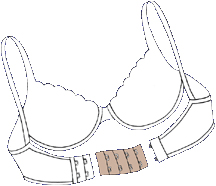
- Full band. A continuous band extending right around the body, with the cups set into it. This provides maximum support, because the load is spread along the full length of the band.
- Partial band. A band attached to the sides of the cups, separated by a hook. Lighter, and correspondingly less supportive.
Fasteners
The band carries a set of hook fasteners, typically at the back. Most bras offer two or three closure positions within the same garment, which lets you adjust the band as it stretches with wear and adjust the vertical position of the breasts.
Some bras place the fastener at the front, between the cups. Others, sports bras in particular, use a pull-on construction with no fasteners at all.

The central panel
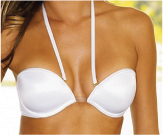
The central panel, also called the gore, sits between the two cups and lies flat against the breastbone.
It is small and it is diagnostic. In a correctly fitting bra it makes contact with the sternum. If it stands away from the chest, something is wrong with the fit or the style, which makes it one of the quickest checks you can run.
The cups
The cups accommodate the breasts and give them their shape, support and control.
Construction
Most cups are double lined, though some use a single lining and others three. Sections may be lined or unlined depending on the design.
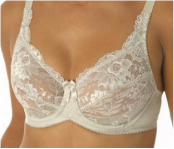
Lace cups are usually lined, for the practical reason that unlined lace scratches against the skin. Padding achieves the same softening effect and adds shape at the same time.
Cups may or may not carry underwires, made of metal or plastic, which sit beneath and around the breast to shape and support it.
Shoulder straps
The straps hold the bra in position on the body. Contrary to how it feels, they should not be carrying the weight. That is the band’s job, and straps that dig in are a sign the band is not doing it.
Adjustment
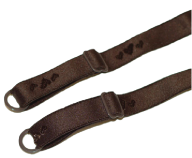
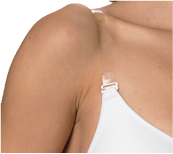
Most straps adjust using ring-and-slide fasteners, positioned either at the front or the back of the strap. Getting this adjustment right is one of the highest-value few minutes you can spend on a bra.
Materials and placement
Straps are made from elastic materials such as spandex and also from non-stretch fabrics. They can be wide-set, sitting further out toward the shoulder, or near-set, sitting closer to the neck. Which suits you depends on your shoulder shape, and it is the usual reason straps slip on one person and not another.

Variations
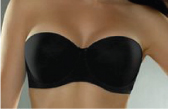
Straps can be clear, beaded or colored, each solving a different problem. Clear straps reduce visibility under narrow-strapped clothing. Beaded and colored straps are designed to be seen. Strapless bras dispense with them entirely.

Fabrics
Bras are typically made from cotton, polyester or spandex, frequently in combination, with lace stitched into various sections for both appearance and structure.
Frequently asked questions
Which part of a bra provides the support?
The band. Straps hold the garment in position, and if they are carrying the weight the band is too loose.
What is the central panel for?
It separates the cups and anchors the bra against the breastbone. Whether it touches the chest is one of the fastest ways to check fit.
Why are lace cups lined?
To stop the lace scratching the skin. Padding achieves the same result while also adding shape.
What is the difference between wide-set and near-set straps?
Where they sit on the shoulder. Wide-set straps sit further out, near-set closer to the neck. Sloping shoulders generally hold near-set straps better.
For how these parts should fit, see a properly fitting bra, and for measuring see determining your bra size.