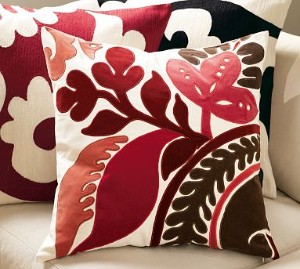
Painting divides broadly into two approaches, and the split matters well beyond the gallery. It shapes textile prints, scarf design, upholstery and a great deal of what ends up on clothing. The two categories are representational and abstract.
Representational painting
A representational painting depicts specific, recognizable physical objects. A face is a face, a bowl of fruit is a bowl of fruit. At its most literal it works almost like a photograph, and the viewer’s task is simply recognition.
Abstract painting
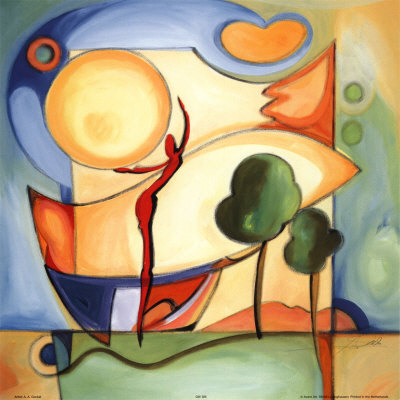
An abstract painting portrays designs, shapes or colors that do not resemble specific physical objects. There is nothing to identify, and that is the point. The composition is carrying the meaning rather than the subject.
This is why abstract work has a reputation for being harder to approach. With a representational painting you always have somewhere to start. With an abstract one you often have no idea what you are looking at, and the work asks you to respond to color relationships, balance, mark-making and composition instead. That takes some familiarity with painting technique to read comfortably, and it is a skill rather than an instinct.
Where abstract art came from
The move toward abstraction grew out of Impressionism and Post-Impressionism in the nineteenth century, and it gained real momentum through the twentieth. Painters including Seurat, Monet and Cezanne are regularly cited as influences on that shift.
What those artists had begun to do was loosen the obligation to reproduce a scene accurately. Once a painting no longer had to be a record of an object, the door was open to work that dispensed with the object altogether.
The two kinds of abstract painting
Abstracted from nature
The first kind takes a real subject and abstracts it. Form is simplified, distorted, flattened or exaggerated until the painting is no longer realistic, but a viewer can still make out what it began as. A landscape reduced to bands of color still reads as a landscape.
Pure abstract art
The second kind portrays no conventional reality at all. There is no original subject to trace back to. What is on the canvas is line, color and shape, arranged for their own sake. This is what is usually meant by pure abstract art.
Why this matters for print and textile design
Almost every printed fabric sits somewhere on this spectrum, and knowing where helps enormously when choosing one.
- Representational prints carry recognizable motifs: florals, birds, paisley, figures. The eye identifies the object immediately, and the print reads as busy or quiet depending on scale and spacing.
- Abstracted prints take a recognizable motif and break it down. A great deal of contemporary floral print works this way, keeping a suggestion of the flower without the botanical detail.
- Pure abstract prints use color blocks, brushstrokes, geometric fields and free marks. Because there is no object to recognize, they tend to read as texture at a distance, which is why they combine more easily with other patterns.
Frequently asked questions
Is abstract art the same as modern art?
No. Modern art is a period. Abstract art is an approach, and one that a great deal of modern art does not use.
Does abstract art require less skill?
No, and the assumption misreads the work. Removing the subject removes the scaffolding a painting can lean on, so composition, color and mark have to hold it up entirely.
How do I wear an abstract print?
Treat it as a texture rather than a motif. Because there is no recognizable object competing for attention, abstract prints pair with plain pieces very easily and mix with other patterns more forgivingly than a figurative print does.