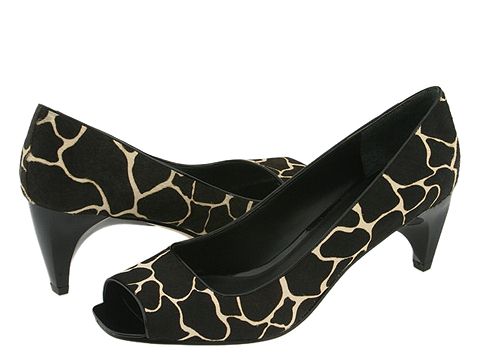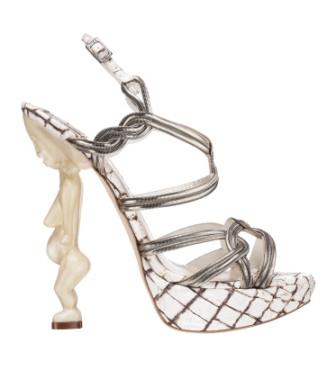
These three styles are defined by very different things. The espadrille is defined by a material, reptile leather by a surface, and the ankle strap by a fastening. Grouped together they cover most of what separates a casual summer shoe from an evening one.
Espadrilles
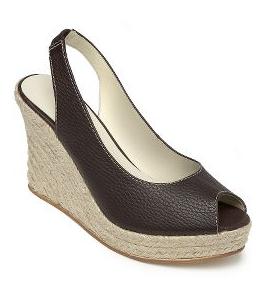
The espadrille is defined by its sole, and specifically by the jute rope it is made from. That rope sole is the single characteristic that makes a shoe an espadrille. Everything else about the style is open.
Construction
The upper is usually canvas or cotton fabric, and it comes in a wide range of patterns and styles. The sole is flexible, made from rope, or from rubber molded to give a rope-like appearance. Genuine jute construction has the softer, more forgiving flex; molded rubber versions trade some of that for durability and water resistance.
Flat or heeled
Espadrilles are made as casual flats, as raised wedges and as high-heeled fashion sandals. The wedge version is the most common dressed-up form, because a rope sole can be built up into a solid wedge far more easily than it can be shaped into a slim heel.
The care point
Jute is a natural fiber and it does not like water. A soaked rope sole loses its shape, and it can rot if it stays damp. Espadrilles are warm, dry weather footwear, and treating them as such is most of what keeps them alive.
Reptile leather
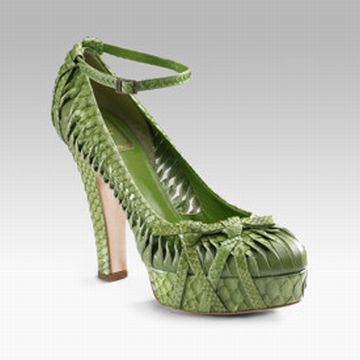
Reptile leather is exotic and luxurious, and it is one of the few materials that reads as expensive from across a room. Alligator, crocodile and snake skins are the major choices, along with other reptile hides.
The look
The effect is a contradiction that works. The finish is bold and refined at the same time, and the overall impression is subtle despite the strength of the pattern. That is because the pattern is a texture rather than a print. It catches light in a way that a printed surface does not, and the scale of the grain does the work rather than color contrast.
What to avoid
Gaudy snake prints and cheap imitations. This is the failure mode of the entire style. A printed reptile pattern on a flat surface has none of the depth of the real grain, and the difference is obvious. A restrained genuine texture reads as luxurious; an exaggerated printed one reads as the opposite.
Designers associated with reptile leather footwear include Dior, Ralph Lauren, Thakoon and Roberto Cavalli.
Ankle straps
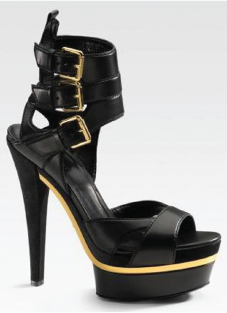
The high heel with straps around the ankle is one of the most popular shoe forms there is, and it comes with one specific effect worth planning around.
A shoe that stops at the ankle makes the leg appear shorter, because the strap draws a horizontal line and the eye reads the leg as ending at it. The practical consequence is that anyone shorter in height should choose the very high heeled versions, where the added height offsets the shortening.
Gucci and Oscar de la Renta are among the names most associated with this form. The style is covered in more detail, including strap width and toe shapes, in our guide to ankle strap shoes and sandals.
Choosing between them
- Warm weather, casual, plenty of walking. Espadrilles, in the flat or low wedge form.
- Evening, where the shoe should read as expensive. Reptile leather, in a restrained natural grain.
- Occasion wear that has to stay on securely. Ankle straps, on as high a heel as you can manage.
For the rest of the range see fringed, fetish and gladiator sandals and pumps, clogs and sandals.
Frequently asked questions
What makes a shoe an espadrille?
The jute rope sole. The canvas upper is typical but not definitional.
Can espadrilles get wet?
Avoid it. Jute loses shape when soaked and can rot if it stays damp. Rubber-soled versions handle moisture far better.
How do I tell real reptile leather from a print?
By feel and by light. Genuine skin has raised, irregular grain you can feel with a fingertip, and it catches light unevenly. A print is flat and regular.
Do ankle straps always shorten the leg?
The horizontal line always has that effect, but heel height, a slim strap and a color close to your skin tone all reduce it considerably.